
KURMA MELA: THE SCIENCE OF THE MASS NESTING OF OLIVE RIDLEY TURTLES
Why in the News?
● The olive ridley turtle (Lepidochelys olivacea), also known as the olive red turtle or olive ridley tortoise, is a vulnerable sea turtle species that has shown remarkable resilience by surviving mass extinctions, continental drift, and rising sea levels over millions of years.
● Despite their resilience, the species remains vulnerable and faces growing environmental threats.
● In March this year, a record-breaking 7 lakh olive ridley turtles nested at Rushikulya beach in Odisha, drawing significant media and conservationist attention. This arribada nesting event, occurring near the Rushikulya River, has become a focal point for olive ridley turtles Odisha conservation efforts.
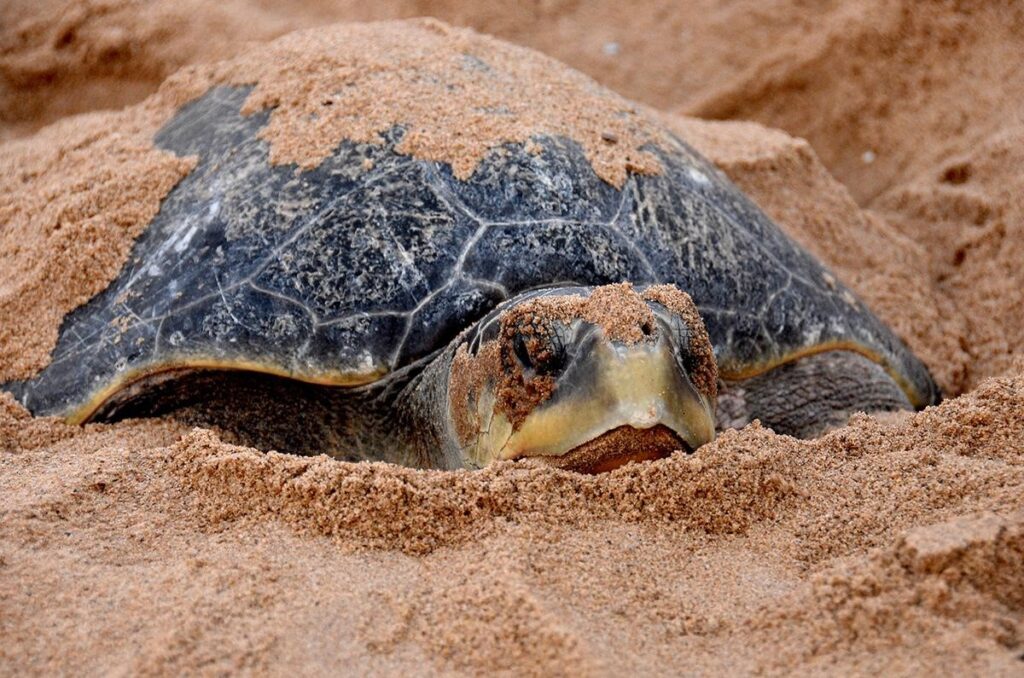
Key Facts about Olive Ridley Turtles and Nesting in Odisha
● Olive ridley turtles, famous for their synchronised mass nesting events, known as arribada — a Spanish term meaning “arrival,” play a crucial role as ecosystem engineers in coastal habitats.
● The Rushikulya arribada offered a sense of hope to many but also raised concerns among conservation biologists about the long-term impacts of human interventions on natural processes.
● Despite some local population recoveries, the IUCN Red List reports a 30–50% global decline in olive ridley numbers since 1960, maintaining their IUCN vulnerable status.
● The turtles’ primary nesting grounds are located along the Pacific coasts of Mexico and Central America, with the Odisha coast also serving as a vital nesting zone. This raises the question: where are olive ridley turtles found in India?
● The Odisha coast’s 480-km coastline supports three major nesting sites for turtle in Odisha:
○ Gahirmatha Marine Sanctuary: Located between the Brahmani and Baitarani river mouths.
○ Devi Beach: Situated 100 km south of Gahirmatha, near the Devi River mouth.
○ Rushikulya Beach: Located 320 km further south of Gahirmatha, this Rushikulya rookery has become a crucial nesting habitat, featuring sand spit formations ideal for turtle nesting.
The ‘Where’ of Nesting: Understanding Site Selection in Olive Ridley Turtles
Philopatry: Magnetic Memory and Site Fidelity
● Olive ridley hatchlings ‘imprint’ on the magnetic field of their birth beach and return decades later to nest with high precision.
● This homing behavior is known as philopatry, involving a combination of memory, environmental cues, and Earth’s geomagnetic field.
● Philopatry is reinforced by a multiplier effect: more females returning to the same site increases site fidelity across generations.
Environmental and Ecological Influences
● Similar studies on Loggerhead turtles (Caretta caretta) show they choose nesting zones near cold-core eddies — nutrient-rich water swirls that promote food availability in their foraging habitat.
● Additional factors influencing nesting site selection: Salinity of water, Slope of the land, Risk of predation and Rainfall patterns.
Crowding and Intra-Species Nest Destruction
● Nesting sites are preferred if they’ve been used by more turtles in the past.
● However, increasing nesting populations vs. limited nesting space creates competition.
● Late-arriving turtles may dig up earlier nests, often guided by olfactory cues such as female urine, destroying existing olive ridley sea turtle eggs — as seen during the second mass-nesting at Rushikulya this year.
Predation Triggered by Egg Damage
● Broken or disturbed eggs release strong olfactory signals, attracting predators, increasing predator threats to the nesting population.
● Earlier beliefs held that predators used visual cues, but new research suggests smell is more crucial — especially the scent of disturbed soil and damaged eggs.
● Thus, the species’ own nesting strategy can unintentionally increase predation risk.
Temperature and Sex Ratios
● In sea turtles, temperature determines the sex of hatchlings during the incubation period.
● Warmer beaches lead to more female hatchlings — a trend observed in Loggerheads and now being studied in olive ridleys.
● Rising temperatures may skew the sex ratio further toward females, intensifying the multiplier effect and increasing return rates to the same beaches.
How Mass Nesting Begins: The Origins of Arribadas
Early Nesting Behavior
● In their first arribadas, female sea turtles:
○ Choose nesting sites without a clear pattern.
○ Use beaches irregularly, not always returning to their birthplace.
● If a female reaches reproductive age before accessing her original nesting beach, she may:
○ Establish a new nesting site closer to her foraging grounds.
○ Her hatchlings get imprinted with this new location and will try to return there in future arribada nesting events.
Importance of ‘Strays and Wanderers’
● Sea turtle populations depend on straying individuals who:
○ Create new nesting sites, preventing overreliance on a single beach.
○ Ensure species survival by spreading nesting activity across more locations.
● Without such dispersal, overcrowding at limited nesting beaches over millions of years could have led to extinction.
Role of Conservation and its Consequences
● Modern conservation efforts have boosted populations through:
○ Artificial incubation of eggs.
○ Beach protection measures.
● However, this success raises concerns:
○ If weaker individuals survive and reproduce due to human aid,
○ It could lead to reduced genetic resilience in the long run, making the population more vulnerable to future threats.
People, Turtles, and Popularity: Balancing Conservation and Human Presence
Role of Local Communities
● Fisherfolk and villagers in Odisha play a crucial role in conservation:
○ Protect nests from predators and poachers.
○ Discourage egg poaching.
○ Assist conservationists in monitoring and safeguarding nesting sites.
● Community participation has been vital in implementing sea turtle protection measures and enforcing legislation like the Wildlife Protection Act and OMFRA (Odisha Marine Fishing Regulation Act).
Turtle Tourism: A Double-Edged Sword
● Rising popularity of turtle tourism offers chances for:
○ Spreading awareness about olive ridley turtles.
○ Encouraging community engagement in conservation.
● However, it also introduces significant anthropogenic threats:
○ Night-time crowds disturb nesting turtles with bright lights and noise.
○ Visitors often take selfies, scoop sand to observe egg-laying, or even sit on turtles for photos — all of which can severely stress the animals.
Impact on Turtle Behavior
● Such disturbances may:
○ Disrupt nesting behaviour.
○ Alter the turtles’ memory and reduce their likelihood of returning to the same site in future nesting seasons.
The Cognitive Side of Turtles
● Scientists are beginning to explore the cognitive and emotional dimensions of turtles.
● Human interactions once considered harmless may, in fact, disrupt ancient behavioral patterns rooted in evolutionary survival.
From Rescue to Responsibility
● Conservation is no longer just about boosting numbers or saving eggs.
● The focus must shift to:
○ Preserving nesting beaches over the long term.
○ Ensuring tourism is managed ethically and responsibly.
● Efforts now include tagging programs, beach maintenance, and the use of turtle excluder devices in fishing nets to reduce fisheries bycatch.
Need to Conserve the Turtles
● Olive ridley turtles have survived mass extinctions, continental shifts, and rising seas — a testament to their resilience.
● But that resilience is not infinite.
● Whether or not they continue to return, humans bear an ethical duty to protect their habitats and maintain the delicate ecological balance that supports their existence.
● Conservation efforts must address various challenges, including cyclonic disturbances, beach erosion, coastal development, and the impacts of climate change on coastal processes and the olive ridley sea turtle habitat.
● Understanding the olive ridley Odisha conservation efforts is crucial for UPSC aspirants, as it represents a significant aspect of India’s biodiversity conservation initiatives. The turtle UPSC topic often includes questions on marine ecosystem conservation and wildlife protection legislation enforcement.
● Recent initiatives include a tagging program to track turtle movements and study hatchling emergence patterns at the Rushikulya rookery, providing valuable data for conservation strategies.
Source: https://www.thehindu.com/sci-tech/energy-and-environment/kurma-mela-the-science-of-the-mass-nesting-of-olive-ridley-turtles/article69593132.ece
Mains Question (250 words):
Discuss the ecological and ethical challenges associated with Olive Ridley turtle conservation in India. Highlight the role of local communities and human interventions in sustaining nesting habitats.