
Uttar Pradesh Launches Rani Lakshmibai Scooty Scheme For Merit
Uttar Pradesh Launches Rani Lakshmibai Scooty Scheme For Merit
Why in the News ?
The Uttar Pradesh Cabinet, chaired by Chief Minister Yogi Adityanath, has approved the implementation guidelines for the Rani Lakshmibai Scooty Yojana. The scheme aims to promote girls’ higher education, reduce dropout rates, and improve access to colleges, especially in rural and remote areas.
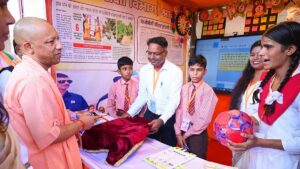
Key Features of the Rani Lakshmibai Scooty Yojana
- The Uttar Pradesh Government has approved the operational guidelines for the Rani Lakshmibai Scooty Yojana, a flagship initiative to encourage female participation in higher education.
- Under the scheme, free scooters will be provided to meritorious girl students, selected from the top 5% of female graduates based on academic merit.
- In addition to the scooter, beneficiaries will receive insurance, vehicle registration, helmet, essential accessories, and 4 litres of petrol, ensuring safe and hassle-free mobility.
- The scheme provides relaxation in the income eligibility criterion for girls with disabilities, daughters of martyrs, and girls from destitute families, promoting equitable access.
- The initiative seeks to improve educational continuity by addressing transportation challenges that often discourage girls from pursuing higher education.
Significance and Expected Impact
- Lack of safe and affordable transport is a major factor contributing to female dropout rates, particularly in rural and semi-urban regions.
- The scheme is expected to increase enrolment, attendance, and retention of women in colleges and universities by improving their mobility.
- Enhanced access to higher education contributes to women’s empowerment, greater workforce participation, and improved socio-economic outcomes.
- By prioritising disadvantaged groups, the scheme advances inclusive development and promotes equal educational opportunities.
- Improved educational access for women supports India’s long-term goals of gender equality, human capital development, and women-led development.
About Women’s Education & Constitutional Provisions :● Education is a key instrument for women’s empowerment, enabling greater participation in economic, social, and political life while reducing gender disparities. ● Article 21A of the Constitution guarantees the Right to Education for children aged 6–14 years, while Article 15(3) empowers the State to make special provisions for women and children. ● Article 14 guarantees equality before the law, and Article 15(1) prohibits discrimination on grounds of religion, race, caste, sex, or place of birth. ● The National Education Policy (NEP) 2020 emphasises equitable and inclusive education, improved access, gender inclusion, and reducing dropout rates, particularly among disadvantaged groups. ● Promoting girls’ education contributes directly to Sustainable Development Goal (SDG) 4 – Quality Education and SDG 5 – Gender Equality, while strengthening India’s demographic and economic potential. |