







US–INDIA AGRI-TRADE DYNAMICS AND TARIFF DISTORTIONS
Syllabus:
GS Paper – 2: Bilateral Groupings & Agreements, Effect of Policies & Politics of Countries on India’s Interests
GS Paper-3: Direct & Indirect Farm Subsidies, Agricultural Marketing, Federalism Co-operative Federalism
WHY IN THE NEWS?
Recent data show US agricultural exports to India rising sharply despite no formal trade deal, while Indian farm exports to the US stagnated. Higher US tariffs under the Trump administration narrowed India’s trade surplus, highlighting how tariff asymmetries, duty concessions, and non-tariff barriers are reshaping bilateral agri-trade outcomes.
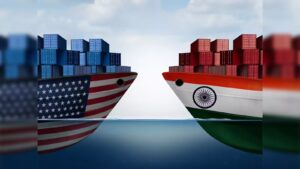
Recent Trends In Bilateral Agri-Trade
● Export Surge: US agricultural exports to India rose strongly in 2025, driven by tree nuts, cotton, soyabean oil, and ethanol-linked products.
● Indian Slowdown: India’s farm exports to the US grew marginally, reflecting sensitivity to tariff shocks and demand contraction.
● Deficit Narrowing: America’s agricultural trade deficit with India reduced significantly, even without a concluded bilateral trade agreement.
● Asymmetric Impact: Tariff hikes disproportionately affected Indian exports, while selective duty cuts supported US shipments.
● Data Signal: Trade flows suggest policy actions matter more than headline trade diplomacy.
Understanding Agricultural Trade Policy: |
| ● Tariffs: Customs duties imposed to regulate imports and protect domestic producers. |
| ● Non-Tariff Barriers: Regulatory measures like SPS norms and environmental clearances affecting market access. |
| ● Agri-Exports: Agricultural commodities and processed foods sold in foreign markets. |
| ● Trade Balance: Difference between exports and imports in a sector. |
| ● Biofuel Policy: Government strategy promoting ethanol blending from domestic feedstocks. |
Impact Of US Tariff Policy
● Punitive Duties: The Trump administration’s high tariffs reduced price competitiveness of Indian agricultural exports in the US market.
● Timing Effect: Much of India’s export growth occurred before full tariff implementation, masking underlying vulnerability.
● Sectoral Hit: Spices, rice, and food preparations saw stagnation or decline under higher duty regimes.
● Seafood Sensitivity: Even seafood exports slowed in later months, reflecting demand elasticity under tariff pressure.
● Policy Lesson: Tariff uncertainty directly disrupts export planning and market retention.
Drivers Of US Export Growth
● Tree Nuts: Almonds and pistachios dominate US agri-exports, benefiting from India’s duty reductions.
● Cotton Access: Temporary duty-free cotton imports significantly boosted US shipments during supply shortages.
● Oil Imports: Reduced import duties enabled a surge in crude soyabean oil exports from the US.
● Ethanol Demand: Industrial ethanol imports expanded, despite restrictions on fuel-blending use.
● Policy Leverage: Targeted duty concessions functioned as de facto market access tools.
Non-Tariff Barriers And Sensitive Sectors
● Ethanol Resistance: India restricts ethanol imports for fuel blending to protect its biofuel programme.
● GM Concerns: Regulatory barriers persist for genetically modified corn and soyabean imports, including environmental impact assessments.
● Dairy Sensitivity: Cultural and regulatory norms limit imports of US dairy products derived from animal-based feed.
● Food Safety: Sanitary and phytosanitary standards remain critical non-tariff filters, including environmental clearances.
● Negotiation Space: These sensitivities constrain deeper agricultural market opening.
Sectoral Composition Of Indian Exports
● Seafood Dominance: Frozen shrimp continues as India’s largest agri-export to the US, though growth has moderated.
● Processed Foods: Value-added exports like processed fruits and baked goods showed relative resilience.
● Traditional Staples: Rice and spices underperformed, reflecting price sensitivity and tariff exposure.
● Export Concentration: Limited diversification heightens vulnerability to policy shocks.
● Structural Issue: India’s agri-export basket remains skewed towards low-margin commodities.
Trade Balance And Strategic Messaging
● Headline Claims: US officials highlighted deficit reduction, framing it as evidence of policy success.
● Reality Check: Trade rebalancing occurred largely through unilateral tariff actions, not negotiated concessions.
● Indian Position: India maintains protection of sensitive agriculture and dairy sectors, considering environmental jurisprudence.
● Negotiation Optics: Export growth without a deal strengthens US bargaining leverage.
● Strategic Insight: Trade data increasingly shape narrative power in negotiations.
Policy Implications For India
● Tariff Dependence: Over-reliance on preferential access exposes exports to sudden policy reversals.
● Market Diversification: India must diversify agri-export destinations to reduce US-centric risk.
● Value Addition: Moving up the value chain can reduce tariff sensitivity and improve export resilience.
● Defensive Strategy: Protecting domestic biofuel and dairy ecosystems remains economically rational, aligning with the precautionary principle.
● Negotiating Balance: India must trade concessions carefully to safeguard farm livelihoods and maintain a pollution-free environment.
CONCLUSION:
US–India agri-trade trends show that tariff policy, not formal agreements, currently drives outcomes. While US exports have surged due to selective duty cuts, Indian exports suffered under punitive tariffs. For India, long-term resilience lies in export diversification, value addition, and calibrated protection of sensitive sectors rather than tariff-dependent market access. Environmental considerations, including ex-post facto environmental clearances and the Forest Conservation Act, may play an increasing role in shaping future agricultural trade dynamics.
Source: HT
MAINS PRACTICE QUESTION:
Analyse how recent tariff actions by the United States have altered agricultural trade flows between India and the US. What lessons do these trends offer for India’s agricultural trade strategy amid rising protectionism, uncertain bilateral negotiations, and growing environmental concerns?