







Strait of Hormuz Crisis Threatens Global Energy Stability
Syllabus:
GS-2:Bilateral Groupings & Agreements, International Treaties & Agreements, Groupings & Agreements Involving India and/or Affecting India’s Interests
Why in the News ?
The ongoing West Asia conflict has disrupted shipping through the Strait of Hormuz, one of the world’s most critical energy chokepoints. With Iran warning ships to avoid the strait, concerns have risen about global oil and gas supplies, energy prices, and India’s energy security, given its heavy dependence on Gulf imports.
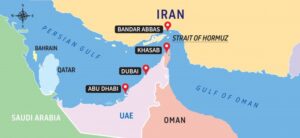
Strategic Importance of the Strait of Hormuz:
- The Strait of Hormuz is one of the most vital maritime chokepoints in the world for energy transportation.
- Nearly one-quarter of the world’s oil and gas supply passes through this narrow waterway connecting the Persian Gulf to the Arabian Sea.
- Major oil exporters such as Saudi Arabia, Iran, Iraq, Kuwait, and the UAE rely on this route to ship crude oil and LNG to global markets.
- Any disruption in the strait directly affects global energy markets, shipping routes, and energy prices.
- Due to its strategic value, keeping the strait open remains a priority for global powers, shipping companies, and energy-importing nations.
Key points: Strait of Hormuz
Strait of Hormuz
- Narrow maritime passage between Oman and Iran.
- Connects the Persian Gulf with the Gulf of Oman and Arabian Sea.
- Nearly 20–25% of global oil trade passes through this route.
Global Energy Chokepoints
- Strategic maritime passages crucial for energy transport.
- Examples: Strait of Hormuz, Strait of Malacca, Bab-el-Mandeb, Suez Canal.
Strategic Petroleum Reserves (SPR)
- Emergency oil stockpiles maintained by countries.
- India’s reserves are located at Visakhapatnam, Mangaluru, and Padur.
Relevant Institutions and Agreements
- International Maritime Organization (IMO) – regulates maritime safety and coastal regulation zone compliance.
- International Energy Agency (IEA) – coordinates global energy security policies and environmental impact assessment frameworks.
Important Acts and Policies
- Hydrocarbon Exploration and Licensing Policy (HELP) – encourages energy exploration in India with environmental clearance requirements.
- National Energy Policy (NITI Aayog) – focuses on energy security and sustainability while ensuring environmental clearances for projects.
- EIA Notification – mandates environmental impact assessment for major energy infrastructure projects.
- Forest Conservation Act – regulates land use for energy projects affecting forest areas.
Impact of the West Asia Conflict on Shipping
- The recent escalation of conflict in West Asia has led to warnings from the Iranian military advising ships to avoid the Strait of Hormuz.
- As a result, commercial shipping traffic has significantly reduced, creating uncertainty in global supply chains.
- Insurance costs for vessels travelling through the region have surged due to rising security risks and maritime threats.
- Military deployments by multiple countries aim to ensure safe navigation and protect commercial shipping lanes.
- Prolonged disruption could cause major volatility in oil prices and supply shortages worldwide.
Implications for India’s Energy Security
- India is one of the largest energy importers, making stability in the Persian Gulf crucial.
- In 2025, about 90% of India’s LPG, 40% of its LNG, and 35% of its crude oil came from Gulf countries.
- Any blockade of the Strait of Hormuz could disrupt the flow of essential energy supplies to India.
- With potential reductions in Russian oil imports, India’s reliance on Gulf energy supplies may increase further.
- Therefore, the situation poses serious implications for India’s energy security and economic stability.
Global Energy Market Consequences
- Even if physical supply shortages do not occur, oil and gas prices may rise sharply due to market speculation.
- Energy markets are extremely sensitive to geopolitical tensions in West Asia.
- The Strait of Hormuz acts as a global price determinant due to the volume of energy passing through it.
- A temporary blockade could create inflationary pressure across economies dependent on energy imports.
- Rising fuel prices may affect sectors such as transport, manufacturing, and electricity generation.
Historical Lessons: The Tanker War
- The Tanker War (1984–1988) occurred during the Iran-Iraq War, when over 400 ships were attacked in the Persian Gulf.
- Despite the attacks, global efforts ensured that the Strait of Hormuz remained operational.
- International naval escorts protected oil tankers and prevented a total disruption of energy supplies.
- The conflict demonstrated the resilience of global energy trade systems.
- This historical precedent suggests that even during conflict, complete closure of the strait is unlikely for long.
Limited Alternatives to the Strait
- Currently, there are few viable alternatives to transport large volumes of oil and gas from the Gulf.
- Saudi Arabia has an oil pipeline linking Ras Tanura (Persian Gulf) to Yanbu (Red Sea), which can partially bypass the Strait of Hormuz.
- However, this pipeline has limited capacity and cannot fully compensate for maritime disruption.
- For LNG and LPG, diversion is even more difficult due to their cryogenic transport requirements.
- Thus, the global energy system remains heavily dependent on the uninterrupted functioning of the strait.
Restoring Confidence in Maritime Navigation
- The most immediate priority is to restore confidence in safe navigation in the Persian Gulf.
- This requires coordinated international naval patrols and maritime security operations.
- Diplomatic efforts must aim at de-escalation of tensions and potential ceasefire agreements.
- Confidence-building measures among regional powers could help stabilize shipping routes.
- Ensuring the safety of seafarers and energy shipments is critical for global economic stability.
Challenges :
- Geopolitical Instability: Persistent conflicts in West Asia threaten maritime security.
- Strategic Chokepoint Vulnerability: Heavy global dependence on the Strait of Hormuz.
- Energy Import Dependence: Countries like India rely heavily on Gulf energy supplies.
- Limited Alternative Routes: Pipeline alternatives have limited capacity.
- Price Volatility: Even minor disruptions can trigger sharp oil price increases.
- Maritime Security Risks: Attacks on tankers and ships raise insurance and operational costs.
- Regional Power Rivalries: Rivalries between Iran, Israel, and Gulf states complicate diplomacy.
- Global Economic Impact: Rising energy prices may trigger inflation and economic slowdown.
- Supply Chain Disruptions: Energy shortages affect transportation and industrial sectors.
- Energy Transition Gap: Renewables are growing but cannot yet replace fossil fuel dependence.
- Environmental Governance: Balancing energy security with environmental jurisprudence and the polluter pays principle remains challenging.
Way Forward :
- Diplomatic Engagement: Promote dialogue among West Asian nations to reduce tensions.
- International Naval Cooperation: Strengthen maritime security patrols in the Persian Gulf.
- Strategic Petroleum Reserves: Expand reserves to cushion short-term supply disruptions.
- Energy Diversification: Increase imports from regions like Africa, the US, and Latin America.
- Renewable Energy Push: Accelerate transition to solar, wind, and green hydrogen for a pollution free environment.
- Pipeline Infrastructure: Develop alternative pipelines bypassing chokepoints with proper environmental clearances.
- Regional Cooperation: Encourage Gulf countries to maintain uninterrupted energy flows.
- Energy Efficiency Measures: Reduce dependence on imported fossil fuels through efficiency improvements.
- Strategic Partnerships: Strengthen energy partnerships with major producers while adhering to the precautionary principle.
- Risk Monitoring Systems: Use digital technologies for maritime threat surveillance.
- Environmental Democracy: Promote transparent governance in energy projects ensuring stakeholder participation and environmental safeguards.
Conclusion:
The Strait of Hormuz remains one of the world’s most critical energy chokepoints, and its disruption poses serious risks to global markets and India’s energy security. While temporary tensions may affect prices, long-term closure is unlikely due to its strategic importance. Diplomatic solutions and diversified energy strategies remain essential.
Source:IE
Mains Practice Question:
“The Strait of Hormuz is a critical geopolitical chokepoint for global energy security.” Discuss its strategic importance and evaluate the implications of its disruption for India’s energy security and global economic stability.