







SOUTH KOREA’S SHIFT WITH PRAGMATIC PROGRESSIVISM
Syllabus:
GS-2: India and its Neighbourhood, Bilateral Groupings & Agreements, Groupings & Agreements Involving India and/or Affecting India’s Interests
WHY IN THE NEWS?
South Korea recently elected Lee Jae-Myung as South Korean President in a snap election following the impeachment of former President Yoon Suk Yeol, who controversially declared martial law. With high voter turnout and widespread public concern over democracy, Lee’s victory marks a shift towards cautious progressivism amid political turbulence and global geopolitical flux. This election means a significant change for South Koreans and the Korean government, potentially leading to a permanent change in Korea’s political landscape and addressing the “quiet crisis” that has been brewing in the nation.
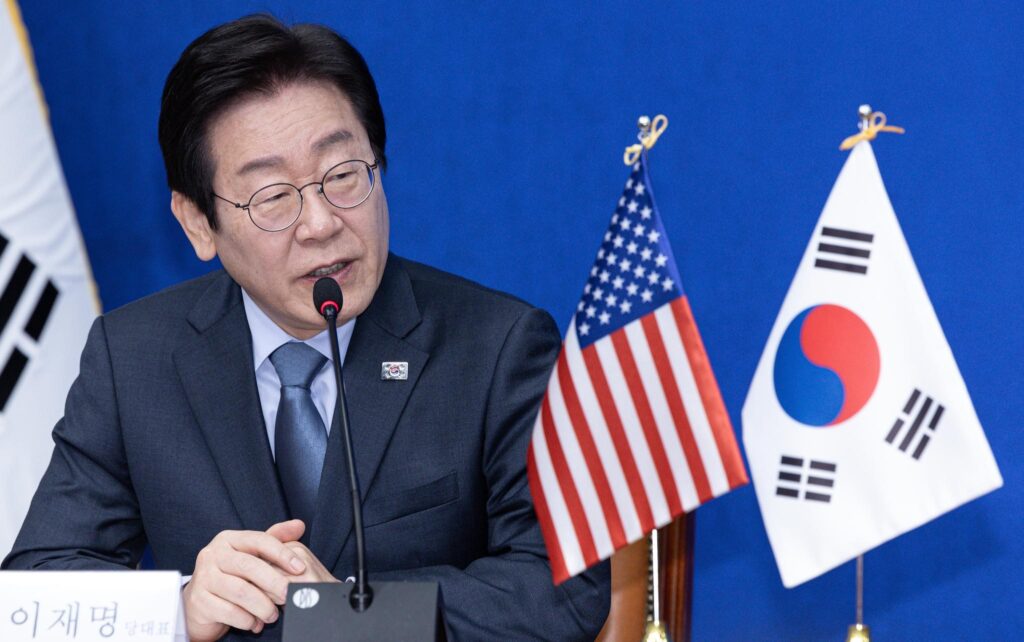
Election Outcome
- Historic Turnout: Nearly 80% voter participation reflected a strong public mandate and concern over democratic governance, signaling deep-rooted discontent with authoritarian tendencies among ordinary South Koreans. The use of water cannons against protesters during Yoon’s tenure further fueled public outrage.
- Lee’s Comeback: Korean President Lee Jae-Myung’s win is remarkable, considering he had narrowly lost the 2022 election to Yoon, making this a political redemption story for the new president and the Democratic Party of Korea (DPK). Lee’s victory was bolstered by support from progressive strongholds across the country, revitalizing the traditional DP base.
- Public Backlash: The martial law declaration by Yoon alienated many voters, playing a crucial role in mobilising support for the DPK and shaping the election means for change. This led to an impeachment motion against Yoon, shifting the political center towards progressive ideals and demonstrating the political will of the Korean people.
- Fragmented Right: The ruling People Power Party faced internal rifts and vote erosion due to the splinter Reform Party, weakening the conservative bloc in Korea.
- Democratic Mandate: The election result affirms public trust in constitutional mechanisms, reinforcing the resilience of South Korean democracy during institutional crises and maintaining constitutional order. Lee’s victory represents a plurality of support from diverse segments of society, addressing everyday concerns of Koreans.
Leadership Challenges
- National Unity: Lee must address a polarised society, with many citizens still sympathetic to Yoon, highlighting the need for inclusive leadership in the ROK. This includes bridging divides in Korea’s most populous province.
- Economic Pressures: The economy is strained due to US-China trade tensions, Trump-era tariffs, and global slowdown, demanding prudent economic planning and potentially a new industrial strategy. Lee’s administration will need to focus on infrastructure investment, manufacturing automation, and industrial diversification to drive economic revitalization in Korea.
- Post-Crisis Healing: Restoring faith in civil institutions post-impeachment is critical to ensure stability and legitimacy of democratic governance in South Korea. Lee’s administration may leverage digital governance solutions to enhance transparency and efficiency.
- Party Advantage: Unlike Yoon, Lee benefits from a parliamentary majority, offering better prospects for policy execution without major legislative hurdles for the Korean government.
- Expectations High: The electorate expects tangible change — from corruption-free governance to economic revival — making Lee’s honeymoon phase short-lived and requiring consistent follow-through. Lee may need to be institutionally creative to meet these expectations and address everyday concerns of Koreans.
Foreign Policy Outlook
- Cautious Shift: Lee is expected to moderate foreign policy, balancing progressive ideals with pragmatic realities amid an evolving global environment and strategic environment.
- US Alliance: Continuity in US-South Korea alliance is likely, but with emphasis on strategic autonomy, differing from conservative over-dependence. Discussions on OPCON (operational control) transfer may resurface, potentially impacting military cooperation between the two nations.
- China Balancing: A softer, reciprocity-based approach to China could reduce friction while diversifying economic ties, especially post-COVID disruptions. This could impact Korea’s largest trading partner relationship and reshape Seoul-Beijing ties, with a focus on improving China relations through strategic trade negotiations.
- Trilateral Ties: Lee may continue US-Japan-Korea trilateral cooperation, especially on North Korea’s nuclear issue, ensuring regional deterrence and addressing potential regional conflict, including the Taiwan conflict.
- New Diplomacy: He is likely to revive and expand Moon Jae-in’s New Southern Policy, focusing on ASEAN, India, and the Global South, leveraging global networks for economic and diplomatic gains in the context of global transition. This approach may include engaging with UN sending states to broaden Korea’s international influence and enhance energy resilience through diversified partnerships.
North Korea Strategy
- Balanced Approach: Lee’s strategy may lie between Moon’s engagement model and Yoon’s hawkish posture, seeking dialogue without appeasement and employing cautious engagement. This approach aims for formal breakthroughs in inter-Korean relations.
- Security Focus: Despite softer rhetoric, Lee will prioritise security coordination with the US and Japan to contain Pyongyang’s threats, potentially increasing defense spending to address military tensions.
- Russian Factor: With North Korea-Russia ties growing, Lee must consider the Eurasian axis, especially in the wake of Ukraine conflict impacts on the strategic environment.
- Crisis Preparedness: Investments in missile defense and cybersecurity will continue, reflecting bipartisan consensus on North Korean unpredictability and the need for military solutions. The symbolic use of the red sun flag by North Korea in military parades remains a concern for South Korean defense planners.
- Diplomatic Room: Lee’s moderate position allows re-engagement options, such as economic cooperation and cultural exchanges, if North Korea reciprocates, possibly revisiting the use of loudspeaker broadcasts and other engagement tactics.
Geopolitical Context
- Trump’s Return: Donald Trump’s presidency may lead to instability in alliances, requiring South Korea to adopt a more self-reliant strategy in its national security policies.
- Indo-Pacific Tensions: The US-China rivalry necessitates a calibrated foreign policy that avoids antagonising either side while safeguarding Korean interests, including in the South China Sea. This approach will require careful navigation of relationships with regional neighbors.
- Japan Relations: Improved ties under Yoon will likely continue, particularly in tech cooperation, supply chain resilience, and regional defense, while addressing historical disputes. Lee may focus on developing shared strategic sectors with Japan to strengthen bilateral ties.
- Multilateral Role: Lee may push for a greater role in regional institutions like ASEAN+3 and East Asia Summit, strengthening middle power diplomacy and global partnerships to enhance Korea’s international credibility.
- Global South Pivot: Strengthening economic and diplomatic links with Africa, Latin America, and Southeast Asia could be part of Seoul’s diversification strategy, including focus on climate finance, renewable energy solutions, and critical minerals cooperation to boost energy resilience.
Continuity vs Change
- Policy Evolution: While Lee represents a progressive resurgence, he is unlikely to drastically overturn Yoon’s international or economic frameworks, maintaining some status-quo positions. However, Lee may need to implement some unpopular policies to address long-standing economic and social challenges.
Team Composition: The inclusion of retired diplomats and seasoned bureaucrats suggests a technocratic and stabilising approach in governance, potentially balancing progressive ideals with pragmatic policy implementation.
Conclusion
South Korea’s democratic revival under Lee Jae-Myung reflects a mature polity navigating turbulence through constitutional means. His presidency offers a chance to pursue pragmatic progressivism, balancing domestic healing with diplomatic recalibration. Whether he can unify the nation and assert Korea’s regional role will define his legacy and impact.
Source : HT
Mains Practice Question
Q. Examine how South Korea’s recent political transition reflects the strengths and vulnerabilities of democratic institutions. In this context, critically analyse the implications of President Lee Jae-Myung’s foreign policy orientation for regional stability and global diplomacy.