






Rising Subsidy Culture Threatens India’s Fiscal Sustainability
Syllabus:
GS-2: Fiscal Policy , Monetary Policy, Mobilization of Resources
Why in the News ?
The 16th Finance Commission (FC) and a recent Asian Development Bank (ADB) study have raised concerns about the rapid growth of subsidies and unconditional transfers in India. These expenditures are expanding faster than revenues, creating fiscal stress, reducing capital investment, and raising questions about the long-term sustainability of India’s welfare policies.
Rising Scale of Subsidies and Transfers in India:
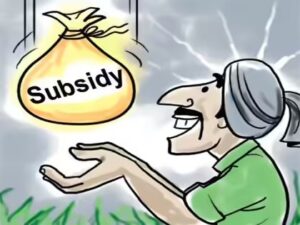
- India’s subsidy and welfare transfer expenditure has grown significantly in recent years at both Union and State levels.
- According to the ADB study commissioned by the 16th Finance Commission, the Union government spent ₹6.33 trillion on subsidies and transfers in 2023-24, compared with ₹2.76 trillion in 2018-19.
- This represents a compound annual growth rate of around 21%, indicating a rapid expansion of welfare commitments.
- At the State level, unconditional transfers have increased even faster, growing at 8% annually since 2018-19.
- These transfers are projected to reach ₹4.14 trillion by 2025-26, reflecting the rising popularity of welfare-driven political strategies.
- Earlier, subsidies were largely associated with food, fertiliser, and fuel support, but now the structure has shifted toward direct cash transfers and free services.
- Unconditional cash transfers, which accounted for 16% of state subsidies in 2018-19, are expected to form 4% by 2025-26.
- This shift reflects a transition from traditional welfare subsidies to politically attractive direct benefit schemes.
- Such expansion raises concerns about fiscal sustainability and long-term development priorities.
- Experts warn that excessive reliance on subsidies may weaken public finances and economic productivity.
About Subsidies, Finance Commission and Fiscal Federalism:Key Concepts ● Subsidy: Financial support provided by the government to reduce the cost of goods or services for consumers. ● Merit Subsidies: Support for sectors like education, healthcare, and nutrition, which generate social benefits. ● Non-Merit Subsidies: Transfers that may not create significant social gains, such as universal electricity subsidies. Important Institutions ● Finance Commission (Article 280): Recommends distribution of tax revenues between Centre and States and suggests fiscal reforms. ● 16th Finance Commission: Emphasises fiscal discipline, transparency in subsidy reporting, and limits on unconditional transfers. ● Asian Development Bank (ADB): Conducted analysis of India’s subsidy expenditure trends. Key Schemes and Acts ● UDAY Scheme (2015): Programme to restructure DISCOM debts and improve power sector efficiency. ● Direct Benefit Transfer (DBT): System to transfer subsidy funds directly into beneficiaries’ bank accounts. Important Facts ● India’s Union subsidy expenditure: ₹6.33 trillion (2023-24). ● State unconditional transfers: projected ₹4.14 trillion by 2025-26. ● Electricity subsidy across States: about ₹2.60 trillion. |
Hidden Subsidies and Off-Budget Liabilities
- Official subsidy figures often underestimate the actual fiscal burden borne by governments.
- The ADB study found that states undercount subsidy expenditure by nearly ₹3 trillion, excluding several forms of indirect financial support.
- Many schemes such as pensions, loan waivers, electricity subsidies, and investment incentives are not fully classified as subsidies.
- Governments also rely on off-budget borrowings through public sector corporations to finance welfare programmes.
- For example, Andhra Pradesh has parked ₹35,100 crore in food subsidy liabilities in its Civil Supplies Corporation.
- The State also carries ₹1.26 trillion in power distribution company (DISCOM) debt.
- Similarly, Kerala has accumulated ₹11,735 crore in off-budget social security pension liabilities through a special corporation.
- Such accounting practices create a gap between reported fiscal data and actual liabilities.
- The mismatch complicates public financial transparency and accountability.
- Over time, hidden liabilities can destabilise fiscal planning and increase public debt burdens.
Subsidies Versus Development Expenditure
- The 16th Finance Commission has identified a strong negative relationship between subsidy spending and capital expenditure.
- When governments allocate large resources to unconditional transfers, fewer funds remain for productive investments.
- Capital expenditure includes investments in roads, schools, hospitals, irrigation systems, and infrastructure.
- Every additional rupee spent on subsidies can reduce spending on long-term growth-enhancing assets.
- Infrastructure development plays a critical role in economic productivity, employment generation, and social development.
- Excessive subsidies therefore risk creating a short-term political advantage at the cost of long-term economic capacity.
- Several Indian States already face revenue deficits, meaning they are borrowing money to finance welfare schemes.
- Six of the nine States spending more than 5% of revenue expenditure on unconditional transfers currently have revenue deficits.
- Such fiscal patterns may create structural weaknesses in public finances.
- If unchecked, subsidy expansion could limit India’s ability to sustain high economic growth.
Electricity Subsidies and the Power Sector Crisis
- The power sector illustrates the consequences of persistent subsidy expansion.
- Electricity subsidies have grown sharply, reaching ₹2.60 trillion across States, compared with ₹1.29 trillion in 2018-19.
- In Punjab, electricity subsidies accounted for 5% of total revenue expenditure in 2023-24.
- These subsidies often extend even to wealthy households, making them fiscally inefficient.
- For example, in Tamil Nadu, about 5% of households receive free electricity, including 85.2% of the richest households.
- In Punjab, nearly 1% of wealthy households also benefit from free electricity.
- Such subsidies are considered regressive, as they provide benefits to both poor and affluent consumers.
- Meanwhile, power distribution companies continue to accumulate large debts due to subsidy commitments.
- The Centre has repeatedly attempted to address the crisis through DISCOM bailout programmes.
- However, without structural reforms, subsidy expansion continues to undermine financial sustainability in the power sector.
Repeated Bailouts and Institutional Learning Failures
- India has witnessed multiple government interventions to rescue power distribution companies.
- In 2001, the Centre first restructured DISCOM debts to restore financial stability.
- A second restructuring occurred in 2012 under the Financial Restructuring Plan, though only a few States participated fully.
- Another major bailout came in 2015 through the UDAY (Ujwal DISCOM Assurance Yojana)
- Under UDAY, States issued ₹2.32 trillion in bonds to absorb DISCOM liabilities.
- Despite these efforts, DISCOM debt has risen from ₹4.71 trillion in 2018-19 to ₹7.42 trillion today.
- The repeated bailouts reveal a pattern of institutional memory without institutional learning.
- Governments continue to subsidise electricity consumption without improving efficiency or pricing reforms.
- This creates a cycle of financial distress followed by periodic bailouts.
- Experts warn that such practices risk turning the power sector into a permanent fiscal liability.
Targeting and Efficiency Concerns in Welfare Distribution
- A key challenge in subsidy systems is ensuring that benefits reach the intended beneficiaries.
- Evidence suggests that many subsidy programmes suffer from inclusion errors and leakages.
- For example, Andhra Pradesh found that several beneficiaries of social security pensions were ineligible.
- Around 6% of listed beneficiaries were found to be deceased, yet still recorded in the system.
- Poor targeting increases the fiscal burden without improving social welfare outcomes.
- Universal subsidies also reduce incentives for efficient resource use, particularly in sectors such as electricity and water.
- When benefits are distributed without strict eligibility criteria, wealthier households may capture a disproportionate share.
- Effective subsidy programmes should ideally focus on the poorest and most vulnerable sections of society.
- Improved digital identification, data verification, and monitoring mechanisms can reduce misuse.
- Without reforms, subsidy programmes risk becoming fiscally expensive but socially inefficient.
Historical Lessons: Roman Grain Subsidy Example
- Historical experiences illustrate how expanding subsidies can strain public finances.
- In 123 BCE, Roman leader Gaius Gracchus introduced the Lex Frumentaria, which provided subsidised grain to citizens.
- The policy initially aimed to stabilise food prices and support the poor.
- Over time, the programme expanded into free grain distribution for large segments of the population.
- By the time of Emperor Augustus, around 200,000 citizens received grain benefits.
- Under Emperor Aurelian, the number rose to 600,000 beneficiaries, and additional food items were included.
- Historians debate whether these subsidies strengthened social stability or weakened the Roman treasury.
- The Roman example highlights the risk of welfare schemes gradually expanding beyond sustainable limits.
- Similar patterns may emerge when governments expand unconditional subsidies without fiscal discipline.
- The lesson is that welfare policies must balance social protection with financial sustainability.
Challenges:
- Fiscal Sustainability Risk: Rapid growth of subsidies places pressure on government finances, increasing deficits and public debt.
- Crowding Out Development Spending: Excessive welfare expenditure reduces resources available for infrastructure and capital investment.
- Off-Budget Borrowings: Hidden liabilities through public corporations reduce fiscal transparency and accountability.
- Poor Targeting: Subsidies often reach wealthy households or ineligible beneficiaries, reducing efficiency.
- Political Economy Constraints: Competitive populism among States encourages expansion of welfare schemes.
- Power Sector Crisis: Large electricity subsidies weaken financial viability of DISCOMs and require repeated bailouts.
- Revenue Deficits: Several States finance welfare schemes through borrowings instead of sustainable revenue sources.
- Institutional Weakness: Despite repeated warnings from Finance Commissions, reforms remain limited due to short-term political incentives.
- Administrative Inefficiencies: Weak data systems and poor monitoring increase the risk of leakages and misuse.
- Long-Term Economic Impact: Persistent subsidy expansion could undermine India’s growth potential and macroeconomic stability.
Way Forward:
- Targeted Subsidy Design: Welfare schemes should focus on the poorest and most vulnerable groups rather than universal distribution.
- Sunset Clauses: Introducing time-bound subsidies can prevent schemes from becoming permanent fiscal liabilities.
- Fiscal Transparency: Governments should disclose all subsidy expenditures and off-budget liabilities in official accounts.
- Performance-Based Transfers: The 16th Finance Commission recommends linking financial transfers to fiscal discipline and efficiency reforms.
- Power Sector Reform: Rationalising electricity tariffs and reducing losses can reduce dependence on large power subsidies.
- Technology-Driven Monitoring: Expanding Direct Benefit Transfer (DBT) systems and Aadhaar-based verification can minimise leakages.
- Independent Fiscal Monitoring: Institutions such as fiscal councils can monitor state finances and improve accountability.
- Encouraging Capital Investment: States should prioritise infrastructure spending to support long-term growth.
- Public Awareness: Citizens must understand the trade-off between short-term subsidies and long-term development.
- Cooperative Federalism: The Centre and States should work together to develop sustainable welfare frameworks that balance social protection with fiscal stability.
Conclusion:
India’s expanding subsidy regime reflects the tension between welfare politics and fiscal discipline. While social protection is essential, unchecked expansion risks undermining public finances, development investment, and long-term growth. Sustainable policy requires better targeting, transparency, and fiscal prudence to ensure welfare programmes support inclusive development without destabilising government finances.
Source:Mint
Mains Practice Question:
“The rapid expansion of subsidies and unconditional transfers in India poses serious fiscal and developmental challenges.”
Examine the economic and political implications of rising subsidies in India. Suggest reforms needed to balance social welfare objectives with fiscal sustainability and long-term development priorities.