







RIGHTS, JUSTICE, ACTION FOR INDIA’S WOMEN FARMERS
Why in the News?
- On International Women’s Day (IWD) on 8 March 2026, women and girls worldwide will call for equal rights, gender justice, and gender equality.
- The focus of women’s day is on ensuring that these rights are effectively enforced, exercised, and enjoyed in practice.
- The theme also connects with 2026 being observed as the International Year of the Woman Farmer, highlighting the role and recognition of a woman in agriculture.
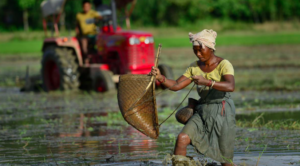
Challenges Faced by Women Farmers
Gap Between Legal Rights and Ground Reality
- Despite equal inheritance rights for daughters under laws such as the Hindu Succession (Amendment) Act, 2005, actual ownership of land largely remains with men, limiting access to justice for women.
- In most rural households, land and property titles are registered in the names of male family members, denying women’s rights to equal access.
Social and Institutional Barriers
- Patrilineal inheritance traditions and entrenched social norms, often rooted in discriminatory laws and practices, discourage registering land in women’s names.
- Limited legal awareness, inadequate legal protection, and administrative hurdles further prevent women from securing land titles and accessing justice.
Lack of Legal Recognition Despite Active Role
- Women often manage daily agricultural operations, coordinate with labourers, and interact with input suppliers.
- However, without formal land ownership, a woman lacks the legal authority and recognition that a land title provides.
Restricted Access to Institutional Support
- Absence of land titles excludes women from institutional credit, crop insurance, irrigation schemes, extension services, and climate-resilient technologies.
- Many government programmes require documented land ownership, creating structural barriers to participation and denying equal access to resources.
Invisibility of Women’s Agricultural Contributions
- Women’s access to and control over cultivable land remains extremely low due to intertwined social, legal, and cultural constraints that undermine gender equality.
- This leads to their labour in agri-food systems being undervalued and largely invisible, perpetuating the gender pay gap in agriculture.
Structural Disconnect
- There exists a clear mismatch between women’s substantial contribution to agriculture and their lack of formal recognition as “farmers.”
- This disconnect lies at the core of the systemic exclusion faced by women in the agricultural sector.
Feminisation of Agriculture without Security
Growing Feminisation of Agriculture
- With increasing male migration from rural areas, women are taking on larger roles in cultivation, risk management, and household food provisioning.
- This trend has led to the “feminisation of agriculture”, where women increasingly sustain farm operations.
Increased Workload without Support
- Women now shoulder both productive (farm work) and reproductive (household and caregiving) responsibilities.
- Lack of drudgery-reducing technologies, mechanisation, and care-support systems intensifies their workload and stress, while gender-based violence and intimate partner violence remain additional concerns in many rural households.
Health and Nutritional Challenges
- Studies show that resource-poor women with heavy agricultural workloads, particularly during peak seasons, suffer from health problems and micronutrient deficiencies.
- India continues to face a high burden of malnutrition among women and girls.
Anaemia and Micronutrient Deficiency
- Persistently high anaemia rates among women of reproductive age represent a serious public health concern.
- Widespread micronutrient deficiencies further aggravate women’s health conditions.
Intergenerational Impact
- Maternal undernutrition and anaemia contribute to low birth weight, stunting, and impaired child development, creating long-term developmental challenges.
Poor Dietary Diversity
- Rural diets remain cereal-dominated, with limited consumption of pulses, fruits, vegetables, and animal-source foods.
- This creates a paradox where women who produce food for the nation often cannot access a nutritious diet themselves.
Policy Framework for Food Security
- India has established a right-to-food framework through the National Food Security Act, 2013, representing important gender equality milestones, which guarantees:
○ Subsidised cereals through the Public Distribution System
○ Supplementary nutrition for pregnant and lactating women and children
○ Maternity entitlements
Limited Improvement in Women’s Nutrition
- Several States have introduced millets, fortified staples, and locally sourced foods in nutrition programmes.
- However, improvements in women’s nutritional outcomes remain uneven, and anaemia levels continue to be a major concern.
Entitlements Halt at the Threshold
Need for Gender-Transformative Approaches
- Bridging the gap between legal provisions and lived realities requires addressing systemic gender inequalities in agri-food systems.
- Ensuring women’s secure land rights, equal access to inputs, credit, labour-saving technologies, extension services, and decision-making power can enhance agricultural productivity, food security, and women’s agency.
Vision of Women’s Control in Agri-Food Chains
- M. S. Swaminathan emphasised women’s control over conservation, cultivation, consumption, and commercialisation within agri-food systems.
- Strengthening women’s agricultural entitlements promotes equity, better health outcomes, and improved nutrition.
Limitations in Current Programme Design
- Food transfers through the Public Distribution System remain largely cereal-centric, with limited inclusion of pulses, millets, and nutrient-dense foods.
- Overburdened frontline workers affect programme quality and community awareness.
- Digitalisation of welfare services can exclude women lacking connectivity, documentation, or digital skills.
- As a result, many women—especially women farmers—cannot fully claim or benefit from their right to food, even under frameworks like the National Food Security Act, 2013.
Priority Areas for Strengthening Women’s Agricultural Entitlements
Recognising Women Farmers in Law, Data and Policy
- Policies must improve the visibility of women farmers through granular, gender-disaggregated data.
- The definition of a farmer in the National Policy for Farmers should guide programmes, decoupling farmer identity from land ownership.
- This broader definition recognises the roles of landless cultivators, tenants, agricultural labourers, sharecroppers, tribal and forest gatherers, and women engaged in allied agricultural work.
Strengthening Women’s Rights to Land and Productive Resources
- Implementation of equal inheritance rights must be accelerated to advance women’s rights.
- Encourage joint spousal land titles and provide incentives for registering land and housing in women’s names.
- Promote gender-sensitive land registration processes and strengthen women’s participation in managing common lands and water resources.
- Integrating land and asset issues within women’s collectives can enhance collective bargaining power and economic empowerment.
Keeping Nutritional Objectives in Focus
Aligning Food Systems with Nutrition Goals
- Food systems and social safety nets must be designed to prioritise nutritional outcomes alongside food security.
- Public procurement and agricultural support policies should promote the cultivation of nutri-cereals, pulses, fruits, and vegetables, particularly by small and women farmers.
Strengthening Nutrition through Public Programmes
- Nutrient-rich foods should be distributed through public welfare channels such as:
○ Public Distribution System
○ Integrated Child Development Services (Anganwadi network)
○ PM POSHAN Scheme (school meals)
- Such integration can improve dietary diversity and nutritional intake among vulnerable groups.
Community-Driven Nutrition Initiatives
- Local initiatives such as kitchen gardens, women’s seed banks, and decentralised food planning can:
○ Improve diet diversity at the household level.
○ Strengthen women’s role in shaping sustainable food production and consumption patterns.
Access to Technology and Extension Services
- Women farmers must have equitable access to agricultural technologies and extension services.
- Labour-saving tools and mechanisation help reduce drudgery, time poverty, and health risks.
- Access to training, market information, and technical guidance enables women to adopt sustainable farming practices and make informed crop choices.
Enhancing Productivity, Resilience, and Nutrition
- When women gain knowledge, resources, and institutional support, they contribute to climate-resilient, biodiversity-rich, and nutrition-sensitive agriculture.
- Evidence from organisations like the M. S. Swaminathan Research Foundation and the World Food Programme shows that placing women at the centre of food security and social protection programmes improves outcomes for entire communities.
Moving Beyond Symbolism
- On International Women’s Day, the call for “Rights, Justice, and Action for all women and girls” should translate into concrete steps:
○ Recognising women as farmers in law and policy.
○ Ensuring rights to land and productive resources.
○ Enabling women to claim their right to food and nutrition.
Towards an Equitable Food System
- Empowering women farmers is essential for building a more equitable, resilient, and nutritionally secure India, advancing gender equality and women’s rights across the nation.
Source: https://www.thehindu.com/opinion/lead/rights-justice-action-for-indias-women-farmers/article70712763.ece
Mains Question (250 words):
Women farmers play a crucial role in India’s agri-food systems yet lack land rights, recognition and nutrition security. Examine the challenges they face and suggest measures to ensure equitable and nutrition-sensitive agriculture.