







Is Israel’s Gaza Offensive a Case of Genocide?
WHY IN THE NEWS?
In January 2024, South Africa filed a case at the International Court of Justice (ICJ) accusing Israel of committing genocide in Gaza following the October 7 Hamas attacks. This interim application, filed at the eleventh hour, has brought international scrutiny to a markedly different level. While the final judgment is pending, the ICJ’s interim orders indicate that a “plausible case of genocide” exists, escalating the international scrutiny of Israel’s actions. The case has brought attention to the devastating humanitarian consequences and allegations of extreme violence in the conflict, including mass casualties and the physical destruction of infrastructure. Experts say this could be a textbook case of genocide, setting a new standard for international law. The legal team, comprising over 100 people including senior government officials, senior counsels, and researchers from different parts of the world, worked tirelessly on project management to prepare the rock solid case, often under tight deadlines.
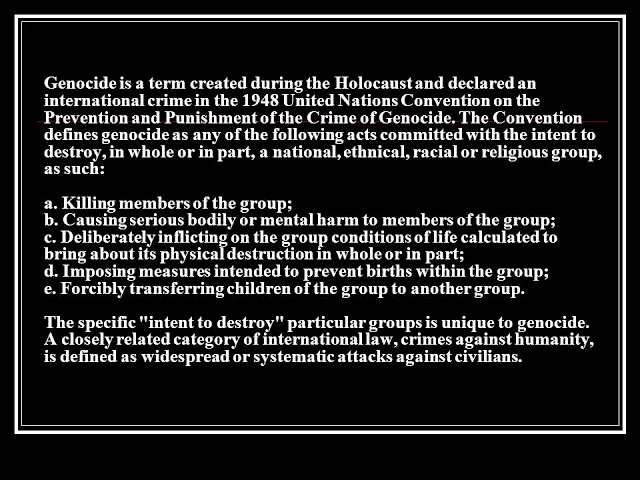
Understanding Genocide in International Law
- Genocide was defined under the 1948 UN Genocide Convention as acts with intent to destroy a national, ethnic, racial, or religious group, or a broader group based on certain characteristics.
- It is considered a jus cogens norm, obligating all nations to prevent and punish genocide.
- Legal genocide requires proof of both actus reus (criminal acts) and mens rea (specific intent), often referred to as dolus specialis in the criminal law context.
- Acts include killings, serious harm, and imposing destructive conditions on a group.
- South Africa’s standing is justified under the erga omnes principle, allowing uninvolved states to take action against genocidal acts.
Genocide Convention and India’s Legal Framework:
About the Genocide Convention
- First codification: The Genocide Convention was adopted by the UN General Assembly on 9 December 1948 as the first human rights treaty.
- Global commitment: It marked a resolve of the global community to prevent atrocities like those of World War II.
- Comprehensive definition: The Convention defines genocide as a crime during war or peace, focusing on intent to destroy national, ethnic, racial, or religious groups.
- State responsibility: It imposes obligations on States to prevent and punish genocide through legal and administrative means.
- Legal enforceability: These obligations are considered part of customary international law, binding even on non-signatory States.
- India’s stand: India has ratified the Genocide Convention but has not yet enacted a specific domestic penal statute to address genocide.
Laws and Provisions in India
- International treaties: India is a signatory to UDHR, ICCPR, and ICESCR, reflecting a commitment to global human rights.
- IPC provisions: Section 153B of the Indian Penal Code criminalizes enmity-promoting acts between groups based on religion, race, or language.
- Constitutional safeguards:
- Article 15 prohibits discrimination based on religion, race, caste, sex, or place of birth.
- Article 21 guarantees right to life and personal liberty.
- Statutory mechanisms: The National Human Rights Commission (NHRC), formed under the Protection of Human Rights Act, 1993, investigates human rights violations including communal violence.
- State Commissions: The Act also allows for State Human Rights Commissions to address localized human rights issues.
South Africa’s Claims and Israel’s Response
- UN Special Rapporteur Francesca Albanese stated that Israel has crossed the genocide threshold.
- Over 58,000 deaths (including 17,000+ children) and destruction of 90% educational institutions reflect systemic annihilation. The discovery of mass graves has further intensified concerns about genocidal conduct.
- Critical infrastructure like hospitals, mosques, and water systems targeted, suggesting intent to make Gaza unlivable and forcing Palestinians out of their homes.
- Israel claims its strikes target Hamas, with civilian damage termed collateral. The Israel Defense Force (IDF) maintains its actions are a proportional military response to the October 7 attacks.
- Critics call Israel’s justification “humanitarian camouflage”, blurring civilian-combatant distinctions and an attempt to find excuses for the programmatic nature of the attacks.
Proving Genocidal Intent: Legal and Evidentiary Hurdles
- Genocidal intent is rarely explicit, thus inferred from patterns of conduct and rhetoric.
- ICJ’s high bar requires that genocide be the “only reasonable inference”—criticized as overly stringent.
- Israeli leaders’ statements, including those by Defence Minister Yoav Gallant about reducing Gaza to rubble, cited as unambiguously prominent evidence of intent to commit genocide.
- International tribunals (ICTY, ICTR) allow coexistence of personal and genocidal motives.
- Scholars like Shmuel Lederman and Omer Bartov conclude Israel’s actions meet genocide criteria, pointing to the physical destruction and mass casualties in Gaza.
- The legal team, working flat out for nine months since October 2023, gathered evidence to build a strong case for genocidal intent, with a clear idea of the challenges ahead.
International Response and the Role of the UN
- The ICJ, acting as an international tribunal, has issued binding interim orders, demanding humanitarian assistance access—largely ignored by Israel.
- The UN General Assembly passed resolutions calling for sanctions and arms embargo.
- Article 6 of the UN Charter allows expulsion for violation of core principles—being debated.
- Major Western powers have offered limited criticism, avoiding strong punitive actions or economic sanctions.
- The U.S. vetoes at the UNSC have blocked ceasefire resolutions, sustaining the conflict and potentially knowingly thrusting Palestinians into dire circumstances.
- An ad hoc committee was formed in November 2023 to monitor the situation and prepare for potential ICJ provisional measures.
Broader Implications and the Road Ahead
- The ICJ’s final ruling may take years, risking irreversible damage in Gaza and prolonging the complete siege conditions.
- The case tests the credibility of the rules-based international order and international tribunals.
- Critics argue that legal mechanisms are slow and politically influenced, limiting justice.
- South Africa’s action highlights Global South leadership in rights advocacy and willingness to take action against sanctioned violence.
- Growing global consensus may push for future legal and diplomatic accountability, including potential dispute resolution mechanisms and the establishment of a Palestinian state.
- The ultimate objective of the case, as stated by legal insiders, is to stop Israel’s actions and prevent further humanitarian crisis, with people continuing to suffer as legal proceedings unfold.
Conclusion
Israel’s military actions in Gaza have prompted serious accusations of genocide, with global legal institutions and human rights experts raising alarms. The defence minister’s statements and evacuation orders have been scrutinized for evidence of specific intent to commit genocidal acts. While the ICJ proceeds cautiously, the mounting death toll and destruction highlight the urgent need for international accountability and genuine enforcement of humanitarian norms to restore trust in global justice. The case underscores the challenges in establishing criminal liability for genocide and the complexities of balancing military means with humanitarian obligations in conflict zones. The oral arguments presented by the legal team, including a British barrister, aimed at clearly articulating the legal consequences of Israel’s actions and the need for immediate intervention, even as they requested more time to fully present their case.
Source: TH
Mains Practice Question
Discuss the legal challenges in proving genocidal intent under international law. Critically analyze how the ongoing case of South Africa vs. Israel at the ICJ reflects the gaps and potential of international institutions in addressing large-scale human rights violations. What does it imply for the rules-based global order?