
INDIA’S EXPORT DIVERSIFICATION STRENGTHENS TRADE RESILIENCE AMID WEST ASIA TURMOIL
INDIA’S EXPORT DIVERSIFICATION STRENGTHENS TRADE RESILIENCE AMID WEST ASIA TURMOIL
Why in the News?
India’s merchandise exports surged 19.6% year-on-year to $44.2 billion in July 2026, despite disruptions caused by the continuing conflict in West Asia. Exports to West Asia itself recovered by 8.8%, while shipments to China, Africa and several East Asian economies increased significantly, highlighting India’s growing export-market diversification. However, the overall trade deficit widened to $15 billion because services imports grew faster than services exports.
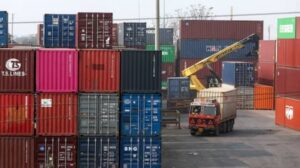
EXPORT PERFORMANCE AND TRADE DIVERSIFICATION
- Export Surge: Merchandise exports increased 19.6% to $44.2 billion in July 2026, significantly exceeding the 17.5% growth recorded in merchandise imports.
- Regional Recovery: Exports to West Asia reached $5.7 billion, registering 8.8% growth despite continuing geopolitical disruptions and earlier contractions caused by the conflict.
- Market Diversification: India recorded stronger exports to previously less prominent destinations including China, Singapore, Japan, South Korea, Taiwan, Vietnam, Malaysia and Austria.
- African Expansion: Export growth also strengthened India’s engagement with African markets, including Kenya, Tanzania and the South African Customs Union region.
- China Growth: India’s exports to China increased 65% to $2.2 billion in July, while cumulative April-July exports to China rose 36%, although the growth partly reflects a low base.
TRADE RESILIENCE AND CHALLENGES AHEAD
- Logistics Adaptation: India mitigated West Asian disruptions by rerouting cargo through alternative ports and shipping lines, demonstrating greater resilience in international supply chains.
- Alternative Routes: Ports such as Oman’s ports outside the Strait of Hormuz and the UAE’s Fujairah and Khor Fakkan have absorbed greater cargo flows amid regional disruptions.
- Deficit Expansion: Despite stronger merchandise exports, India’s overall trade deficit widened to $15 billion, compared with $11.4 billion during July 2025.
- Services Pressure: Services exports grew only 6.4% to $35.9 billion, while services imports increased 9.5% to $18.9 billion, narrowing India’s services trade surplus.
- Strategic Priority: Sustained export diversification, logistics resilience, FTAs, value-added manufacturing and services competitiveness will be essential for reducing vulnerability to geopolitical and demand shocks.
BALANCE OF TRADE AND INDIA’S TRADE DEFICIT
- Trade Balance: The balance of trade represents the difference between a country’s merchandise exports and merchandise imports; exports exceeding imports create a surplus, while imports exceeding exports create a deficit.
- Merchandise Trade: Merchandise trade covers physical goods, whereas services trade includes software, financial services, transport, tourism, professional services and other intangible transactions.
- Overall Balance: India’s external trade position must be assessed through both merchandise and services, because its large merchandise deficit is partly offset by a substantial services surplus.
- Trade Diversification: Diversifying export destinations, products and supply chains reduces India’s exposure to geopolitical disruptions, protectionism and economic slowdowns in individual markets.
- UPSC Relevance: The issue is important for GS Paper III topics including balance of payments, international trade, export promotion, FTAs, global value chains, supply-chain resilience and geopolitical risks to the Indian economy.