






INDIA–ARAB LEAGUE PARTNERSHIP AND STRATEGIC CONVERGENCE
Syllabus:
GS Paper -2 India and its Neighbourhood, Indian Diaspora
GS Paper – 3 Liberalization, Mobilization of Resources
WHY IN THE NEWS?
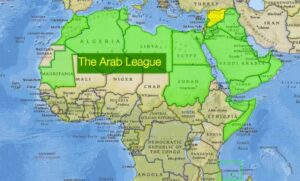
Foreign Ministers of the 22-member Arab League are meeting in New Delhi for the second India–Arab Foreign Ministers’ Meeting in January 2026. This gathering comes amid West Asian instability, great-power rivalry, and India’s expanding economic, energy, and security engagement with the region, making the India-Arab League partnership strategically significant for India’s evolving foreign policy.
Geopolitical Flux And Strategic Context:
- Regional Volatility: West Asia faces overlapping conflicts involving Iran, Gaza, Syria, and Yemen, creating persistent security uncertainty and diplomatic volatility for regional and external stakeholders.
- Great Power Shifts: Unilateral approaches by major powers have weakened the rules-based international order, compelling middle powers like India to pursue diversified partnerships.
- Intra-Regional Faultlines: Emerging tensions between Saudi Arabia and the UAE reflect competition over influence, signalling possible realignment of regional power structures.
- Indian Stakes: India’s energy security, diaspora welfare, and maritime trade routes make regional instability a direct national interest concern.
- Diplomatic Opportunity: The Foreign Ministers’ meeting enables India to project itself as a stabilising, non-interventionist partner in the India-Arab League relationship.
Understanding Arab League And India’s West Asia Policy:
| Key Points |
| – Arab League: Founded in 1945, the League coordinates political and economic cooperation among 22 Arab states. |
| – West Asia Policy: India pursues issue-based engagement balancing relations with all major regional actors. |
| – Energy Diplomacy: Securing hydrocarbons remains central to India’s West Asia strategy. |
| – Diaspora Dimension: Millions of Indian workers in the region strengthen people-centric diplomacy. |
| – Strategic Autonomy: India avoids bloc politics while deepening multi-sectoral partnerships. |
Evolution Of India–Arab League Engagement:
- Historical Ties: India’s civilisational and commercial links with Arab societies span centuries, forming a durable base for people-to-people relations.
- Institutionalisation: Engagement with the Arab League was formalised through a 2002 Memorandum of Understanding enabling structured political dialogue.
- Forum Creation: The Arab–India Cooperation Forum established in 2008 institutionalised regular consultations on political and economic cooperation.
- Diplomatic Presence: India’s Permanent Representation to the Arab League strengthened continuity and coordination in multilateral engagement.
- Economic Platforms: Regular partnership and investment summits underscore growing economic interdependence between India and Arab League nations.
Strategic Partnerships And Political Convergence:
- Bilateral Upgradation: India has concluded strategic partnerships with Oman, UAE, Saudi Arabia, Egypt, and Qatar, deepening defence and political cooperation.
- Vision Alignment: National development visions like Saudi Vision 2030 and India’s Viksit Bharat 2047 reveal converging priorities.
- Multilateral Support: Arab states increasingly align with India in platforms like BRICS and SCO.
- Trust Deficit Reduction: Sustained political engagement has reduced historical mistrust, enhancing strategic predictability in India-Arab relations.
- Foreign Policy Autonomy: Both India and Arab League members value strategic autonomy, avoiding rigid alliances in a multipolar world order.
Trade, Investment And Connectivity:
- Trade Scale: India–Arab League trade exceeds 240 billion dollars, reflecting deep commercial integration.
- Investment Flows: Commitments from UAE, Saudi Arabia, and Qatar highlight confidence in India’s infrastructure-led growth model.
- Maritime Dependence: Critical sea lanes through Suez, Red Sea, and Gulf of Aden underpin India’s external trade security.
- Connectivity Vision: The India-Middle East-Europe Economic Corridor enhances logistics efficiency and supply-chain resilience.
- Economic Diversification: Stronger connectivity supports mutual diversification beyond hydrocarbons into manufacturing and services sectors.
Digital And Financial Integration:
- Fintech Cooperation: Digital public infrastructure collaboration reflects convergence on technology-driven governance models.
- Payment Systems: Adoption of RuPay and UPI across several Arab countries strengthens cross-border financial integration.
- Currency Usage: Acceptance of the Indian rupee in select locations signals deepening monetary confidence.
- Transaction Efficiency: Digital payments reduce transaction costs, benefiting trade, tourism, and diaspora remittances.
- Scalability Potential: Fintech cooperation offers scalable solutions for broader South–South digital partnerships.
Energy Security And Economic Interdependence:
- Energy Dependence: Arab League countries supply a majority of India’s crude oil, gas, and fertilisers, anchoring energy security.
- Long-Term Contracts: LNG agreements with Qatar and ADNOC ensure supply stability amid volatile global energy markets.
- Strategic Reserves: UAE’s participation in India’s strategic petroleum reserves enhances energy resilience.
- Transition Cooperation: Clean energy investments align with mutual commitments to energy transition pathways.
- Supply Reliability: Energy interdependence incentivises political stability and sustained economic cooperation between India and Arab nations.
Security And Defence Cooperation:
- Defence Agreements: India has defence cooperation pacts with several Arab states, expanding military-to-military engagement.
- Maritime Security: Initiatives like SAGAR strengthen collaboration against piracy and maritime threats.
- Strategic Access: India’s access to Duqm port in Oman enhances operational reach in the Indian Ocean.
- Counterterrorism Alignment: Arab states consistently support India’s position against cross-border terrorism.
- Defence Exports: Joint production and export of platforms like Tejas and BrahMos expand defence-industrial cooperation.
Emerging Areas And Future Potential:
- Technology Domains: Cyber, space, and drone technologies offer new frontiers for strategic collaboration.
- Human Capital: Skill mobility and education partnerships can deepen knowledge-based linkages.
- Institutional Expansion: New chambers of commerce strengthen private-sector engagement.
- Conflict Diplomacy: India’s balanced approach positions it as a credible interlocutor in regional de-escalation efforts.
- Long-Term Vision: Sustained engagement can transform bilateral ties into a comprehensive strategic partnership between India and the Arab League.
CONCLUSION:
The India–Arab League partnership reflects deepening convergence across diplomacy, energy, trade, and security domains. Amid regional instability, India’s balanced, development-oriented engagement positions it as a trusted partner. Institutionalising cooperation through political dialogue, connectivity initiatives, and defence collaboration can convert historical goodwill into a resilient strategic partnership shaping India’s extended neighbourhood in West Asia.
Source: TH
MAINS PRACTICE QUESTION:
Discuss the strategic significance of India’s engagement with the Arab League in the context of West Asian instability and shifting global power dynamics. How does the India-Arab League partnership advance India’s energy security, economic interests, and regional strategic autonomy?