





Honouring Freedom Fighters, Building Viksit Bharat by 2047
Syllabus:
GS Paper – 1
Indian Heritage Sites Indian Architecture
Why in the News ?
Prime Minister Narendra Modi’s 12th Independence Day address from the Red Fort emphasized aligning governance with the dreams of freedom fighters, highlighting social justice, poverty alleviation, Article 370 abrogation, and tributes to leaders like Savarkar, Patel, Bose, Ambedkar, and Birsa Munda, setting the vision for Viksit Bharat by 2047 – a developed India that honors its past while embracing the future.
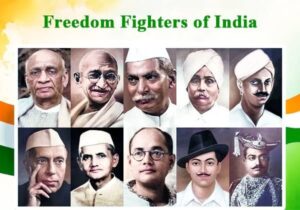
Honouring Freedom Fighters and Cultural Legacy
- PM Modi has consistently recognized and honoured contributions of India’s patriots through commemorations, statues, memorials, and national events.
- 2021: Declared Janjatiya Gaurav Diwas on Birsa Munda’s birth anniversary, acknowledging the tribal community’s role in the freedom struggle.
- First PM to visit Ulihatu village, Jharkhand, birthplace of Birsa Munda.
- Commemorations include:
○ Indian Language Day on poet Subramania Bharati’s birth anniversary.
○ Commemorative coin release on Ahilyabai Holkar’s 300th birth anniversary.
- Restoration of historical memory: Reinstalled Savarkar’s plaque at the Andaman Cellular Jail in 2016.
- Kranti Mandir, Red Fort: Dedicated to Netaji Subhash Chandra Bose, the 1857 First War of Independence, and the Jallianwala Bagh massacre.
- 2018: Inaugurated Statue of Unity in Kevadia, Gujarat — world’s tallest statue honouring Sardar Patel.
| Key Acts & Provisions ● Article 370 Abrogation – Jammu & Kashmir Reorganisation Act, 2019.
- Bharatiya Nyaya Sanhita, 2023 – Replacing IPC.
- PM-Kisan Scheme – Direct income support to farmers.
Notable Leaders Referenced ● Birsa Munda – Tribal leader, anti-colonial resistance.
- Subramania Bharati – Tamil poet, nationalist.
- Ahilyabai Holkar – Holkar queen, social reformer.
- Savarkar – Revolutionary, nationalist ideologue.
- Sardar Patel – Architect of national integration.
- B.R. Ambedkar – Constitution maker, social justice advocate.
- Netaji Subhash Chandra Bose – INA leader, militant nationalist.
Important Monuments & Events ● Statue of Unity – 182m statue in Gujarat.
- Kranti Mandir – Red Fort museums for INA, 1857, Jallianwala Bagh.
- Janjatiya Gaurav Diwas – 15 November annually. |
Policy Actions Reflecting Freedom Fighters’ Vision
- Article 370 abrogation — fulfilling Sardar Vallabhbhai Patel’s vision of national integration and addressing the special status of Jammu and Kashmir.
- Bharatiya Nyaya Sanhita — replacing colonial-era Indian Penal Code, aligning with decolonization goals and strengthening the Indian judiciary.
- Digital transactions revolution — tribute to B.R. Ambedkar’s emphasis on economic inclusion, promoting UPI transactions and digital commerce.
- Social Security Safety Net — covers 94.3 crore Indians, ensuring welfare-based governance and inclusive governance for marginalized communities.
- Financial support to farmers — 14.5 crore small farmers benefitting from PM-Kisan, boosting small businesses in rural areas.
- Poverty reduction — 2 crore lifted out of poverty through targeted schemes, resonating with Mahatma Gandhi’s vision of rural empowerment and economic progress.
- Self-reliant armed forces — modernization initiatives aligning with Netaji’s vision of a strong, sovereign India, enhancing national security through technological advancements.
Political and Historical Context
- Past neglect in honouring some leaders — e.g., Patel, Ambedkar, and Netaji were conferred the Bharat Ratna decades after Independence.
- Non-Congress governments installed portraits of Netaji (1978) and Ambedkar (1980) in Parliament Central Hall.
- Controversies:
○ 2003: Sonia Gandhi‘s letter to President Kalam supporting Savarkar’s portrait installation.
○ Congress boycott of Savarkar event.
○ 2004: UPA government removed Savarkar’s plaque in Cellular Jail.
- Supreme Court warnings against defaming freedom fighters — emphasising respect for their sacrifices and the principles of the Indian Constitution.
Linking Past Sacrifices to Future Vision
- Modi’s governance framed around Antyodaya — uplifting the last person in society, a concept rooted in the ideals of freedom fighters.
- Integrating freedom fighters’ ideals with Viksit Bharat 2047 vision:
○ Economic growth with inclusion, promoting small businesses and digital technology.
○ Social justice reforms, addressing the needs of marginalized communities and disabled people.
○ Cultural pride and historical restoration, preserving the legacy of diverse languages and regions.
- Strengthening national unity by commemorating leaders from diverse backgrounds and regions, fostering cultural unity.
- Positioning India globally as a self-reliant and culturally rooted power, aspiring to become a developed nation and global player.
Public Awareness and National Integration
- Public awareness campaigns have:
○ Revived interest in lesser-known freedom fighters like Alluri Sitarama Raju and C Rajagopalachari.
○ Encouraged historical tourism (e.g., INA Museum, Statue of Unity).
○ Promoted pride in national identity and territorial integrity.
- Balanced representation of leaders from all political spectrums in state events.
- Using national days and commemorations to reinforce unity in diversity among diverse states.
- Connecting younger generations to India’s independence story through educational initiatives and digital technology.
Challenges :
- Political Polarization: Historical figures often become points of political conflict, hindering collective commemoration and unanimous decisions.
- Selective Recognition: Risk of overemphasis on certain leaders while neglecting others from different regions or communities.
- Public Awareness Gap: Limited knowledge among youth about regional and tribal freedom fighters.
- Infrastructural Limitations: Preservation of heritage sites, statues, and museums often lacks funding or proper maintenance.
- Distortion of Historical Facts: Misrepresentation in political discourse can dilute authentic historical narratives and the constitutional text.
- Balancing Development & Heritage: Rapid urbanization sometimes sidelines heritage preservation, challenging the “housing for all” initiative.
- Sustainability of Initiatives: Long-term continuation of commemorative efforts beyond political cycles is uncertain, requiring collective participation.
Way Forward :
- Non-Partisan Commemoration: Establish independent cultural committees to ensure unbiased recognition of all freedom fighters, transcending ideological inclinations.
- Educational Integration: Incorporate comprehensive freedom struggle narratives in school curricula, fostering understanding of diverse regions and languages.
- Digital Archives: Create public digital repositories of documents, speeches, and biographies of national leaders, leveraging digital technology to combat deepfakes and cyber crime.
- Local Heritage Development: Promote heritage tourism through local infrastructure upgrades, creating employment opportunities.
- Community Participation: Engage civil society in heritage conservation and commemoration projects, ensuring inclusive governance.
- Global Outreach: Showcase India’s freedom struggle in international forums and cultural exchanges, positioning India as a global player.
- Legislative Protection: Enact laws to protect monuments and prevent historical distortion, strengthening the democratic structure.
- Youth Engagement: Launch internships and volunteer programs at museums and heritage sites, connecting the younger generation with India’s rich history.
Conclusion :
PM Modi’s initiatives have revitalized national memory, honouring the sacrifices of freedom fighters while embedding their ideals into modern governance. By integrating historical respect with developmental goals, the vision of Viksit Bharat 2047 can align with the aspirations of those who fought for a free, united, and just India. This approach, combining good governance with cultural preservation, sets the stage for India to emerge as a developed nation, rooted in its rich heritage while embracing technological advancements and inclusive growth.
SOURCE : HT
Mains Practice Question :
Question: Discuss how contemporary governance in India can integrate the vision of freedom fighters into developmental policies. Illustrate with examples from recent government initiatives, highlighting both achievements and challenges in preserving historical legacy while pursuing modern socio-economic objectives.