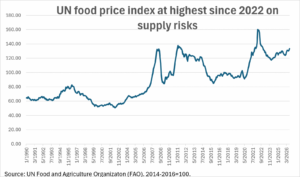
FAO FOOD PRICE INDEX RISES AMID GROWING GLOBAL SUPPLY RISKS
WHY IN THE NEWS?
Global food prices rose in August to their highest level since late 2022, according to the FAO Food Price Index.
The increase reflects growing concerns over extreme weather, geopolitical conflicts, disrupted trade routes and agricultural supply risks.
Higher prices of cereals, vegetable oils, sugar, meat and dairy products indicate renewed pressure on global food security.
GLOBAL FOOD PRICES AND SUPPLY-SIDE PRESSURES
FAO Index: The FAO Food Price Index averaged 133.3 points in August, up from the revised 130.8 points in July, marking its highest level since November 2022.
Weather shocks:Extreme heat and drought in Europe have adversely affected expectations for maize, sugar and livestock production, raising concerns about future availability.
Conflict disruption: Intensifying attacks around the Black Sea have affected grain shipments from Russia and Ukraine, important suppliers of global agricultural commodities.
Energy concerns: Anticipated restrictions on fuel supplies could increase production and transportation costs while creating additional uncertainty for palm oil and sugar output in Asia.
Fertiliser flows: Geopolitical tensions, including the US-Iran conflict, have disrupted fertiliser supply chains, potentially increasing input costs for farmers and affecting future agricultural production.
About FAO AND GLOBAL FOOD SECURITY:
FAO Overview: The Food and Agriculture Organization (FAO) is a specialised UN agency working to eliminate hunger, improve nutrition and promote sustainable agriculture.
Price Index: The FAO Food Price Index tracks monthly changes in international prices of major globally traded food commodities.
Commodity Basket: Its benchmark covers cereals, vegetable oils, dairy products, meat and sugar, making it a useful indicator of international food-market conditions.
Food Security: According to the broader concept of food security, people should have physical and economic access to sufficient, safe and nutritious food at all times.
India Linkage: Global commodity-price shocks can influence India’s food inflation, import bills, farmer incomes and food-security policies, highlighting the importance of diversified supply chains and resilient agriculture.