







AS MULTILATERALISM ERODES, INDIA MUST REFRAME THE FOREIGN POLICY
Why in the news?
● Prime Minister Narendra Modi, speaking in the Rajya Sabha, acknowledged the emergence of a new global order.
● He noted the decline of multilateral institutions and the rise of power politics and transactional relations among nations.
● The statement highlights the need for India to rethink the foreign policy beyond traditional strategic autonomy.
● Emphasis on building domestic capabilities, diversifying trade partnerships, and reducing external vulnerabilities.
● The shift is linked to the long-term national goal of achieving Viksit Bharat 2047—transforming India into a developed nation by its centenary of independence.
● The remarks signal a recalibration of India’s global role and national identity in response to changing geopolitical realities.
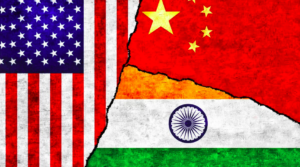
Eroding Multilateralism
Foundation of Strategic Autonomy
○ India’s leadership of the Global South at the United Nations General Assembly (UNGA) underpinned its long-standing policy of strategic autonomy and multilateral diplomacy.
○ The UN-led global order, shaped by former colonial powers led by the U.S., often reflected Western interests in the post-colonial era.
○ Indian diplomats played a key role in shaping negotiating texts, protecting developing countries from excessive obligations and promoting south-south cooperation.
○ Climate negotiations up to 1992 were largely steered by India on behalf of the Global South, laying the groundwork for future climate diplomacy efforts.
China’s Rise and Institutional Shift (Post-2010)
○ Around 2010, China created alternative funding, economic, and security institutions, altering global governance dynamics and challenging the rules-based order.
○ China now heads four principal UN agencies and provides aid volumes exceeding Western contributions, reshaping development partnerships.
○ The U.S., struggling to influence UN processes, has withdrawn from 31 UN institutions, weakening multilateral cooperation.
○ These shifts have weakened India’s earlier intellectual leadership within the UN system and necessitated a reevaluation of its approach to multilateral diplomacy.
Crisis in the Global Trade Regime
○ The 1986 Uruguay Round, launched by the U.S., led to the creation of the World Trade Organization in 1995, fundamentally altering international trade dynamics.
○ Developing countries’ interests became more fragmented, making it harder for India to secure favorable outcomes in trade negotiations.
○ Since 2019, the U.S. has paralysed the WTO’s dispute settlement mechanism and reverted to unilateral tariffs, undermining multilateral trade norms and economic integration efforts.
○ In contrast, China has diversified exports and is now the largest trading partner of over 120 countries, demonstrating the importance of supply chain resilience.
Implications for India
○ The core challenge for India is not merely China’s rise but the structural weakening of multilateralism and the rules-based order.
○ While the EU and Canada acknowledge institutional decline, developing nations seek ways to revive global governance frameworks and promote sustainable development.
○ As a potential third-largest economy, India faces heightened vulnerability in an increasingly transactional, U.S.-dominated global order, where even alliances like NATO face uncertainty, necessitating a robust Indo-Pacific strategy.
The Evolution of Strategic Autonomy
Declining relevance of Global South leadership
○ India once exercised outsized influence by leading the Global South in multilateral forums, shaping the agenda for south-south cooperation.
○ With the weakening of international institutions and legal frameworks, platforms to represent developing countries have diminished, impacting India’s role in multilateral diplomacy.
○ Global competition is now centred on technological dominance between the U.S. and China, rather than influence in bodies like the United Nations, shifting the focus towards technology transfer and innovation.
From Cold War doctrine to post-1991 ambiguity
○ Strategic autonomy originally emerged during the Cold War, when India led the Non-Aligned Movement, shaping its approach to diplomatic engagement.
○ After the collapse of the Soviet Union in 1991, the concept gradually lost its original relevance but continued to influence the foreign policy.
○ It evolved into a self-declared identity used to justify diverse foreign policy choices, allowing for flexible diplomatic engagement.
○ India joined the U.S.-led Quadrilateral Security Dialogue (Quad) in 2017, signalling closer cooperation with the West and a shift in its Indo-Pacific strategy.
○ In 2018, India chose the Russian S-400 missile system over the U.S. Patriot system, reflecting continued defence cooperation with Russia and the pursuit of strategic influence.
Historical tilt towards the Soviet Union/Russia
○ India moved closer to the Soviet Union after its 1951 veto blocked discussion of Kashmir in the United Nations Security Council, shaping its approach to great power relations.
○ Russia has remained India’s most consistent defense partner, providing advanced military technology and supporting defense cooperation.
○ The U.S. has increasingly sought to reduce India’s dependence on Russian systems, testing India’s aspiration to act as a third pole in a multipolar world and its pursuit of strategic autonomy.
Shift in U.S. perception of India
○ With China’s rise, U.S. analysts began describing India as a “swing state” rather than a strategically autonomous actor, influencing bilateral relations.
○ Current U.S. military strategy focuses less on classical containment and more on technological and strategic competition with China, impacting India’s role in regional stability.
Power Politics
Return to asymmetric bilateral relations
○ The main arena of international relations has shifted from multilateral institutions to asymmetric bilateral arrangements, challenging traditional approaches to economic diplomacy.
○ Tariff reciprocity is increasingly framed through an “America First” approach, placing other countries in subordinate trade positions and affecting international trade dynamics.
Trade agreements reflecting unequal dynamics
○ Under the India–U.S. Framework Agreement, India agreed to significantly increase imports, largely industrial goods, impacting its economic integration strategies.
○ Meanwhile, the U.S. continues to maintain around 18% tariffs, with reductions linked to further concessions from India, highlighting the challenges in bilateral economic statecraft.
○ In contrast, the India–EU trade deal eliminated about 70% of tariff lines with phased, reciprocal reductions, demonstrating a more balanced approach to economic integration.
Core strategic dilemma for India
○ The key issue is why India has been targeted by U.S. tariffs and how it can grow in an uncertain, shifting global order while maintaining its strategic influence.
○ The U.S. seeks to prevent the emergence of another China-like economic rival, impacting its approach to foreign investment and technology transfer with India.
○ India is one of the few countries with the potential to match or surpass major global economies, necessitating a careful balance in its economic diplomacy.
Changing global industrial opportunity
○ China used multilateral trade rules under the World Trade Organization to build an independent manufacturing base, a strategy now less viable for other nations.
○ That window is now closing as major powers adopt protectionist and strategic trade policies, challenging India’s pursuit of economic integration and supply chain resilience.
Strategic balancing challenge
○ The U.S. has long sought to keep India separate from closer alignment with Russia and China, influencing security alliances and regional stability.
○ This policy is now intensifying, and managing these pressures will test Indian diplomacy and strategic autonomy in a multipolar world, particularly in the context of the Indo-Pacific strategy.
Reframing Foreign Policy
Leverage demographic and technological strengths
○ India’s comparative advantage lies in its young population and strong global tech presence, with a large share of Silicon Valley’s workforce tracing roots to India, offering opportunities for technology transfer and innovation.
○ By nurturing this talent, India can emerge as a cyber superpower, integrating AI across security, manufacturing, and services, enhancing its strategic influence.
○ This requires robust economic and technological ties with the U.S., Russia, and China, along with expanded Free Trade Agreements (FTAs) to promote economic integration and foreign investment.
○ The foreign policy focus should shift from strategic autonomy to the development-oriented vision of Viksit Bharat 2047, emphasizing sustainable development and economic diplomacy.
Build endogenous capabilities with a low-profile global posture
○ Drawing lessons from early 20th-century strategies of China and the U.S., India should prioritise domestic capability-building and focus on economic statecraft.
○ Maintain a relatively low international profile while accelerating growth within Asia, the centre of the emerging global economy, to enhance regional stability.
Diversify trade diplomacy
○ Reduce overdependence on the U.S. by expanding export markets and pursuing a comprehensive international trade strategy.
○ Pursue FTAs with Asian economies, expected to hold two-thirds of global wealth, and Africa, the fastest-growing continent, to promote economic integration and supply chain resilience.
○ Continue trade integration even as vulnerabilities persist in bilateral relationships, focusing on building strategic influence through economic partnerships.
Expand technological and strategic partnerships
○ Deepen technological, cyber, and space cooperation with Russia, a long-standing strategic partner, to enhance defense cooperation and maritime domain awareness.
○ Allow calibrated Chinese investment in infrastructure and manufacturing, with safeguards, to boost growth and trade while maintaining a balance in great power relations.
Reframe relations with Pakistan
○ Treat ties with Pakistan primarily as a foreign policy issue rather than a security-centric one, exploring opportunities for regional stability.
○ Explore confidence-building measures such as new water-sharing arrangements, revival of the Iran–Pakistan–India peace pipeline, and trade agreements to create economic incentives for cooperation.
Use BRICS leadership to reshape global engagement
○ As chair of BRICS, India can promote a shift toward economic cooperation rather than political alignment, fostering south-south cooperation and triangular cooperation.
○ Initiatives such as linking digital currencies could ease cross-border trade, remittances, and tourism payments, enhancing economic integration among BRICS nations.
By reframing its foreign policy approach, India can navigate the challenges posed by eroding multilateralism and rising power politics. Focusing on economic diplomacy, technology transfer, and strategic partnerships will be crucial for achieving the vision of Viksit Bharat 2047 while maintaining India’s strategic autonomy and influence in the evolving global order.
Source: https://www.thehindu.com/news/national/as-multilateralism-erodes-india-must-reframe-its-foreign-policy/article70624458.ece
Mains question
“Multilateral institutions are weakening amid rising power politics, compelling India to rethink strategic autonomy. Examine the challenges this poses and discuss how India should reframe the foreign policy towards Viksit Bharat 2047.”