







ANIMAL VACCINATION AS A STRATEGIC LEVER FOR RURAL TRANSFORMATION AND SUSTAINABLE DEVELOPMENT
Syllabus:
GS-3: Economics of Animal-Rearing, Agricultural Marketing, International Trade
WHY IN THE NEWS?
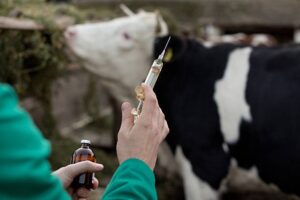
Amid rising concerns over rural incomes, antimicrobial resistance, climate commitments, and pandemic preparedness, experts have called for India to scale up livestock vaccination. With livestock supporting nearly 100 million rural households and contributing significantly to agricultural value added, animal vaccines are emerging as a critical policy priority in the context of sustainable development and economic diplomacy.
Livestock And Rural Economic Stability
- Livelihood Anchor: Livestock contributes nearly 30% of agricultural gross value added and supports millions of small and marginal farmers, playing a crucial role in economic integration and rural development.
- Daily Liquidity: Dairy income provides regular cash flow, unlike seasonal crop earnings, enhancing rural economic resilience and contributing to overall economic stability.
- Asset Security: For smallholders, animals function as living savings accounts for education, healthcare, and shocks, serving as a form of economic statecraft at the grassroots level.
- Mortality Losses: High calf and small ruminant mortality in underserved regions erodes household income stability, highlighting the need for strategic partnerships in animal health.
- Vulnerability Risk: Disease-related productivity losses disproportionately affect poorer rural households, underscoring the importance of bilateral relations in addressing these challenges.
Understanding One Health And Livestock Policy: |
| ● One Health: Integrated approach recognising linkages between human, animal, and environmental health, aligning with global governance principles. |
| ● Antimicrobial Resistance: Resistance developed by pathogens due to antibiotic overuse, a concern in international trade and public health. |
| ● Emission Intensity: Emissions per unit of output, such as per litre of milk, relevant to climate finance discussions. |
| ● Zoonotic Diseases: Diseases transmitted from animals to humans, a focus area for disaster relief and pandemic preparedness. |
| ● Biosecurity: Measures preventing introduction and spread of infectious diseases, crucial for maintaining regional stability and supply chain resilience. |
Vaccines And Productivity Gains
- Disease Control: Preventing infections improves milk yield, weight gain, and reproductive performance, contributing to sustainable development goals.
- Yield Variation: Milk productivity per cow in India remains far below advanced dairy economies, presenting opportunities for technology transfer and foreign investment.
- Emission Intensity: Higher productivity reduces greenhouse gas emissions per litre of milk, aligning with climate diplomacy efforts.
- Efficiency Gains: Healthier animals convert feed more efficiently, lowering production costs and enhancing economic integration in the agricultural sector.
- Income Multiplier: Even modest productivity increases can significantly raise smallholder incomes, supporting broader economic diplomacy initiatives.
Climate Mitigation Benefits
- Livestock Emissions: Livestock contributes roughly 14.5% of global anthropogenic greenhouse gas emissions, a key concern in climate finance discussions.
- Intensity Reduction: Raising milk yield substantially lowers emissions intensity without expanding herd size, supporting energy security goals.
- Sustainable Growth: Productivity-driven growth aligns livestock expansion with climate commitments and the Indo-Pacific strategy for green development.
- Low-Carbon Pathway: Vaccination supports climate mitigation through improved biological efficiency, contributing to the rules-based order for environmental protection.
- Policy Convergence: Rural development and climate strategy can be jointly advanced through strategic partnerships and multilateral diplomacy.
Antimicrobial Resistance (AMR) Control
- Antibiotic Overuse: Preventive and therapeutic antibiotic use remains common in livestock management, posing challenges to global health security.
- Disease Prevention: Vaccination directly reduces infection incidence and antibiotic demand, supporting the foreign policy goal of combating AMR.
- AMR Threat: Curtailing antimicrobial use helps combat global antimicrobial resistance, a priority in international trade and public health.
- Poultry Impact: In poultry and pigs, vaccination reduces severity and reliance on antibiotics, enhancing food security and trade diplomacy.
- Public Health Link: Reduced AMR strengthens national and global health security, aligning with strategic autonomy in healthcare.
Pandemic Risk Reduction
- Zoonotic Interface: Pathogens such as avian influenza, swine influenza, and Nipah circulate in animal populations, necessitating robust maritime domain awareness and biosecurity measures.
- Spillover Prevention: Strong herd immunity reduces pathogen amplification and spillover risk, contributing to regional stability and global health security.
- Surveillance Strengthening: Routine vaccination improves outbreak detection and differentiation, enhancing maritime security and disaster relief capabilities.
- Early Warning: Animal health systems serve as frontline buffers against pandemics, supporting the Indo-Pacific strategy for health security.
- One Health Approach: Integrating animal and human health enhances preparedness, aligning with the principles of global governance and multilateral institutions.
Barriers To Scaling Vaccination
- Information Gaps: Smallholders may lack awareness of economic returns from vaccination, highlighting the need for development partnerships and knowledge sharing.
- Liquidity Constraints: Upfront costs deter adoption among low-income farmers, presenting opportunities for innovative climate finance solutions.
- Market Incentives: Private manufacturers face limited scale economies in dispersed rural markets, calling for strategic partnerships and economic statecraft.
- Cold Chain Limits: Lack of thermo-tolerant vaccines constrains rural delivery, necessitating technology transfer and supply chain resilience initiatives.
- Regional Disease Variation: Disease specificity reduces standardisation advantages, requiring tailored approaches in bilateral relations and trade agreements.
Manufacturing And Strategic Opportunity
- Domestic Capacity: India possesses strong vaccine manufacturing and campaign experience, positioning it for leadership in south-south cooperation.
- Dual Utility: Investments in high-quality animal vaccine production create surge capacity for human pandemics, enhancing strategic influence in global health.
- mRNA Platforms: Flexible vaccine technologies offer rapid response capability, supporting strategic autonomy in biotechnology.
- Export Potential: India can become a global hub for livestock vaccine innovation, leveraging economic diplomacy and trade agreements.
- Strategic Industry: Strengthening this sector supports economic and biosecurity goals, aligning with the broader Indo-Pacific strategy.
Integrated Policy Approach
- Complementary Measures: Biosecurity, farm management, and surveillance must accompany vaccination, supporting a comprehensive approach to rural development.
- Public Investment: Government support can correct market failures in rural vaccine provision, demonstrating effective economic statecraft.
- Targeted Subsidies: Smart incentives encourage uptake among smallholders, aligning with sustainable development goals and economic integration efforts.
- Data Systems: Strong livestock health surveillance enhances monitoring effectiveness, contributing to maritime domain awareness and regional stability.
- Roadmap Priority: Animal vaccination should feature in Viksit Bharat development planning, integrating with broader foreign policy and economic diplomacy initiatives.
CONCLUSION:
Animal vaccination offers a rare convergence of rural prosperity, climate mitigation, antimicrobial resistance control, and pandemic prevention. By investing strategically in livestock immunisation and manufacturing capacity, India can strengthen smallholder incomes while advancing environmental and health security goals. Scaling animal vaccines is not merely an agricultural reform but a national resilience strategy that supports sustainable development, enhances strategic partnerships, and contributes to global governance in health and climate action.
Source: HT
MAINS PRACTICE QUESTION:
Examine how expanding livestock vaccination in India can simultaneously advance rural incomes, climate mitigation, antimicrobial resistance control, and pandemic preparedness. What policy measures are required to overcome structural barriers to scaling animal immunisation, and how can this initiative support India’s broader foreign policy and economic diplomacy goals?