






HPV VACCINE MUST BE ONLY ONE PIECE OF THE CERVICAL CANCER STRATEGY
Syllabus:
GS 2:
- Issues related to Social Sector – Health
GS 1:
- Science and technology and its application
Why in the News?
India recently launched a nationwide Human Papillomavirus (HPV) vaccination programme, aiming to immunise 14-year-old girls through a campaign approach before integrating the vaccine into routine government health services. The move aligns with global efforts to combat cervical cancer, which remains the second-most common cancer among Indian women. As the world observes International Women’s Day on 8 March each year, this initiative underscores the critical importance of women’s health as a fundamental aspect of gender equality and women’s rights.
PUBLIC HEALTH PREVENTION STRATEGY● Primary Prevention: Measures such as vaccination and health education aim to prevent disease occurrence before infection. ● Secondary Prevention: Screening tools like Pap smear and HPV testing detect diseases at an early, treatable stage. ● Tertiary Prevention: Effective treatment and rehabilitation prevent complications and improve quality of life. ● Health System Integration: Successful programmes require coordination across education, healthcare, and community outreach systems. ● Policy Sustainability: Long-term disease control depends on sustained funding, monitoring, and evidence-based policy adaptation. |
CERVICAL CANCER BURDEN IN INDIA
- High Disease Prevalence: Cervical cancer remains the fourth-most common cancer among women globally and the second-most prevalent cancer among women in India, reflecting a major public health challenge that demands urgent attention to gender justice in healthcare.
- Frequent Mortality: In India, one woman dies every seven minutes due to cervical cancer, indicating the urgent need for effective prevention, early detection, and treatment strategies that ensure equal access to healthcare for all women.
- Rising Case Incidence: A new case of invasive cervical cancer emerges approximately every four minutes, highlighting the persistent burden of this largely preventable disease that disproportionately affects a woman from vulnerable communities.
- Risk Factors: Key contributors include early sexual activity, multiple sexual partners, smoking, weakened immunity, and poor hygiene, which increase vulnerability to infection and subsequent cancer development.
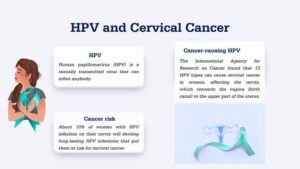
- HPV Link: Around 70% of cervical cancer cases are linked to infection by high-risk Human Papillomavirus strains, especially types 16 and 18, making vaccination an essential preventive intervention.
ROLE OF THE HPV VACCINE
- Preventive Protection: The Gardasil-4 vaccine protects against HPV types 16 and 18, responsible for most cervical cancer cases, along with types 6 and 11, which cause genital warts.
- Global Adoption: With the rollout of HPV vaccination, India joins over 148 countries implementing national HPV immunisation programmes, marking a significant gender equality milestone in preventive healthcare.
- Early Immunisation: Vaccination targets girls aged 9–14 years, before potential exposure to HPV through sexual contact.
- Single-Dose Strategy: India has opted for a single-dose vaccination regimen, which studies suggest may offer comparable protection to multi-dose schedules.
- Cost and Accessibility: Free vaccination through government health centres improves accessibility for economically vulnerable populations, addressing barriers similar to the gender pay gap that limits healthcare affordability.
LIMITATIONS OF VACCINATION ALONE
- Duration Uncertainty: Experts remain concerned about the long-term effectiveness of a single dose, particularly because cervical cancer risk peaks between 50 and 59 years of age.
- Booster Requirement: There is ongoing debate regarding the possible need for booster doses to maintain long-term immunity.
- Incomplete Protection: HPV vaccines do not cover all cancer-causing strains, leaving some risk even among vaccinated individuals.
- Behavioural Factors: Vaccination does not address other risk behaviours and environmental factors contributing to cervical cancer.
- Need for Monitoring: Long-term epidemiological surveillance is essential to assess vaccine impact and adjust policy accordingly.
SOCIAL AND CULTURAL BARRIERS
- Awareness Gap: Knowledge about HPV infection and cervical cancer prevention remains limited, particularly in rural and low-income communities, reflecting structural barriers to health information access.
- Myths and Misconceptions: Cultural taboos surrounding sexual health education often discourage open discussions about HPV vaccination, perpetuating discriminatory laws and social norms that restrict women’s healthcare choices.
- Gender Norms: Social attitudes toward female sexuality and reproductive health sometimes create resistance to vaccination programmes, undermining equal rights to preventive healthcare.
- Parental Hesitation: Lack of parental awareness regarding the severity of cervical cancer affects vaccine acceptance among adolescents, compounded by concerns about gender-based violence and intimate partner violence that make discussions about sexual health challenging.
- Trust Deficit: Public scepticism toward vaccines and health programmes can reduce uptake without targeted community engagement and legal protection against misinformation.
IMPORTANCE OF A COMPREHENSIVE HPV STRATEGY
- Integrated Approach: Vaccination must be complemented by screening, treatment, education, and health system strengthening to ensure access to justice in healthcare delivery.
- Early Detection: Screening methods such as Pap smear and Visual Inspection with Acetic Acid (VIA) help detect precancerous lesions early, providing equal justice through timely intervention.
- Low Screening Uptake: Despite availability, cervical cancer screening coverage in India remains extremely low, limiting early diagnosis and violating principles of equal access to preventive services.
- Self-Sampling Innovation: Self-collected HPV testing has emerged as a promising alternative that can increase screening participation while respecting women’s autonomy and privacy.
- Affordability Challenge: High costs of advanced screening technologies remain a barrier for widespread implementation.
ROLE OF EDUCATION AND COMMUNITY ENGAGEMENT
- School-Based Awareness: School health programmes provide an effective platform for delivering age-appropriate education on HPV, vaccination, and reproductive health as part of broader women’s rights education.
- Adolescent Health Schemes: Integrating HPV awareness into programmes such as Rashtriya Kishor Swasthya Karyakram (RKSK) can improve outreach and promote gender equality in health outcomes.
- Parental Engagement: Mothers’ education levels and parental perception of disease severity significantly influence vaccination acceptance.
- Community Dialogue: Engagement with local leaders, health workers, and civil society organisations can reduce stigma and misinformation.
- Behavioural Change: Sustained public health messaging helps translate awareness into actual vaccination and screening practices.
CONCLUSION
The rollout of the HPV vaccination programme represents a crucial milestone in India’s fight against cervical cancer and a significant step toward achieving gender equality milestones in public health. However, vaccination alone cannot eliminate the disease. As we reflect on the spirit of International Women’s Day (IWD) celebrated annually on March 8, it becomes clear that protecting women’s health requires dismantling structural barriers and ensuring equal rights to comprehensive healthcare. Achieving the WHO’s 90-70-90 cervical cancer elimination targets requires a comprehensive strategy combining vaccination, screening, treatment, and education. Only through a coordinated public health approach that upholds women’s rights and promotes gender equality can India significantly reduce cervical cancer burden and protect the health and dignity of women across the nation.
SOURCE: IE
MAINS PRACTICE QUESTION
“HPV vaccination is a necessary but insufficient tool in eliminating cervical cancer.” Discuss the need for an integrated public health strategy in India.