







WHAT US ANNEXATION OF GREENLAND COULD MEAN FOR NATO, RUSSIA
Why in the news?
● US President Donald Trump has renewed claims over Greenland, asserting through a social media post that the US should take over the island.
● His remarks have reignited global debate on sovereignty, international law, and Arctic geopolitics, including concerns about environmental clearances for potential resource extraction.
● The statements raise concerns about a possible American military move in Greenland, a strategically vital NATO-linked territory, which could require extensive environmental impact assessments.
● Such an action could undermine NATO unity, benefiting rival powers like Russia and China, while also raising questions about environmental jurisprudence in international relations.
● Analysts warn that escalation in the Arctic could destabilize global security and potentially trigger a new nuclear arms race, with implications for environmental democracy and the precautionary principle in global governance.
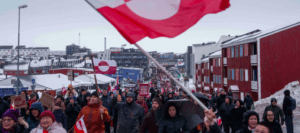
NATO Implodes
● Any unilateral US move in Greenland would strike at the core of NATO, founded in 1949 on the principle of collective defence against external threats, potentially requiring ex post facto environmental clearances.
● NATO’s Article 5 treats an attack on one member as an attack on all, a guarantee invoked only once, after the 9/11 attacks, in support of the US.
● Denmark, which administers Greenland as an autonomous territory, was among the first to invoke Article 5 in 2001 and suffered heavy military losses alongside US forces in Afghanistan.
● A US violation of Danish territorial integrity would expose a blind spot in Article 5: it never anticipated aggression by one member against another, nor did it consider environmental impact assessments for such actions.
● Even if Denmark invokes Article 5, NATO would face an unprecedented crisis with no clear path forward, potentially rendering the alliance ineffective and challenging established environmental jurisprudence.
Strategic Gift to Russia and China
● Trump’s rhetoric and any resulting NATO fractures would directly benefit Russia and China, America’s principal strategic rivals, potentially undermining global environmental governance.
● Russian President Vladimir Putin would gain from a divided NATO, especially if attention and resources are diverted from supporting Ukraine and addressing Arctic environmental concerns.
● While the Greenland move is framed as countering Russian influence in the Arctic, weakening NATO unity undermines the very objective of containing Russia and protecting sensitive Arctic ecosystems.
● The most effective way to limit Russian power remains defeating Moscow’s ambitions in Ukraine, not provoking a crisis within NATO or neglecting environmental clearances in the Arctic region.
Redundancy of a Greenland Takeover
● The US already enjoys extensive strategic access to Greenland under a 1951 defence agreement, which may need updating to include modern environmental standards and coastal regulation zone considerations.
● At one point, the US operated 17 military bases in Greenland, closing most of them by its own choice, potentially requiring retrospective environmental clearances for any reactivation.
● These facilities could be reactivated if required, making territorial acquisition unnecessary from a security standpoint and avoiding complex environmental impact assessments.
Misreading the Arctic Threat
● Russia and China have indeed expanded cooperation in the Arctic, commercially and militarily, including joint exercises, raising concerns about adherence to the polluter pays principle in the region.
● However, US defence assessments identify the main area of concern as the waters around Alaska, not Greenland, with implications for coastal regulation zones and environmental clearances.
● According to the US Department of Defense, China funds Russian Arctic energy projects and participates in military activity near Alaska’s coast, potentially impacting fragile Arctic ecosystems.
● The Pentagon’s 2024 Arctic Strategy highlights deteriorating US Arctic infrastructure due to permafrost thaw and coastal erosion, again focusing on Alaska rather than Greenland, and emphasizing the need for environmental impact assessments.
The Backers
● The Trump administration has kept all options open, with the White House press secretary stating that a military takeover of Greenland is not ruled out, raising questions about ex-post facto environmental clearances.
● US Secretary of State Marco Rubio has indicated plans to engage European officials on the possibility of purchasing Greenland, which would require extensive environmental impact assessments.
● Denmark has categorically rejected any idea of selling Greenland, making the issue highly sensitive in both Copenhagen and Nuuk, Greenland’s capital, with implications for environmental democracy.
● Even exploring a commercial arrangement could trigger strong political backlash within Denmark and Greenland, potentially challenging established environmental jurisprudence.
Domestic Drivers in the US
● The push for Greenland appears to stem from influential Trump-aligned constituencies within the US, some of whom may overlook the need for rigorous environmental clearances.
● Tech investor and Trump confidant Peter Thiel has floated the idea of a post-national, libertarian settlement in a territory such as Greenland, raising questions about adherence to environmental regulations.
● Elon Musk has expressed interest in Greenland’s rare earth mineral potential beneath its ice-covered terrain, which would require extensive environmental impact assessments.
● Billionaire Ronald Lauder, a Trump confidant and heir to the Estée Lauder empire, is reportedly among the first to have suggested the Greenland idea to Trump, potentially overlooking environmental concerns.
● Trump himself is said to view Greenland through the lens of a real estate developer, treating the issue instinctively as a property acquisition, which may not fully account for environmental jurisprudence.
Canada’s Strategic Anxiety
● Canada would be among the most affected countries, as a US-controlled Greenland would effectively hem it in geographically, potentially impacting its coastal regulation zones.
● Canadian strategic thinkers have begun reassessing national security assumptions in light of such a shift, including considerations of environmental democracy.
● Jean-François Bélanger, a military operations expert, has argued that Canada may need to revisit its stance on nuclear weapons amid growing insecurity, raising concerns about the precautionary principle.
● This debate, once fringe, is now gaining broader traction in Canadian policy circles, with implications for environmental clearances in the Arctic region.
Risk of a Nuclear Domino Effect
● A collapse or paralysis of NATO could push major powers to reconsider their nuclear postures, potentially challenging the polluter pays principle on a global scale.
● Germany and Poland could be prompted to explore nuclear options if collective security guarantees weaken, raising concerns about environmental impact assessments.
● In Asia, South Korea and Japan may also reassess their non-nuclear status, potentially impacting regional environmental governance.
● Together, these shifts risk triggering a wider global nuclear arms race, with significant implications for environmental jurisprudence and the precautionary principle.
Way Forward
● Reaffirm the inviolability of sovereignty and international law, making clear that territorial acquisition by coercion is unacceptable within alliances, while also emphasizing the importance of environmental clearances.
● Strengthen NATO’s internal conflict-resolution mechanisms to address disputes between member states without eroding collective security or compromising environmental standards.
● Redirect US strategic focus toward reinforcing unity within NATO, particularly by sustaining support for Ukraine as the most effective check on Russian expansionism, while adhering to environmental impact assessment protocols.
● Leverage existing defence agreements, including the 1951 US–Greenland treaty, to enhance Arctic security without provoking territorial disputes or neglecting coastal regulation zones.
● Invest in upgrading Arctic infrastructure, especially around Alaska, in line with Pentagon assessments rather than symbolic territorial ambitions, ensuring compliance with environmental clearances.
● Engage Greenland and Denmark through cooperative economic, environmental, and security partnerships that respect local autonomy and adhere to principles of environmental democracy.
● Coordinate with Canada and other Arctic states to manage regional security anxieties and prevent nuclear proliferation debates from gaining momentum, while upholding the precautionary principle.
● Promote confidence-building measures in the Arctic to prevent escalation and reduce the risk of a destabilizing global arms race, emphasizing the importance of environmental jurisprudence in international relations.
Source: https://indianexpress.com/article/explained/explained-global/contradictions-america-greenland-nato-russia-10480857/
Mains Question (30 words):
“Critically examine how a potential US takeover of Greenland could undermine NATO, reshape Arctic geopolitics and trigger a wider nuclear arms race, considering environmental clearances and the precautionary principle.”