







Why Phasing Out Fossil Fuels Remains Elusive
Syllabus:
GS-2: Issues Relating to Development, Growth & Development, Renewable Energy, Environmental Pollution & Degradation
Why in the News?
The global debate on phasing out fossil fuels resurfaced after COP30 negotiations, where explicit phase-out commitments were avoided despite reaffirming the Paris Agreement goals. Divergences between developed and developing countries, slow climate finance flows, and sector-specific constraints have raised questions on the feasibility of rapid fossil fuel elimination. The need for environmental clearances and impact assessments, including Environmental Impact Assessments (EIAs) as mandated by the EIA Notification, further complicates the transition process.
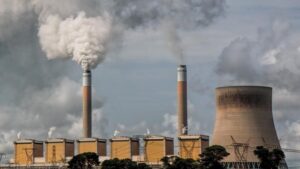
Current Status of Energy Transition: Mixed Global Progress
- India’s electricity capacity has reached nearly 50% non-fossil fuel based, marking a significant milestone in renewable expansion.
- Despite this achievement, installed capacity does not equal actual generation, as renewables suffer from intermittency and storage constraints.
- Globally, fossil fuels still dominate energy consumption, especially in electricity, transport, and industrial sectors.
- Many countries with high renewable potential face acute shortages of capital, technology, and grid readiness.
- The ambitious COP28 call to triple renewable capacity by 2030 underestimates structural, financial, and technological barriers.
Understanding Just Energy Transition: Relevance
Meaning and Core Idea
- A Just Energy Transition refers to shifting from fossil fuel–based energy systems to low-carbon and renewable energy in a manner that is equitable, inclusive, and socially balanced.
- It ensures that workers, communities, and developing countries are not disproportionately burdened during climate action.
- The concept aligns with the principle of Common But Differentiated Responsibilities (CBDR) under global climate frameworks.
Global Climate Context
- The Paris Agreement (2015) aims to limit global warming to 1.5–2°C, requiring rapid emission reductions.
- Nationally Determined Contributions (NDCs) are the primary instruments through which countries commit to energy transition.
- However, unequal historical emissions and financial capacities necessitate a just and differentiated transition pathway.
Energy and Emissions Reality
- Fossil fuels contribute:
- ~40% of global power sector emissions
- ~21% from the transport sector
- ~20% from manufacturing and industry
- These sectors cannot be decarbonised uniformly due to technological and economic constraints.
India-Specific Considerations
- India has achieved ~50% non-fossil installed capacity, yet coal remains critical for baseload power.
- Electric vehicle penetration in cars is still below 3%, reflecting affordability and infrastructure challenges.
- India’s net-zero target of 2070 underscores the need for a gradual and just transition.
Role of Key Concepts
- Hard-to-abate sectors like steel and cement need continuous high-temperature energy, limiting immediate fossil fuel exit.
- Green hydrogen offers long-term decarbonisation potential but remains costly and technologically immature.
- Baseload power requirements highlight the need for transitional fuels and diversified energy mixes.
Politics of Climate Negotiations: COP30 and Global Divides
- At COP30, India successfully resisted explicit language on fossil fuel phase-out, supported by China, Russia, and oil-exporting nations.
- Simultaneously, developing countries extracted a commitment to triple adaptation finance, though without binding timelines.
- The United States, despite climate rhetoric, aligned with fossil-fuel-dependent economies on avoiding strict phase-out obligations.
- Around 80 countries protested the absence of a fossil fuel phase-out roadmap in the final communique.
- The negotiations reflect a persistent North–South divide over historical responsibility, climate finance, and development space.
Disconnect Between Paris Targets and Emissions Reality
- The Paris Agreement’s 1.5°C target requires a 55% reduction in global emissions by 2035.
- However, global carbon emissions continue to rise, driven by economic recovery, industrial growth, and energy demand.
- The absence of binding outcomes linking COP declarations to measurable emission reductions weakens climate credibility.
- Nationally Determined Contributions (NDCs) remain insufficient and unevenly implemented.
- This growing gap between aspiration and action undermines trust in multilateral climate governance.
Sectoral Constraints: Transport and Industry Bottlenecks
- The transport sector, contributing about 21% of global emissions, is banking heavily on Electric Vehicles (EVs).
- In India, electric car penetration remains below 3%, limited by high upfront costs, battery dependence, safety concerns, and weak charging infrastructure.
- EV charging during non-solar hours indirectly increases coal-based power demand, diluting emission gains.
- The industrial sector (cement, steel, aluminium) is a hard-to-abate sector, requiring continuous high-temperature processes.
- Renewables alone cannot provide stable baseload power needed for such industries, limiting fossil fuel substitution.
Technological Limitations: Renewables, Nuclear and Hydrogen
- Renewable energy requires heavy upfront investment in generation, transmission, and storage infrastructure.
- Countries with strong solar and wind potential often lack affordable finance and grid integration capacity.
- Green hydrogen, seen as a solution for industrial heating, accounts for less than 1% of global hydrogen production.
- High production costs make green hydrogen economically unviable at scale in the short to medium term.
- Nuclear energy, though low-carbon, faces challenges of high capital cost, fuel scarcity (especially for India), safety concerns, and long gestation periods.
Developed World’s Contradictions and Responsibility
- The European Union, despite leading climate advocacy, consumed around 10,600 TWh of fossil fuels in 2024, nearly 8% of global usage.
- France and Germany alone account for one-third of the EU’s fossil fuel consumption.
- Many developed economies peaked emissions decades ago, yet have failed to achieve net-zero transitions.
- There is visible reluctance to provide concessional climate finance and technology transfer to developing nations.
- This undermines the principle of Common But Differentiated Responsibilities (CBDR).
Realistic Path Ahead: Transition Without Illusions
- Even with full NDC implementation, fossil fuel consumption may reduce only by 10–12% by 2035.
- A rapid phase-out without alternatives risks energy insecurity, inflation, and industrial slowdown.
- Developing countries need policy flexibility to balance growth, poverty reduction, and climate commitments.
- The transition must be gradual, just, and adequately financed, rather than politically symbolic.
- Fossil fuel reduction is essential, but timeframes must reflect ground realities.
Challenges:
- Financing Gap: Massive investments needed for renewables, grids, storage, and hydrogen are not being met, especially in the Global South.
- Technological Immaturity: Storage technologies, green hydrogen, and industrial decarbonisation solutions remain costly and unscalable.
- Energy Security Concerns: Sudden fossil fuel reduction can destabilize power supply, particularly in coal-dependent economies like India.
- Weak Global Consensus: Lack of binding commitments and political divisions dilute the effectiveness of COP outcomes.
- Industrial Constraints: Heavy industries require continuous high-temperature energy, which renewables cannot yet reliably supply.
- EV Ecosystem Gaps: High costs, battery dependence on imports, and inadequate charging infrastructure slow transport decarbonisation.
- Equity Concerns: Developed countries’ historical emissions contrast sharply with their reluctance to fund transitions in poorer nations.
Way Forward:
- Scaled Climate Finance: Developed nations must honour commitments on adaptation and mitigation finance, including concessional loans and grants.
- Technology Transfer: Sharing of battery storage, hydrogen electrolysers, and carbon capture technologies should be institutionalized.
- Phased Transition Strategy: Sector-specific timelines rather than blanket phase-out targets can ensure economic stability.
- Grid Modernisation: Investments in smart grids, energy storage, and demand-side management are critical for renewable reliability.
- Industrial Innovation: Support for green steel, low-carbon cement, and hydrogen-based processes must be prioritized.
- Balanced Energy Mix: Renewables should be complemented with nuclear, gas as transition fuel, and efficiency improvements.
- Just Transition Framework: Protecting workers, regions, and economies dependent on fossil fuels must be integral to climate policy.
Conclusion:
Phasing out fossil fuels is a climate necessity, but its execution must be realistic, equitable, and well-financed. Without credible climate finance, mature technologies, and differentiated responsibilities, global commitments will remain aspirational. The transition must reconcile environmental urgency with economic and developmental imperatives. Implementing robust environmental clearance processes and conducting thorough environmental impact assessments (EIAs) are crucial steps towards achieving a pollution-free environment. Additionally, adhering to the precautionary principle and the polluter pays principle can guide policy decisions and ensure responsible environmental stewardship during this complex transition.
The path forward requires a delicate balance between environmental protection and development needs. This balance can be achieved through the proper implementation of environmental regulations such as the Forest Conservation Act and Coastal Regulation Zone notifications. Moreover, the concept of ex post facto or retrospective environmental clearances should be carefully considered within the framework of environmental jurisprudence. The Vanashakti judgment has set important precedents in this regard, emphasizing the need for proper environmental assessments before project implementation.
To truly achieve a sustainable and just transition, we must embrace the principles of environmental democracy, ensuring that all stakeholders have a voice in the decision-making process. This inclusive approach, combined with rigorous scientific assessments and policy frameworks, will be essential in navigating the complex challenges of phasing out fossil fuels while safeguarding both environmental and developmental interests.
Source: HT
Mains Practice Question:
“Despite global commitments, phasing out fossil fuels remains a distant goal.” Examine the political, technological, and economic challenges hindering fossil fuel phase-out. Suggest a balanced pathway for developing countries like India to achieve climate goals without compromising growth, considering the need for environmental clearances and impact assessments.