
Supreme Court 2026: Faith, Freedom, Citizenship, Accountability
Syllabus:
GS-2: Judiciary
Why in the News?
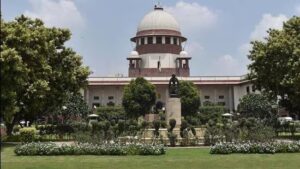
In 2026, the Supreme Court of India is set to hear several constitutionally significant cases involving free speech, religious freedom, citizenship, electoral rights, judicial accountability, and privacy. After a year dominated by judicial controversies, attention returns to courtroom adjudication impacting citizens’ liberties and democratic governance.
Free Speech and Personal Liberty Before the Court:
- Free speech jurisprudence will remain central under the tenure of CJI Surya Kant, whose oral observations and rulings have shaped national debates.
- Bail cases, especially that of Umar Khalid under the Unlawful Activities (Prevention) Act (UAPA), highlight how procedural delays directly affect personal liberty under Article 21.
- The Court will examine the interpretation of Section 15 of UAPA, particularly the expanded definition of a “terrorist act”, which critics argue enables over-criminalisation of dissent.
- Contradictory judicial approaches are visible: stern remarks in cases involving Nupur Sharma and hate speech, alongside interim protections for digital creators like Ranveer Allahbadia, raising concerns of judicial inconsistency.
- Proposals such as mandatory Aadhaar or PAN-based verification for social media users raise questions on privacy, anonymity, and chilling effects on speech.
Constitutional Articles, Laws, and Institutions:Key Constitutional Articles● Article 14 – Equality before Law ○ Guarantees equality before the law and equal protection of laws. ○ Forms the basis for challenges to discriminatory legislation, including CAA, electoral revisions, and religious laws. ○ Central to the application of the reasonable classification test. ● Article 19 – Freedom of Speech and Expression ○ Protects political dissent, media freedom, and digital expression. ○ Subject to reasonable restrictions under Article 19(2) for public order and security. ○ Frequently invoked in hate speech, sedition, and online content regulation cases. ● Article 21 – Right to Life and Personal Liberty ○ Includes due process, bail jurisprudence, privacy, and dignity. ○ Expanded through judicial interpretation to cover procedural fairness. ○ Core to challenges involving UAPA detentions and surveillance. ● Article 25 – Freedom of Religion ○ Ensures freedom of conscience and religious practice, subject to public order and morality. ○ Interpreted through the Essential Religious Practices (ERP) doctrine. ○ Relevant in Sabarimala, hijab ban, and Waqf law cases. ● Basic Structure Doctrine ○ Prevents Parliament from altering the core constitutional framework. ○ Includes secularism, federalism, judicial independence, and democracy. ○ Central to scrutiny of ONOE and constitutional amendments. Important Legislations ● Unlawful Activities (Prevention) Act, 1967 ○ Anti-terror law enabling extended detention and stringent bail conditions. ○ Criticised for impacting personal liberty. ● Places of Worship Act, 1991 ○ Freezes religious status of places as of August 15, 1947. ● Citizenship (Amendment) Act, 2019 ○ Provides citizenship on religious criteria, excluding Muslims. ● Digital Personal Data Protection Act, 2023 & DPDP Rules, 2025 ○ Establish data fiduciary obligations and individual privacy rights. ● Representation of the People Act, 1951 ○ Governs elections, disqualification, and electoral integrity. ● Judges (Inquiry) Act, 1968 ○ Prescribes procedure for impeachment of judges. ● Waqf (Amendment) Act, 2025 ○ Alters administration of waqf properties, increasing state oversight. ● Prohibition and Regulation of Online Gaming Act, 2025 ○ Regulates online money gaming, impacting digital economy and federalism. Key Institutions ● Supreme Court of India ○ Guardian of the Constitution and fundamental rights. ● Election Commission of India ○ Conducts free and fair elections under Article 324. ● Supreme Court Collegium ○ Appoints judges to higher judiciary. ● Data Protection Board ○ Enforces data protection compliance and penalties. |
Religion, Faith, and Constitutional Morality
- The Court is expected to revisit the “Essential Religious Practices” (ERP) test, a doctrine evolved to balance religious freedom under Article 25 with constitutional values.
- Challenges to the Places of Worship Act, 1991, which freezes the religious character of places of worship as of August 15, 1947, remain pending and politically sensitive.
- The Sabarimala review petitions, questioning women’s entry and religious autonomy, continue to test the balance between gender equality and faith-based practices.
- Interim orders on the Waqf (Amendment) Act, 2025 have already limited the role of district collectors and capped non-Muslim representation on Waqf Boards.
- A comprehensive challenge to the Waqf law—especially provisions allowing the government to determine waqf property status—is likely to be heard in 2026.
Citizenship, Elections, and the State’s Power
- The Citizenship (Amendment) Act, 2019 (CAA) remains under judicial scrutiny for its religion-based classification, raising questions under Article 14 (Equality).
- The Special Intensive Revision (SIR) of electoral rolls in Bihar set a precedent for nationwide voter verification, now likely to be litigated in opposition-ruled states.
- The Supreme Court’s directive to include Aadhaar as a valid identity document strengthens voter inclusion but raises privacy and exclusion concerns.
- The Court acknowledged the Election Commission’s power to conduct such revisions, while also emphasising procedural fairness.
- These cases reflect the tension between administrative efficiency and democratic participation.
Policy Laws and Expanding Judicial Review
- The Prohibition and Regulation of Online Gaming Act, 2025 bans online money games, blurring the judicially evolved distinction between games of skill and chance.
- Multiple High Court challenges were transferred to the Supreme Court, indicating the law’s pan-India implications.
- The Court also delivered major commercial rulings in 2025, clarifying limits of judicial intervention in private contractual disputes.
- Earlier judgments favouring the executive—such as on retrospective environmental clearances—were reversed, signalling a return to institutional balance.
- These developments suggest a recalibration of judicial restraint and activism.
Judicial Accountability, Collegium, and Impeachment
- Allegations against Justice Shekhar Yadav and Justice Varma placed judicial conduct under unprecedented public scrutiny.
- The Supreme Court agreed to hear Justice Varma’s plea challenging the Lok Sabha Speaker’s decision to constitute an inquiry committee under the Judges (Inquiry) Act.
- If Parliament proceeds, India may witness its first successful impeachment of a constitutional court judge.
- The failure of another impeachment motion demonstrates that judicial accountability is deeply political in practice.
- Internal dissent within the Collegium, including a rare dissent note by Justice B.V. Nagarathna, raised transparency concerns.
Technology, Privacy, and Public Scrutiny
- The phased implementation of the Digital Personal Data Protection Act, 2023 and DPDP Rules, 2025 will trigger litigation on consent, surveillance, and state exemptions.
- Courts have embraced hybrid hearings and live-streaming, enhancing transparency but also exposing judges to real-time public criticism.
- Isolated incidents, including a lawyer attacking a sitting judge in open court, highlight rising institutional vulnerability.
- Post-retirement interviews by former CJIs defending landmark judgments (Babri Masjid, Aravalli case) have reopened debates on judicial propriety.
- The Court must balance openness with institutional dignity.
Big Constitutional Questions Ahead
- The One Nation, One Election (ONOE) Bill faces constitutional scrutiny, particularly regarding federalism and democratic accountability.
- Former CJIs have expressed divergent views on whether ONOE violates the Basic Structure Doctrine.
- With five Supreme Court judges retiring in 2026, the composition of benches will significantly affect outcomes.
- CJI Surya Kant’s leadership of the Collegium will shape the Court’s ideological direction.
- Overall, 2026 signals a year of constitutional introspection and institutional testing.
Challenges:
- Delay in Justice: Prolonged hearings in bail and civil liberty cases undermine Article 21 protections.
- Judicial Inconsistency: Varying oral observations risk eroding predictability in free speech jurisprudence.
- Politicisation of Accountability: Impeachment remains dependent on political will, not institutional ethics alone.
- Religious Polarisation: Cases involving faith risk being interpreted through majoritarian or minority lenses.
- Privacy vs Governance: Aadhaar-based verification and DPDP exemptions pose threats of state overreach.
- Transparency Deficit: Collegium decisions continue to face criticism for opaque functioning.
- Public Trust Erosion: Off-court controversies and post-retirement defences weaken judicial credibility.
Way Forward:
- Time-bound Hearings: Prioritise bail and liberty cases through constitutional benches.
- Clear Free Speech Standards: Develop consistent tests balancing harm prevention and dissent protection.
- Judicial Accountability Mechanism: Consider an independent, non-political oversight body within constitutional limits.
- Revisit ERP Doctrine: Replace it with a rights-based proportionality framework.
- Data Protection Safeguards: Narrow state exemptions and strengthen Data Protection Board independence.
- Collegium Transparency: Publish dissent notes and objective criteria for appointments.
- Institutional Discipline: Frame guidelines on post-retirement conduct of judges.
- Civic Inclusion: Ensure electoral roll revisions prioritise inclusion over exclusion.
Conclusion:
As India enters 2026, the Supreme Court stands at a constitutional crossroads. Its decisions on faith, freedom, citizenship, privacy, and accountability will shape democratic resilience. The challenge lies in reaffirming constitutional morality, safeguarding liberties, and restoring institutional trust amid intense public and political scrutiny.
Source: IE
Mains Practice Question:
“Discuss how the constitutional cases likely to be heard by the Supreme Court in 2026 reflect the evolving relationship between the citizen and the State in India. Evaluate the challenges faced by the judiciary in balancing liberty, faith, accountability, and governance.”