
Bangladesh at a Crossroads: Fake Promises, False Enemies and a Fractured Polity
Syllabus:
GS 2:
- Neighbourhood first
- International relations
Why in the News?
The Overseas Mobility (Facilitation and Welfare) Bill, 2025 marks a shift from rights-based protection to bureaucratic facilitation of labour migration. By diluting safeguards against trafficking, centralising governance, weakening recruitment regulation, and neglecting reintegration, the Bill risks institutionalising exploitation of Indian migrant workers rather than securing their dignity, safety, and agency.
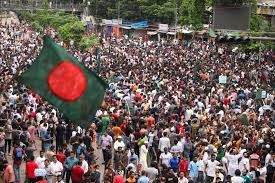
Taking the Long View of Bangladesh’s Crisis
When analyzing the complex political landscape of Bangladesh, it’s crucial to take a long-term perspective, much like how environmental impact assessments consider the lasting effects of development projects. Just as the process of obtaining environmental clearances involves careful scrutiny, understanding Bangladesh’s current crisis requires examining its historical context.
- Political transitions in Bangladesh, like ex post facto environmental approvals, have often been contentious and retroactive in nature.
- Peaceful transfers of power have been as rare as pollution-free environments in rapidly industrializing nations.
- Electoral victories typically result in a “winner-takes-all” approach, reminiscent of how some development projects proceed without proper environmental clearances.
Democracy: An Uneven Record
Over the past five decades, Bangladesh’s democratic journey has been as turbulent as the implementation of environmental regulations in developing countries. Just as the Forest Conservation Act faces challenges in enforcement, Bangladesh’s democratic institutions have struggled to take root.
- Bangladesh has never been a model democracy, much like how it has struggled with consistent environmental jurisprudence.
- Periods of civilian rule have alternated with military dominance, political vendetta, and institutional decay, paralleling the ebb and flow of environmental protections.
- The current vilification of Sheikh Hasina, especially in some Western narratives, ignores this broader historical context, much like how critiques of environmental policies often overlook long-term trends.
- Similarly, the glorification of Muhammad Yunus as a democratic savior finds little resonance in India or among seasoned observers, echoing how some environmental solutions are overhyped without considering their full impact.
Power Vacuum and the Rise of Extremism
The political vacuum in Bangladesh has allowed extremist forces to gain ground, much like how the absence of strong environmental regulations can lead to ecological degradation. This situation mirrors the challenges faced in implementing the Coastal Regulation Zone norms in many countries.
- The last 16 months have witnessed the capture of key institutions by right-wing Islamist forces, reminiscent of how industrial lobbies sometimes influence environmental policy-making.
- These groups are embedded within ruling circles and shielded by political immunity, similar to how some polluters evade the “polluter pays principle.”
- Media suppression is evident, with journalists fearing reprisals and contrarian voices silenced, much like the challenges faced in environmental reporting.
- Mob justice and street vigilantism have returned, signaling democratic regression and a disregard for the precautionary principle in governance.
Elections: Necessary but Not Sufficient
Elections remain the only viable exit from the current morass, but like environmental clearances, they are necessary but not sufficient for ensuring good governance. The process must be transparent and inclusive, adhering to principles of environmental democracy.
- Credible elections require a strong, neutral administrative machinery, similar to how fair environmental impact assessments need impartial experts.
- An election without the Awami League cannot be considered legitimate, just as development without considering environmental impacts is unsustainable.
- Reform measures are underway, but intent must translate into practice, not symbolism, echoing the challenges in implementing environmental laws.
India’s Calculated Watchfulness
India’s approach to Bangladesh’s situation is nuanced, much like how nations navigate complex environmental treaties. Delhi’s stance reflects an understanding of regional dynamics akin to how the Vanashakti judgment considered broader ecological impacts.
- India has clearly stated its readiness to engage with any legitimate political formation in Bangladesh, maintaining a stance similar to its approach to international environmental agreements.
- Delhi’s approach reflects awareness of Pakistan’s strategic games, sensitivity to Bangladeshi public sentiment, and realism about regional stakes, much like balancing development needs with environmental conservation.
The Real Beneficiaries: Jamaat-e-Islami and Pakistan
The political vacuum has benefited extremist forces, much like how lax environmental enforcement can benefit unscrupulous developers. This situation poses risks to Bangladesh’s stability and regional security.
- Right-wing Islamist forces, led by Jamaat-e-Islami, are exploiting the situation, similar to how some entities exploit loopholes in environmental regulations.
- Pakistan is leveraging the instability to regain influence, reminiscent of how external actors sometimes influence environmental policies in developing nations.
The Real Losers: Bangladesh’s Youth
Bangladesh’s youth are being misled by false promises and manufactured enemies, much like how misinformation can cloud public understanding of environmental issues. The focus on India as a scapegoat distracts from real developmental and identity challenges, similar to how blaming external factors can detract from addressing local environmental concerns.
Conclusion: Waiting for Democratic Maturity
Bangladesh’s political maturation process is ongoing, much like the evolution of environmental jurisprudence in developing nations. The country’s future depends on inclusive elections, institutional neutrality, and rejection of extremist shortcuts, paralleling the need for balanced environmental policies that consider both development and conservation.
As Bangladesh navigates these challenges, it must strive for a political environment that respects democratic norms and the rights of all citizens, much like how nations must work towards creating a pollution-free environment for future generations. The coming weeks are crucial, and the silent majority awaits its turn to shape a more sustainable and equitable future for Bangladesh.
UPSC Mains Practice Question
Q: Discuss the implications of excessive centralisation in migration governance for India’s federal structure, with reference to the Overseas Mobility Bill, 2025. (15 marks)