
Inhalable Microplastics: The Invisible Pollutant Deepening India’s Urban Air Crisis
Syllabus
GS 3 ● Climate change ● Microplastics in air
Why in the News
Recent scientific evidence reveals that inhalable microplastics have emerged as a dangerous but largely unrecognized component of urban air pollution. Acting as “Trojan horses”, these particles carry heavy metals, toxic chemicals, and antibiotic-resistant microbes deep into human lungs. The article highlights health risks, inter-city variations, policy gaps, and the urgent need to integrate microplastics into air-quality governance, similar to how environmental clearances are required for potentially polluting projects.
Introduction: From Smog to Silent Toxins
● In November, as Delhi’s Air Quality Index (AQI) once again hovered between “very poor” and “severe”, citizens gathered at India Gate holding placards stating “I miss breathing” and “Right to live, not just survive.”
● Public discourse on air pollution in Indian cities has traditionally focused on PM2.5, PM10, nitrogen oxides, sulphur oxides, ozone, carbon monoxide, and lead.
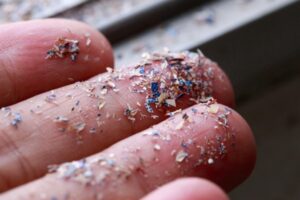
● However, new research indicates that India’s polluted air contains an even more insidious and overlooked contaminant — inhalable microplastics.
● These particles are not only respirable but also biologically and chemically active, making them a serious long-term public health concern, potentially requiring a new approach to environmental impact assessment and clearances.
● The study introduces a critical shift in understanding urban air pollution — from visible smog to microscopic, persistent toxic carriers.
What Are Inhalable Microplastics?
Definition and Size
● Inhalable microplastics are plastic particles smaller than 10 micrometres (µm).
● Due to their minute size, they: ○ Bypass nasal and bronchial defence mechanisms ○ Penetrate deep into the alveoli ○ Persist in the lungs because of low gravitational settling velocity
Why They Are Especially Dangerous
● Unlike conventional particulate matter, microplastics: ○ Do not degrade easily ○ Act as carriers of other toxins ○ Remain airborne for prolonged periods
● Chronic exposure leads to cumulative biological harm, even at low concentrations, highlighting the need for stringent environmental clearances and ex post facto assessments of existing pollution sources.
The Study: India’s First Comprehensive Assessment
About the Research
● Published in Environment International (November) ● Led by Prof. Gopala Krishna Darbha, IISER Kolkata ● First comprehensive Indian study on inhalable microplastics
Methodology
● Ambient air sampled at human breathing height (1.5 metres) ● Monitoring conducted in five high-density market areas across: Delhi, Mumbai, Kolkata, Chennai
Key Findings
● Average concentration: 8.8 µg/m³ ● Estimated daily inhalation: ~132 micrograms per person ● Indicates a very high daily pollution dose, comparable to other major pollutants
Seasonal and Spatial Patterns
Seasonal Variation
● Winter evenings: ○ 32.7 particles/m³ ● Non-winter evenings: ○ 18.8 particles/m³ ● Represents a 74% seasonal increase in winter, similar to PM2.5 trends
Inter-City Differences
● Highest exposure: ○ Kolkata: 14.23 µg/m³ ○ Delhi: 14.18 µg/m³ ● Lower exposure: ○ Mumbai: 2.65 µg/m³ ○ Chennai: ~4 µg/m³
Reasons for Variation
● Meteorological conditions (coastal winds vs landlocked stagnation) ● Urban population density ● Waste mismanagement ● Traffic and construction intensity
A ‘Trojan Horse’ of Toxins
1. Heavy Metals
● Microplastics were found to carry: ○ Lead ○ Cadmium ● Atmospheric lead levels were highest in Kolkata, followed by Delhi.
2. Endocrine-Disrupting Chemicals
● Presence of diethyl phthalates, known to: ○ Disrupt hormonal balance ○ Affect reproductive health ○ Increase cancer risk
3. Microbial Carriers
● Inhalable microplastics also hosted: ○ Harmful fungi such as Aspergillus fumigatus ○ Microbes containing antibiotic-resistance genes (ARGs) ● This raises the risk of: ○ Hard-to-treat respiratory infections ○ Spread of antimicrobial resistance (AMR)
Health Implications: A Multi-System Threat
1. Respiratory System
● Deep lung penetration leads to: ○ Chronic inflammation ○ Reduced lung capacity ○ Increased asthma and bronchitis risk
2. Cancer and Hormonal Disorders
● Toxic co-pollutants linked with: ○ Breast problems ○ Hormone-related diseases ○ Elevated cancer risk
3. Vulnerable Groups
● Especially at risk: ○ Traffic police ○ Construction workers ○ Sanitation workers ○ Street vendors ● Tyre-wear particles, a major source, are particularly carcinogenic.
Sources of Inhalable Microplastics
Major Sources
● Synthetic textiles (clothing fibres) ● Tyre wear and road dust ● Packaging materials ● Household waste ● Cosmetics and personal-care products ● Construction and micro-industries
Particle Forms
● Fragments more common than filaments ● Size distribution: ○ <100 µm: 56.2% ○ 100–500 µm: 24.7% ○ 500 µm: 19.1%
The Policy Blind Spot
Limitations of the Air Quality Index (AQI)
● AQI may capture some nanoplastics indirectly, but: ○ Evidence is too preliminary ○ No direct measurement or standard exists ● Inhalable microplastics remain outside regulatory frameworks, unlike other pollutants covered by environmental clearances and the Forest Conservation Act.
Waste Management Failures
● Uncontrolled dumping ● Poor segregation ● Open burning of waste ● These practices release: ○ Toxic gases ○ Fine particulates ○ Microplastics that piggyback on PM2.5
Policy Imperatives and the Way Forward
Regulatory Measures
● Ban or sharply reduce single-use plastics ● Regulate polymer-intensive products ● Strengthen Extended Producer Responsibility (EPR) ● Consider implementing ex post facto environmental clearances for existing pollution sources
Urban Air Governance
● Integrate microplastics into: ○ Air-quality monitoring ○ Pollution standards ○ Health-risk assessments ● Apply principles of environmental jurisprudence to microplastic regulation
Occupational Safety
● Provide protective equipment to: ○ Traffic police ○ Urban informal workers ● Regular health screening for high-risk occupations
Behavioural and Lifestyle Changes
● Promote: ○ Cotton-based clothing ○ Reuse and refurbishment over recycling ○ Reduced consumption of synthetic textiles
Research and Public Awareness
● Expand city-wise monitoring ● Support interdisciplinary studies ● Increase public awareness of non-visible air pollutants ● Conduct comprehensive environmental impact assessments for urban development projects
Conclusion: An Emerging Environmental Crisis
● Inhalable microplastics represent a new frontier of urban pollution, combining physical, chemical, and biological hazards.
● Their ability to smuggle toxins deep into the human body makes them far more dangerous than conventional particulates.
● India’s air-pollution response must evolve beyond visible smog and include emerging contaminants, embracing principles of environmental democracy and the polluter pays principle.
● Recognizing and regulating inhalable microplastics is essential for safeguarding public health, environmental justice, and urban sustainability. This may require innovative approaches to environmental clearances and post facto assessments, similar to those used in other areas of environmental governance.
UPSC Mains Practice Question
Q: “Inhalable microplastics have emerged as a hidden but potent threat to urban air quality and public health.” Discuss their sources, health impacts, and the policy gaps in India’s air pollution governance, considering the principles of environmental jurisprudence and the need for comprehensive environmental impact assessments. (15 marks)