







India’s Demographic Dividend: Boon or Burden?
Syllabus:
GS Paper – 2
testing Skill Development,Health Poverty Education
GS Paper – 3
Employment Mobilization of Resources Inclusive Growth
Why in the News ?
- India has 800+ million people below 35 years, making it the world’s largest youth population.
- This demographic dividend is at risk of becoming a demographic liability, due to mismatch between education and employability.
- AI and automation are rapidly reshaping the job market; without upskilling and reskilling, India’s youth may face massive unemployment and unrest.
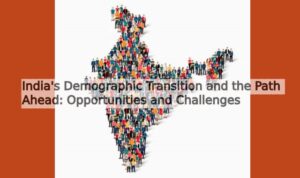
India’s Demographic Dividend: An Overview
- Demographic Dividend = Economic growth potential when the working-age population (15–64 years) is larger than dependent groups.
- India: 67% population in working-age; median age = 28 years (UN, 2023).
- Window of opportunity: 2020–2055 (35 years approx.) as per UNFPA.
- Advantage: Largest youth population in the world, ahead of China.
- Paradox: Instead of harnessing, India risks demographic disaster due to mismatch between education and employability.
- Nobel Laureate Rabindranath Tagore‘s quote stresses preparing youth for the future, not past jobs.
- Current reality: Unemployment + unemployability = ticking time
| Key points : India’s Demographic Dividend and Skilling” |
| ● Demographic Dividend: Defined by UNFPA as potential growth when working-age population > dependents. |
| ● India’s Window: 2020–2055 (~35 years). |
| ● Median Age: 28 years (2023). |
| ● Skill India Mission (2015): Target 400 million → underachieved. |
| ● PMKVY, PMKK, JSS, PMYY, SANKALP: Schemes for skilling. |
| ● Graduate Employability (2025): 43% job-ready. |
| ● India Skills Report 2024: 65% students misaligned with interests/career choices. |
| ● McKinsey Report: 70% jobs at risk by 2030. |
| ● WEF Forecast: 170M jobs created, 92M displaced. |
| ● Tagore’s Quote: Symbolic of mismatch between old education and new era. |
| ● Global Examples: Germany (apprenticeships), Singapore (SkillsFuture), Finland (future skills curriculum). |
AI and the Future of Work :
- Artificial Intelligence (AI) is the most disruptive force in the global job market.
- Research shows:
○ 70% of global jobs impacted by AI.
○ 30% of tasks in many jobs automated.
○ In India, 7 out of 10 jobs at risk by 2030 (McKinsey).
- World Economic Forum (WEF) prediction: By 2030 → 170 million new jobs created, but 92 million displaced.
- Urgency: India must up-skill, re-skill, and cross-skill workforce continuously.
- Current curriculum cycles (3-year updates) are too slow to match disruptive tech pace.
- Without reform, India risks creating educated but unemployable graduates.
- The rise of AI and automation is reshaping industries, including the semiconductor sector. Top chip manufacturers and semiconductor companies are increasingly integrating AI into their processes, from chip design to fabrication.
Education-Employment Mismatch :
- India produces millions of graduates annually, but industry-ready talent remains scarce.
- 40–50% of engineering graduates unemployed or underemployed.
- Graduate Skills Index 2025: Only 43% of graduates job-ready.
- 61% of higher education leaders admit curricula outdated, misaligned with job market.
- Disparity is not limited to non-STEM fields; even engineers face placement issues.
- EdTech largely focuses on rote learning, test prep, not career discovery or job-readiness.
- Skills gap = Degrees ≠ Employability → industry complains of talent shortage despite rising graduate numbers.
- This mismatch extends to emerging fields like semiconductor technology, where there’s a growing demand for skilled professionals in chip fabrication and design.
The Mismatch Begins in High School :
- Early stage career guidance is almost absent.
- Mindler Survey (2022):
○ 93% of students (Classes 8–12) aware of only 7 career options (doctor, engineer, lawyer, teacher, etc.).
○ In reality → 20,000+ career paths exist.
- Only 7% of students receive formal career counselling.
- India Skills Report 2024:
○ 65% of high school graduates pursue degrees misaligned with interests/market needs.
- Impact: Students graduate with irrelevant skills → fueling unemployment.
- Example: Students studying traditional streams, while industry demands AI, data science, cybersecurity, green jobs, and semiconductor technology.
Digital Tools, but Analog Mindsets :
- Smartphones & internet accessible, but pedagogy remains exam-centric.
- Schools focus on rote learning, not skill-building.
- AI labs and computers exist, but curricula lag.
- EdTech platforms (Coursera, Udemy, etc.):
○ Offer certifications.
○ But certificates becoming commoditised; limited employer value.
- Disconnect persists between education system and market realities.
- Lack of practical learning → fresh graduates ill-equipped to meet industry expectations, including in emerging fields like semiconductor fabrication and chip design.
Government Interventions So Far :
- Skill India Mission (2015): Train 400 million by 2022 → fell short.
- Multiple schemes (“acronym soup”):
○ PMKVY, PMKK, JSS, PMYY, SANKALP, Apprenticeship Scheme.
- Challenges:
○ Overlapping policies, poor monitoring, fragmented implementation.
○ Limited industry-academia linkage.
- Despite large funding, outcomes disappointing.
- Some progress: Integration of AI, coding, and digital literacy in CBSE/NCERT curricula.
- But overall → lack of cohesive national strategy.
- The India Semiconductor Mission aims to establish a domestic semiconductor industry, but its integration with education and skill development programs remains limited.
The Decisive Decade :
- India’s ambition: Global digital powerhouse by 2030.
- Two pathways:
○ Harness demographic dividend through education-technology-employment integration.
○ Or face demographic disaster with unemployed, frustrated youth.
- Warning signs:
○ Mandal agitation (1990s): Youth protests → violence, deaths.
○ Risk of similar unrest if educated youth remain jobless.
- World Bank Economic Review (Lant Pritchett): “Where Has All the Education Gone?” highlights paradox of education without employability.
- The choice:
○ Prepare youth for jobs of tomorrow, including roles in the semiconductor ecosystem and chip manufacturing.
○ Or create a generation of literate but unemployable youth → ticking time bomb.
The Road to Future-Ready Youth :
- Solution requires multi-stakeholder approach.
- Government + private sector + academia must collaborate.
- Curriculum reform → integrate 21st century skills (critical thinking, digital literacy, problem-solving, AI, green tech, semiconductor technology).
- Career counselling must start at school level, including awareness about emerging fields like chip design and fabrication.
- Skill mapping & forecasting required to match education with industry demands, including the needs of semiconductor companies and chip manufacturers.
- Continuous learning ecosystem: Not one-time skilling, but lifelong re-skilling.
- India must shift from degree-based to skill-based recognition.
- Develop a robust semiconductor ecosystem to create high-skilled jobs and reduce dependence on imports.
Challenges :
- Education-Industry Disconnect: Curricula not aligned with emerging job markets, including the semiconductor industry.
- Overproduction of graduates in traditional fields with fewer jobs.
- Limited Career Guidance: Students unaware of diverse career paths, including opportunities in chip manufacturing and design.
- Poor Implementation of Skill Missions: Fragmented approach, lack of monitoring, duplication of schemes.
- Digital Divide: Rural areas lack digital infrastructure despite smartphone penetration.
- Cultural Mindset: Families still prioritise “doctor/engineer” careers; resistance to non-traditional fields like semiconductor technology.
- Employer Perspective: Certifications often lack credibility; practical exposure missing, especially in high-tech fields like chip fabrication.
- Social Risks: Educated but unemployed youth = political unrest, crime, and radicalisation.
Way Forward :
- Curriculum Reforms: Fast-track updates to include AI, coding, data science, sustainability, and semiconductor technology.
- Career Awareness: National counselling programme in schools for early guidance, including information on emerging fields like chip design and fabrication.
- Stronger Skill-Industry Linkages: Encourage apprenticeships, internships, vocational courses aligned with real jobs, including partnerships with semiconductor companies.
- Technology Integration: Use EdTech platforms for skill-based training, not just test prep, incorporating modules on advanced technologies like chip manufacturing.
- Public-Private Partnerships: Leverage industry expertise in training modules, especially from leading semiconductor foundries and chip manufacturers.
- Monitoring Mechanisms: Track progress of Skill India schemes with transparent outcomes, including initiatives related to the semiconductor ecosystem.
- Equity Focus: Prioritise rural, tribal, and disadvantaged youth for training, including in high-tech fields.
- Global Best Practices: Learn from Germany’s apprenticeship model, Singapore’s SkillsFuture initiative, and successful semiconductor hubs globally.
- The next decade is critical — India must act decisively to avoid demographic disaster and capitalize on opportunities in emerging technologies.
Conclusion:
India’s youth is its greatest strength — but without education reform, skill alignment, and future-ready planning, it could become a demographic liability. The clock is ticking. By integrating technology, skilling, and employment, India can turn its demographic dividend into an asset. The next decade will determine whether India reaps a demographic bonus or faces a demographic time bomb.
To truly harness its demographic dividend, India must focus on developing a robust semiconductor ecosystem. The semiconductor industry is crucial for technological advancement and economic growth. By investing in semiconductor manufacturing and fostering a semiconductor value chain, India can create high-skilled jobs and reduce dependence on imports.
The government’s India Semiconductor Mission aims to establish a domestic semiconductor industry. This initiative could lead to the creation of semiconductor fabrication plants and boost the semiconductor supply chain within the country. Encouraging semiconductor chip design and semiconductor packaging capabilities will be essential for India to compete globally in the semiconductor technology space.
As the demand for electronic devices grows, so does the need for skilled professionals in the semiconductor industry. Educational institutions must align their curricula with the requirements of chip companies and semiconductor manufacturing units. This will ensure that India’s youth are prepared for careers in semiconductor fabrication, chip fabrication, and other related fields.
By focusing on the semiconductor ecosystem, India can not only address its employment challenges but also position itself as a key player in the global semiconductor value chain. This strategic move could transform India’s demographic dividend into a powerful force for innovation and economic growth in the semiconductor sector.
Source : TH
Mains Practice Question :
“India’s demographic dividend has the potential to become a demographic disaster.” Critically examine this statement in light of the growing mismatch between education, skills, and employability. Discuss the challenges posed by automation and AI, and suggest measures to ensure that India’s youth remain future-ready.