







Israel’s Gaza Takeover Plan and Operational Constraints
Syllabus:
GS Paper – 2
Bilateral Groupings & Agreements, Effect of Policies & Politics of Countries on India’s Interests, Indian Diaspora, Groupings & Agreements Involving India and/or Affecting India’s Interests
Why in the News?
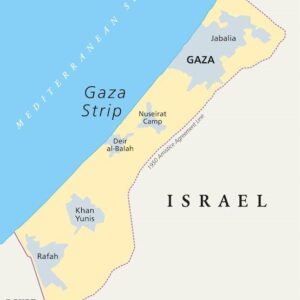
In the ongoing Gaza war, Israel has announced a plan to take control of Gaza City as part of a phased approach toward full occupation of the Gaza Strip. This action comes in response to the October 7 attack on Israel by Hamas. The move reflects serious manpower shortages and strategic challenges faced by the Israeli military after nearly two years of intense conflict with Hamas, a Palestinian militant group, and mounting international criticism over allegations of Gaza genocide.
Background and Current Situation
● Conflict origin: Began after Hamas’s October assault on southern Israel, killing around 1,200 people and taking hostages.
● Israeli aim: Disarm Hamas and remove it from power; initial focus is on Gaza City—the largest population center in northern Gaza.
● Gaza terrain: Densely populated, with a network of underground tunnels, making it a difficult battlefield.
● Military fatigue: Nearly two years of continuous fighting in Gaza, Lebanon, Syria, and the West Bank have caused reservist exhaustion and falling public support.
● Hostage factor: Families of Hamas-held hostages fear that deep incursions could endanger captives.
● Civilian impact: UN warns of starvation deaths and rising malnutrition; displacement likely to increase with further evacuations.
Strategic and Military Constraints:
● Manpower shortages: Large-scale takeover requires tens of thousands of troops; Israel is opting for a gradual advance.
● Operational risk: Rapid push risks ambushes, urban warfare casualties, and logistical strain.
● Morale issues: Reservists reluctant to extend deployments despite compulsory service; military accommodating family and financial concerns.
● Leadership differences: Israeli Chief of Staff Eyal Zamir opposes full takeover, warning of Hamas traps and troop fatigue.
● Gaza City complexity: Possible Hamas-held hostages, dense structures, and tunnels require slow, methodical clearance.
Political and Diplomatic Reactions:
● Domestic sentiment: Polls show 79% Israelis want war to end in exchange for hostage release.
● Opposition voices: Some retired generals warn that rushing military methods may be a strategic mistake.
● Allied positions:
○ Germany suspending arms sales usable in Gaza.
○ UK PM Keir Starmer urges Israel to reconsider expansion.
○ Arab governments reluctant to administer Gaza post-war—don’t want to appear as foreign occupiers.
● US role: Pressured by Arab states to halt offensive and resume cease-fire talks. World leaders, including those at the UN Security Council, have called for action to address the humanitarian crisis.
Humanitarian and Regional Implications
● Aid disruption: Offensive could further restrict food and medical supplies to Gaza City.
● Displacement crisis: More evacuations mean increased internally displaced persons (IDPs) within Gaza.
● Regional fears: Egypt, Jordan, and Lebanon worry about refugee influx.
● International isolation: Growing criticism risks diplomatic fallout and sanctions.
● Security ripple: Conflict could escalate across Lebanon, Syria, and the West Bank.
Negotiations and Future Scenarios:
● Cease-fire breakdown: Talks collapsed in March after both Israel and US withdrew negotiators, citing Hamas disinterest.
● Hamas stance: Claims willingness to negotiate in good faith.
● Israeli gamble: Applying pressure to force Hamas back to talks—but risks international backlash and domestic discontent.
● Possible outcomes:
○ Limited takeover halting at Gaza City.
○ Escalation into full strip occupation.
○ Renewed cease-fire mediated by US-Arab coalition.
Challenges:
-
Manpower Shortages – Sustained multi-front warfare has strained Israel’s army and reserves.
-
Hostage Risk – Operations in Gaza City could harm captives held by Hamas.
-
Urban Warfare Complexities – Dense population, underground networks, and ambush threats increase casualty risk.
-
Humanitarian Fallout – Worsening famine, malnutrition, and displacement damage Israel’s global image.
-
Diplomatic Strain – Suspension of arms sales and pressure from allies could limit operational freedom.
-
Domestic Pressure – Majority of Israelis prioritize war termination over prolonged occupation.
-
Regional Spillover – Refugee flow risk destabilizes neighboring Arab states.
-
Hamas Strategy – Risk of Israel falling into planned traps.
Way Forward:
-
Gradual Operations – Maintain phased control to reduce troop exhaustion.
-
Humanitarian Corridors – Ensure uninterrupted aid supply to civilians.
-
Hostage Negotiations – Prioritize safe release via third-party mediation.
-
Regional Diplomacy – Engage Egypt, Jordan, and Gulf states in post-war governance planning.
-
Public Communication – Build domestic consensus with transparency on goals.
-
International Coordination – Work with allies to mitigate diplomatic fallout.
-
Troop Rotation Policies – Sustain readiness through rest cycles for soldiers.
-
Exit Strategy – Define a clear political endgame to avoid indefinite occupation.
Conclusion:
Israel’s Gaza City takeover plan reflects a strategic compromise between military ambition and operational reality. While aiming to weaken Hamas, it faces humanitarian, diplomatic, and military constraints. The Israeli security cabinet, led by Prime Minister Benjamin Netanyahu, must navigate complex challenges including allegations of Israeli impunity and violations of Palestinian rights. Sustainable peace will require a balanced mix of security operations, hostage diplomacy, and coordinated post-conflict governance with regional and international stakeholders, including the Palestinian Authority and Palestinian foreign minister. The presence of Israeli military vehicles in Gaza continues to raise concerns about the long-term stability of the region.
Source: MINT
Mains Practice Question:
“Discuss the operational, humanitarian, and diplomatic challenges in Israel’s Gaza City takeover plan. How can a phased approach, coupled with regional diplomacy, help address the crisis while balancing security objectives and humanitarian imperatives? Critically evaluate the possible implications for West Asian stability.”