







Goldilocks Economy or Illusion of Balanced Growth
Syllabus:
GS Paper – 3
Planning, Inclusive Growth, Mobilization of Resources
Why in the News?
India’s Finance Ministry recently described the economy as being in a “Goldilocks situation” — marked by moderate growth, subdued inflation, and supportive monetary conditions. However, stagnant real wages, volatile food inflation, and rising inequality raise concerns about whether this balance benefits all citizens equally.
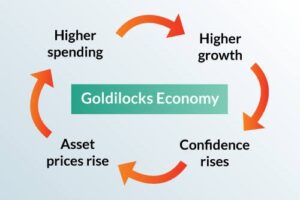
Understanding the ‘Goldilocks’ Economic Claim
- Definition – A Goldilocks economy refers to conditions that are “just right” for growth, avoiding both overheating and stagnation, typically featuring stable inflation and sustained growth.
- Official Statement – The Finance Ministry claimed India is in a Goldilocks phase, supported by 7.6% GDP growth, peaking interest rates, and stable corporate earnings in FY2024.
- Economic Size – India exited FY2024 as a $3.6 trillion economy, projecting buoyancy for FY2025.
- Macroeconomic Indicators – Analysts noted low CPI inflation and high GDP growth as signs of a healthy macroeconomic position.
- Underlying Skepticism – Economists argue that the claim masks structural imbalances such as income inequality, wage stagnation, and fiscal constraints.
Voting Rights Framework and Key Legal Provisions: |
| ● Representation of the People Act, 1950 |
| ○ Section 19 – Eligibility for voter registration: Citizen must be 18+ years and ordinarily resident in a constituency. |
| ○ Section 20 – Defines ordinary residence for electoral rolls. |
| ○ Section 20A – Provision for overseas electors (NRIs) to be included in electoral rolls at their permanent residence in India. |
| ● Constitutional Provision |
| ○ Article 19(1)(e) – Grants citizens the right to reside and settle in any part of India, indirectly linked to mobility and voting rights. |
| ● Judicial Interpretation |
| ○ Gauhati High Court (1999) – Clarified that “ordinarily resident” implies a place where a person’s habitation is fixed and not merely a temporary stay. |
| ● Labour Migration Data |
| ○ PLFS 2020-21 – Around 11% of the workforce are migrant workers, translating to approximately 15 crore eligible voters potentially affected by location-based voting restrictions. |
| ● ECI Pilot Initiatives |
| ○ Remote Voting Machine (2023) – Proposed to facilitate voting for migrants; later scrapped due to political and technical concerns. |
| ● NRI Voting |
| ○ Since 2010, NRIs can register and vote in person at their constituency in India; proxy or online voting not yet implemented. |
Inflation Trends and Wage Stagnation
- Headline CPI vs CFPI – From May 2024 to May 2025, CPI fell from 4.8% to 2.82%, but the Consumer Food Price Index (CFPI) was often higher, peaking at 10.87% in Oct 2024.
- Impact on Households – High food inflation disproportionately hurts lower-income groups, as food constitutes nearly 50% of consumption for such households.
- Real Wage Gap – In 2023, average salaries rose 9.2%, but real wage growth was only 2.5%; in 2020, it was -0.4% despite nominal salary increases.
- Erosion of Purchasing Power – Inflation eats into wage gains, creating a “silent squeeze” where households reduce discretionary spending and savings.
- Sectoral Disparity – Industries like IT services, manufacturing, and consumer goods gave lower hikes, further widening wage inequalities.
Income Inequality and Multi-Speed Growth
- K-Shaped Recovery – Post-pandemic growth has been uneven, with wealthy individuals and certain industries thriving while others lag.
- Billionaire Surge – The number of billionaires in India has increased, while wages for lower-income earners remain stagnant.
- Gini Coefficient Trends – Fell from 0.489 in AY13 to a forecasted 0.402 in AY23, but data excludes much of the informal sector.
- Access Gaps – Income inequality limits education and healthcare access, reducing prospects for inclusive growth.
- Social Risks – Persistent inequality can undermine social cohesion and political stability.
Fiscal Position and Policy Constraints
- Fiscal Deficit – Projected to decline from 6.4% in 2022-23 to 4.4% in 2025-26, indicating consolidation efforts.
- Revenue Deficit – Expected to fall from 4% to 1.5% in the same period.
- Primary Deficit – Estimated to reduce from 3% to 0.8%, yet still significant for a developing nation.
- Debt Levels – Public debt-to-GDP ratio is about 81%, exceeding the FRBM target of 60%, limiting spending flexibility.
- Crowding Out Effect – High government borrowing can reduce private investment by pushing up interest rates.
Cracks in the ‘Perfect Balance’ Narrative
- Food Price Volatility – Seasonal disruptions, global price shocks, and supply chain disruptions make inflation control fragile.
- Real Wage Stagnation – Without growth in real incomes, consumer spending — a key growth driver — remains weak.
- Unequal Benefits – GDP growth disproportionately benefits urban, formal-sector workers and top corporates.
- Superficial Stability – Macroeconomic “sweet spot” does not reflect lived realities of millions of households.
- Need for Inclusive Measures – True equilibrium requires income growth, job creation, and strong fiscal health.
Challenges:
- Volatile Food Inflation – CFPI volatility between 0.99% and 10.87% disrupts household budgets and reduces savings.
- Stagnant Real Wages – Wage growth failing to match inflation reduces purchasing power, affecting consumption demand.
- Persistent Inequality – Wealth accumulation concentrated in a small elite, while most households see negligible income growth.
- Fiscal Limitations – High debt levels constrain public spending on critical social sectors like education and health.
- Crowding Out of Private Sector – Large fiscal deficits may lead to higher interest rates, limiting private sector expansion.
Way Forward:
- Focus on Core Inflation – Policy emphasis should shift from headline CPI to core inflation for sustained price stability.
- Boost Real Wages – Encourage labor-intensive sectors and productivity-linked wage growth to strengthen household incomes.
- Progressive Taxation – Implement fair taxation on wealth to fund public goods without excessive borrowing.
- Strengthen Social Spending – Prioritize investment in health, quality education, and infrastructure to improve human capital.
- Debt Management – Reduce debt-to-GDP ratio gradually to create more fiscal space for development needs.
Conclusion:
India’s so-called Goldilocks economy hides deep structural weaknesses. Sustainable growth demands more than low inflation and high GDP — it requires inclusive income growth, fiscal prudence, and social investment. Only by addressing these fundamentals can India achieve a truly balanced and equitable economic future. The current economic conditions may appear favorable on the surface, but they mask underlying systemic challenges that need to be addressed for long-term economic stability and to avoid boom-and-bust cycles.
To achieve a true Goldilocks moment, policymakers must focus on creating economic opportunities for all segments of society, particularly low-income groups. This involves strengthening the formal sector, addressing supply chain disruptions, and ensuring that economic expansion translates into tangible benefits for household budgets across the board. Additionally, careful management of the money supply and monetary policy by the central bank is crucial to maintain the delicate balance between growth and inflation.
Ultimately, the goal should be to create an economic environment that fosters steady economic growth, maintains low unemployment, and provides ample opportunities for business investment and consumer spending. This balanced approach, coupled with targeted fiscal spending and social sector investments, can help India move beyond surface-level metrics and achieve a genuine macroeconomic equilibrium that benefits all citizens.
Source : IE
Mains Practice Question:
Critically examine the validity of India’s “Goldilocks economy” narrative in the context of wage stagnation, income inequality, and fiscal constraints. Suggest measures to ensure that macroeconomic stability translates into inclusive and sustainable growth for all sections of society.