







Malegaon Blast Verdict Reveals Investigative Flaws
Syllabus:
GS Paper – 2: Governance, Constitution, Polity, Social Justice and International Relations
Why in the News?
On July 31, 2025, a Special NIA Court acquitted all seven accused in the 2008 Malegaon bomb blast case, citing lack of admissible evidence, hostile witnesses, and procedural lapses. The verdict, especially regarding Lt. Col. Purohit and Pragya Thakur, has reignited debates on biased investigations and political narratives. This outcome has raised serious concerns about the handling of terror cases and the integrity of the investigative process.
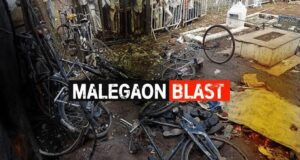
Background of the Malegaon Blast Case
- Blast Incident: On September 29, 2008, during Ramzan, a bomb exploded in Malegaon, a communally sensitive town in Maharashtra, killing 6 people and injuring 95 others.
- Bomb Details: The explosive device was allegedly planted in an LML Freedom motorcycle parked near the Shakeel Goods Transport Company.
- Initial Investigation: The case was initially investigated by the Nashik Rural Police and Mumbai ATS, and later transferred to the NIA in 2011. The involvement of a military intelligence unit in the investigation became a point of contention later in the trial.
- Accused: Fourteen individuals were arrested; charges were dropped against seven. The rest, including Sadhvi Pragya Singh Thakur and Lt. Col. Purohit, were tried under IPC, UAPA, and the Explosive Substances Act.
- Alleged Conspiracy: ATS claimed that the accused participated in conspiracy meetings under the leadership of Pragya Thakur across various locations.
Legal and Investigative Framework about● 2008 Malegaon Blast: Took place on 29 September, killing 6 and injuring 95. ● Acts Invoked: ○ Indian Penal Code, 1860 ○ Unlawful Activities (Prevention) Act, 1967 ○ Explosive Substances Act, 1908 ○ MCOCA, 1999 (later dropped) ● Investigating Agencies: ○ Nashik Rural Police, Mumbai ATS, later NIA (2011 onwards) ● Court: Special NIA Court under Judge A.K. Lahoti ● Key Accused: ○ Sadhvi Pragya Thakur (BJP MP) ○ Lt. Col. Purohit (Army Officer) ○ Five others including Sameer Kulkarni, Ajay Rahirkar ● Key Procedural Issues: ○ Improper sanctioning under UAPA ○ Inadmissible confessions under MCOCA ○ Lack of scientific evidence ○ Hostile witnesses ○ Political and media pressure |
Court Observations and Key Rulings
- Evidence Lacking: The court held that the prosecution failed to prove guilt beyond reasonable doubt, citing lack of credible evidence. This lack of evidence became a serious concern for the prosecution.
- Hostile Witnesses: Several key witnesses, including serving Army officers, turned hostile, claiming their statements were obtained under duress or coercion. The court noted that these unreliable testimonies significantly weakened the prosecution’s case.
- MCOCA Dropped: Confessional statements under the Maharashtra Control of Organised Crime Act (MCOCA) became inadmissible after the NIA dropped MCOCA in 2016 due to procedural flaws.
- Forensic Uncertainty: The court rejected claims that the bomb was planted inside the motorcycle due to lack of scientific testing; expert conclusions were deemed guesswork.
- Lt. Col. Purohit’s Defence: His claim that his association with Abhinav Bharat was part of a covert military operation was dismissed for lack of official authorization. The court noted that 323 witnesses were summoned during the trial, but many of their testimonies were found to be inconsistent or unreliable.
Role of Political and Investigative Bias
- Political Narrative: The term “saffron terror” was promoted by Congress leaders like Digvijaya Singh, Sushil Kumar Shinde, and P. Chidambaram, allegedly to balance Islamist terror perceptions.
- Public Prosecutor Exit: Rohini Salian, the special public prosecutor, resigned alleging she was pressured to go soft on the accused after the NIA took over.
- Ideological Bias Alleged: BJP leaders argue the case reflects a Congress-led bias against the Hindu community and a narrative of criminalising Hindu identity.
- Statements by Rahul Gandhi: A WikiLeaks cable claimed Rahul Gandhi told the US Ambassador that Hindu radicalism posed a bigger threat than Lashkar-e-Taiba.
- Pattern in Cases: Similar procedural failures have been observed in other high-profile terror cases, raising concerns about systemic flaws in terror investigations.
Key Legal and Investigative Shortcomings
- Improper Sanctions: Sanction to prosecute under UAPA was granted by the Maharashtra Home Department without consulting the investigating officer.
- Reverse Burden Invalidated: Because of faulty sanctioning, the statutory presumptions under UAPA, including reverse burden of proof, could not be applied.
- Torture Allegations: Accused claimed their confessions were obtained under torture, raising questions about custodial ethics and accountability.
- Forensic Gaps: No direct evidence of RDX procurement by Purohit or others was presented, and the placement of explosives remained inconclusive. The botched investigation was evident in the poor crime scene documentation and handling of forensic evidence.
- Lack of Chain of Evidence: Investigating agencies failed to establish a material link between the accused and the explosive device.
Public and Political Reactions
- Victims’ Families: Legal counsel for the families termed the verdict a “serious failure of justice”, indicating a plan to appeal in the Bombay High Court.
- Maharashtra Government: Under pressure to file an appeal, similar to its action in the 2006 Mumbai train blasts acquittals.
- BJP’s Stand: The verdict has been celebrated as vindication and used to highlight alleged targeting of Hindus under Congress regimes.
- Congress Response: Largely muted, but facing renewed criticism for past narratives on “Hindu terror” and vote-bank politics.
- Civil Society Concerns: The case reignites the debate over politicisation of terrorism investigations and secularism vs. communal politics in India.
Challenges:
- Hostile Witnesses: The retraction of testimonies by key witnesses undermines credibility and weakens prosecutions in sensitive terror cases.
- Investigative Lapses: Faulty forensics, poor documentation, and lack of procedural rigour, including wrongful sanctioning under UAPA and MCOCA, affect trial outcomes. The botched investigation, particularly in terms of crime scene documentation, has been a serious concern.
- Political Interference: Accusations of governments directing agencies to favour certain narratives compromise the autonomy of investigative bodies.
- Media Narratives: Sensationalised media coverage influences public perception and often prejudges the accused before trial completion.
- Loss of Faith in Institutions: Acquittals in such high-profile cases cause public distrust in the criminal justice system and deepen communal divides.
Way Forward:
- Strengthen Forensic Capacity: Ensure scientific rigor in collection, testing, and preservation of evidence to reduce reliance on confessions.
- Independent Oversight: Create independent commissions to review investigative procedures in terror cases and uphold accountability.
- Legal Reforms: Revise laws like UAPA and MCOCA to include safeguards against misuse, especially in confessional and custodial matters.
- Training and Sensitisation: Train police and investigators in handling sensitive communal cases without bias, pressure, or political influence.
- Protect Witness Integrity: Implement robust witness protection programs to prevent retractions under duress or inducement.
Conclusion: The Malegaon blast acquittals reflect deep flaws in investigation, prosecution, and political influence over terror cases. Beyond the verdict, the case underscores the urgent need for institutional reform to ensure that justice is both impartial and credible, free from communal or political considerations. The involvement of high-ranking officials like Param Bir Singh in such cases further complicates the narrative and raises questions about the integrity of the investigative process.
Source : IE
Mains Practice Question:
Critically examine the implications of the 2008 Malegaon blast acquittals on India’s criminal justice system. In your opinion, what reforms are needed to prevent procedural lapses and political misuse of anti-terror laws?