





Understanding Russia’s Taliban Gauntlet
Syllabus:
GS Paper – 2 India and its Neighbourhood, Effect of Policies & Politics of Countries on India’s Interests
WHY IN THE NEWS?
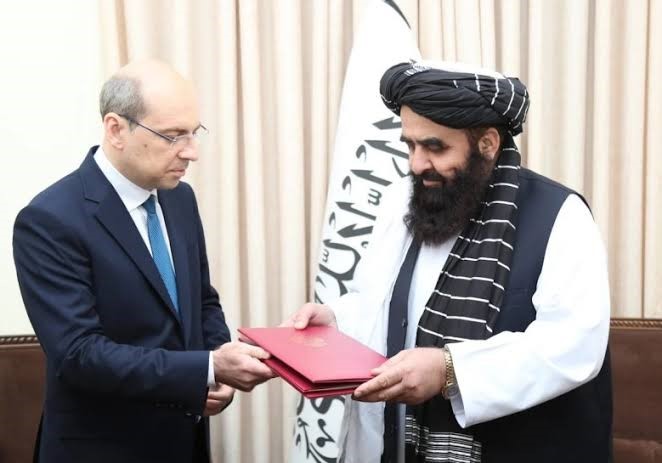
On July 3, 2025, Russia officially recognized the Islamic Emirate of Afghanistan (IEA), making it the first country to do so since the Taliban takeover in 2021. This symbolic shift marks a strategic recalibration in Moscow’s regional outlook and raises questions over security, legitimacy, and regional diplomacy.
Russia’s Evolving Stance Towards the Taliban
● In the 1990s, Russia opposed the Taliban and backed the Northern Alliance militarily.
● Since the U.S. withdrawal in 2021, Moscow has kept its Embassy operational in Kabul, signaling a shift.
● The recent recognition is a symbolic act, not backed by significant economic or military deals.
● Russia’s engagement is now pragmatic, driven by regional stability and security interests.
● Despite official recognition, the Taliban remain on Russia’s federal list of terrorist organizations.
Strategic Security Calculations
● Russia aims to counter the Islamic State–Khorasan Province (IS-K) through Taliban cooperation.
● However, IS-K attacks, like the 2022 Kabul embassy bombing and the 2024 Moscow concert hall attack, raise concerns.
● 2,500 Chechen militants are reportedly training in Taliban-held territories.
● Russia considered “preventive strikes” on terrorist camps, revealing underlying mistrust.
● The Taliban’s past support for Chechen separatists adds historical baggage to current ties.
Russia’s Regional Influence and Diplomatic Calculus
● Recognition is part of a larger regional strategy to edge out the U.S. and assert influence in Central Asia.
● Through platforms like the moscow format consultations, Russia positioned itself as a broker in Afghan affairs.
● There’s an expectation that China and Central Asian states may now follow Russia’s lead.
● Russia’s realpolitik approach downplays human rights and government inclusivity concerns.
● The move aims to open trade corridors through Afghanistan to South and Southeast Asia.
Contradictions and Complexities in Moscow’s Policy
● While recognizing the IEA, Russia still suspends—not removes— the Taliban’s terror tag.
● Some Russian officials even advocate arming the Taliban, despite terror concerns.
● Russia sees the Taliban as the only “objective reality” in Afghanistan.
● Yet, no major economic projects have taken off under Taliban rule.
● The recognition is strategically cautious, leaving room for reversal if Taliban cooperation falters.
India’s Position and Broader Implications
● India continues engaging the Taliban through backchannel diplomacy, but without formal recognition.
● Terrorism in Kashmir is an area of mutual concern for New Delhi and the Taliban.
● India is unlikely to be directly impacted by Russia’s decision.
● New Delhi maintains a balanced stance, offering humanitarian aid while avoiding diplomatic legitimization.
● Russia’s shift may influence other regional players, but India’s policy remains independent and strategic.
Conclusion:
Russia’s recognition of the Taliban-led IEA is a calculated geopolitical maneuver, balancing between security imperatives and regional ambition. While it may enhance Moscow’s diplomatic profile, the Taliban’s dubious record on terrorism and governance could test the durability and depth of this emerging alliance. The Taliban foreign ministry’s response to this recognition will likely shape future diplomatic engagements in the region.
Mains Practice Question:
Russia’s formal recognition of the Taliban regime marks a shift in its foreign policy calculus. Discuss the strategic motivations behind this move and its implications for regional security and diplomacy. Evaluate the impact of such a development on India’s interests and its Afghan policy trajectory.