







India-UK FTA Progress
Syllabus
GS 3: Indian economy
Why in the News?
Recently, India and the UK resumed high-level discussions to finalize the bilateral trade agreement, focusing on goods, services, and investments amid growing strategic cooperation and changing global alliances.
Introduction
- As India and the United Kingdom move closer to signing a landmark UK-India FTA, new avenues of cooperation are emerging.
- One of the most promising is the Global Capability Centres (GCCs) sector, which plays a crucial role in the services sector.
- The FTA could drive significant progress in innovation, digital transformation, and bilateral economic relations, potentially revolutionizing the AI revolution in both countries.
India: A Global Leader in GCCs
- India is home to over 1,500 Global Capability Centres (GCCs).
- These GCCs employ more than 1.9 million professionals across sectors, contributing to a skilled workforce.
- They serve as vital innovation hubs for global companies, supporting the innovation ecosystem.
- India’s GCCs support digital transformation, R&D, analytics, and cybersecurity, often leveraging artificial intelligence.
- Many global firms see India not just for cost-efficiency but as a strategic innovation partner in global supply chains.
UK–India FTA: A Game-Changer for GCC Growth
- The upcoming bilateral trade agreement can reshape economic relations between India and the U.K.
- It can ease regulatory frameworks and support smoother movement of professionals.
- The FTA aims to harmonise digital and data governance, potentially addressing compliance processes.
- It may encourage the expansion of U.K.-linked GCCs based in India, enhancing market access.
- It can also bring British innovation to serve global markets through India, strengthening production networks.
UK Government Commitment to the FTA
- U.K. Foreign Secretary David Lammy visited India shortly after taking office.
- His visit signals strong commitment to India-UK ties and economic cooperation.
- U.K. Business and Trade Secretary Jonathan Reynolds also visited to restart FTA talks.
- The momentum for signing the agreement is high, with both sides eager to reduce trade barriers.
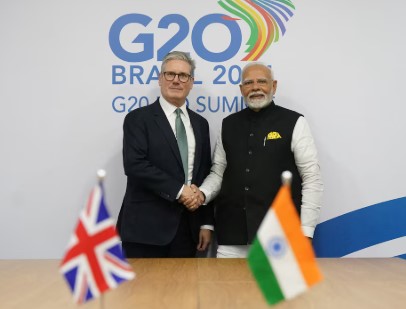
- At the 2024 G-20 Summit in Brazil, Prime Ministers Keir Starmer and Narendra Modi reaffirmed their partnership.
Strategic Benefits for Both Nations
- For the U.K., the FTA provides access to India’s fast-growing digital economy and consumer market.
- It enhances U.K.’s global innovation and service capabilities, particularly in financial services.
- For India, it attracts more British investment in services and tech, boosting the retail market.
- It aligns with India’s goals to become a hub for high-value services and manufacturing exports.
- The agreement also supports India’s skilling and digital growth ambitions, fostering job creation.
Role of GCCs in a Digital Economy
- GCCs are central to trade in services, skills, and digital technologies.
- They help companies innovate, scale, and manage operations efficiently.
- The UK India Business Council (UKIBC) promotes GCCs as key to future trade.
- GCCs operate at the intersection of innovation and service delivery, often utilizing venture capital.
- They play a crucial role in the energy transition, including areas like offshore wind and clean energy.
How the FTA Can Strengthen GCCs
- The FTA can enable robust cross-border collaboration in professional services.
- It should include strong intellectual property rights (IPR) protections.
- It can improve digital mobility solutions for skilled professionals.
- It can resolve business challenges like:
- Double taxation avoidance
- Data localisation mandates
- Conflicting standards
- These measures will boost investor confidence in GCC operations and capital markets.
Current Indian Policies Favouring GCC Growth
- India lacks a single national GCC policy.
- Despite that, policy support is strong and growing.
- MeitY has formed an industry-led panel to shape a national GCC policy.
- Stakeholders include:
- NASSCOM
- KPMG
- Zinnov
- Invest India
- The policy aims to guide states on talent, infrastructure, legal reforms, and innovation.
- It was proposed in the 2025 Union Budget, highlighting its economic value.
Role of State Governments in Promoting GCCs
- Several states are launching their own policies for GCCs.
- Uttar Pradesh held its first GCC Conclave under Invest UP.
- Industry giants like Microsoft, TCS, HCL, and Standard Chartered participated.
- The event highlighted U.P.’s incentives and infrastructure.
- It focused on cities like Lucknow, Kanpur, Prayagraj, and Varanasi, aiming to boost consumer spending.
UKIBC Consultations and Recommendations
- UKIBC held a closed-door session with leaders and experts.
- Discussions focused on how GCCs can drive economic growth.
- Key themes included:
- Governance best practices
- Whether India needs a national GCC policy
- Balancing organic growth with policy support
- Questions were raised on:
- Risks of having multiple State-level GCC policies
- How to avoid inter-State competition
- The importance of talent diversity within GCCs
- Legal challenges and market outlooks were also examined.
- Real-world business experiences from Indian and U.K. firms were shared, including insights on the toy industry.
FTA’s Role in Helping GCCs Scale Up Globally
- The FTA can help Indian GCCs move up the global value chain.
- It promotes talent mobility across the two countries.
- It facilitates knowledge-sharing between Indian and British firms.
- Economic diplomacy efforts through FTAs enhance GCC competitiveness.
- The agreement will boost GCCs’ global positioning, potentially impacting national insurance contributions.
Building a UK–India Knowledge Corridor
- Services and digital trade must remain a priority in FTA negotiations.
- GCCs are the engines of modern knowledge economies.
- Industry leaders should advocate for their interests in ongoing talks.
- A strong agreement will:
- Support resilient supply chains
- Enhance digital connectivity
- Improve innovation flows
- It will also allow for better alignment in data standards and mobility rules.
Lessons from Deloitte and Industry Reports
- Deloitte India’s white paper highlights India’s role in global tax and legal services.
- India-based GCCs now handle:
- Corporate tax
- Indirect tax
- Transfer pricing
- Litigation management
- These services are vital for global compliance and efficiency, including in the medical devices sector.
UKIBC’s Long-Term Vision
- UKIBC has consistently promoted GCCs as key to India–UK cooperation.
- Their vision extends beyond goods trade to include engineering goods.
- They focus on services, skills, and technology.
- GCCs are at the heart of this digital-first trade future, offering export opportunities.
A Call to Action for Policymakers
- U.K. and Indian governments must finalise provisions that support services.
- Data governance, IPR, taxation, and professional mobility need clear alignment.
- A well-balanced FTA can remove business barriers and boost economic value.
- It will encourage startups, boost R&D, and create high-value jobs.
- Joint efforts can build a strong, sustainable digital partnership, potentially addressing the double contributions convention.
Source:The Hindu
Mains Practice Question
How can India and the UK transform historical baggage into strategic opportunity in the 21st century, particularly in light of the ongoing UK-India FTA negotiations and the growing importance of Global Capability Centres?