
Nanavati Report Exposed State Failures In 1984 Riots
Nanavati Report Exposed State Failures In 1984 Riots
Why in News?
Former Congress MP Sajjan Kumar died while serving a life sentence in a 1984 anti-Sikh riots murder case. His role and the wider findings of the Justice Nanavati Commission have again highlighted political complicity, organised violence and failures of the State machinery.
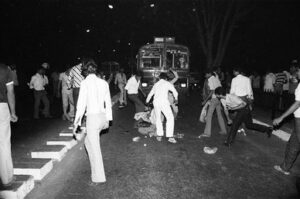
Nanavati Commission and Findings on Sajjan Kumar
- The Justice G.T. Nanavati Commission of Inquiry was constituted in 2000 by the NDA government to examine the 1984 riots and administrative failures.
- The Commission submitted its report in 2005, providing one of the most detailed official assessments of the violence.
- It examined affidavits, police records and witness testimonies relating to attacks on Sikhs and their properties across Delhi.
- The Commission found credible material suggesting that Sajjan Kumar was “probably involved” in attacks described by multiple witnesses.
- Witnesses alleged that Kumar was present at, addressed or directed mobs in areas including Palam Colony, Raj Nagar, Mangolpuri and Sultanpuri.
- The Commission noted allegations that he addressed gatherings and incited violence against Sikhs.
- It also considered circumstantial evidence such as the movement of mobs, availability of petrol and kerosene, use of buses for mobilisation and involvement of local political workers.
- According to the report, violence initially appeared relatively sporadic but subsequently became systematic and organised, suggesting that perpetrators believed they would not face immediate police action.
Political Complicity and Failure of State Machinery
- The Commission concluded that local Congress leaders and workers had allegedly incited or assisted mobs in attacking Sikhs.
- It observed that such large-scale killings could not have occurred so rapidly without the backing or assistance of influential and resourceful persons.
- The report also criticised the police investigation, noting that:
○ Several complaints were allegedly not registered.
○ Eyewitnesses were not properly examined.
○ Names of alleged offenders were omitted from records and chargesheets.
○ Investigations into influential political figures were inadequate.
- The Commission stated that these investigative failures contributed to the collapse of criminal cases and prevented proper assessment of evidence.
- Sajjan Kumar relied on his previous acquittals while defending himself, but the Commission held that acquittals alone could not prevent examination of wider evidence.
- The findings reinforced concerns over the political-criminal nexus and institutional accountability during communal violence.
About 1984 Anti-Sikh Riots :
- The 1984 anti-Sikh riots followed the assassination of Prime Minister Indira Gandhi on October 31, 1984, by her Sikh bodyguards.
- Large-scale violence against the Sikh community occurred particularly in Delhi, along with several other parts of India.
- The episode raises issues of communal violence, rule of law, police accountability, political responsibility and access to justice.
- Rajiv Gandhi, who became Prime Minister after Indira Gandhi’s assassination, later faced criticism for his response to the violence.
- In 2005, Prime Minister Manmohan Singh apologised in Parliament for the suffering caused to the Sikh community.
- The Nanavati Commission highlighted the importance of independent investigation and institutional accountability in cases involving politically influential accused persons.
- The episode remains significant for UPSC themes such as constitutional morality, secularism, minority protection, criminal justice reform and State accountability.