
Vaishya Tekri Excavation Revives Ashokan Stupa Legacy
Vaishya Tekri Excavation Revives Ashokan Stupa Legacy
Why in the News ?
The Madhya Pradesh government and ASI are renewing efforts to excavate and restore Vaishya Tekri in Ujjain after nearly 90 years. The ancient mound may contain a Mauryan-era stupa larger than Sanchi, prompting renewed archaeological and historical interest.
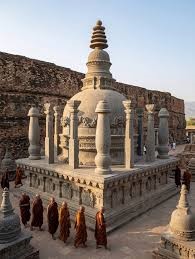
Vaishya Tekri: A Major Mauryan-Era Monument
- Vaishya Tekri, located in Ujjain, Madhya Pradesh, is believed to contain the remains of a large ancient stupa.
- The first systematic excavation was conducted in 1938–39 by the Archaeological Department of the erstwhile Gwalior State.
- The excavation established that the massive mound was not a natural formation, but the remains of a substantial stupa.
- The old excavation report estimated the stupa’s base at around 350 feet in diameter and its surviving height at nearly 100 feet.
- By comparison, the famous Sanchi Stupa is approximately 54 feet high, making Vaishya Tekri potentially much larger.
- The structure has been tentatively associated with the Mauryan period, particularly the reign of Emperor Ashoka.
- However, the archaeological evidence does not conclusively establish that Ashoka himself commissioned the stupa.
Unique Engineering and Archaeological Evidence
- Unlike conventional brick stupas, the monument had a core made of locally quarried blackish murum, which was heavily rammed to create a massive foundation.
- The exterior consisted of brick masonry laid with mud mortar, using exceptionally large bricks.
- Archaeologists identified an unusual bowl-shaped masonry structure at the base, designed to resist the outward pressure of the massive filling above it.
- A square moat-like quarry area surrounded the monument, with a gap separating it from the stupa.
- Evidence of a passage across the western side suggests an approach route for worshippers.
- Two coins — a punch-marked coin and an Avanti cast coin — along with the brick dimensions supported the possibility of a Mauryan-period date.
- The original facing has largely disappeared, making complete reconstruction difficult.
About Mauryan Architecture and Ashokan Stupas:
- Stupas were important Buddhist architectural structures, generally associated with the preservation and veneration of relics.
- Ashoka played a major role in spreading Buddhism and is traditionally associated with the construction or enlargement of numerous stupas.
- Important examples include the Sanchi Stupa, one of India’s most significant Buddhist monuments.
- Mauryan architecture is characterised by:
○ Monumental construction
○ Highly polished stonework
○ Ashokan pillars
○ Rock-cut architecture
○ Expansion of Buddhist monuments and stupas