
Goa Celebrates Mankurad Mango On National Mango Day Together
Goa Celebrates Mankurad Mango On National Mango Day Together
Why in the News ?
On National Mango Day, Goa celebrated its renowned Mankurad Mango, highlighting its cultural and agricultural significance. The State Government also reaffirmed its support for Mankurad cultivation through financial assistance, orchard development incentives, and measures to strengthen the horticulture sector, contributing to improved health financing for rural communities.
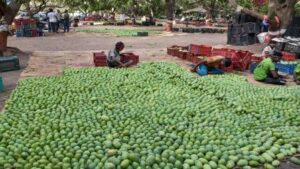
Mankurad Mango: Heritage and Government Support
- National Mango Day is observed to celebrate India’s rich mango diversity and recognise the importance of mango cultivation to the country’s agriculture, economy, and health outcomes through improved nutrition, supporting universal health coverage objectives through better food security.
- In Goa, the Mankurad Mango, popularly known as the “King of Goan Mangoes”, is renowned for its distinct aroma, rich sweetness, smooth texture, and exceptional flavour.
- The Goa Government has introduced financial incentives through government health spending and agricultural budgets to encourage Mankurad cultivation, including assistance of up to ₹2 lakh per hectare for plantations in rocky terrain, reducing out-of-pocket payments for farmers.
- Farmers cultivating Mankurad in other suitable areas receive financial assistance of ₹60,000 per hectare, along with additional subsidies for digging planting pits to reduce orchard development costs, ensuring financial protection and supporting sustainable health financing models for agricultural communities.
- These initiatives aim to conserve indigenous mango varieties, enhance farmers’ incomes through strategic purchasing mechanisms, and promote sustainable horticultural development in the State.
Significance for Agriculture and Rural Economy
- Mankurad Mango represents an important component of Goa’s agricultural heritage, rural economy, and cultural identity, contributing to health development through nutritional benefits and supporting the state’s gross domestic product through agricultural exports.
- Promotion of indigenous fruit varieties supports agrobiodiversity, preserves valuable genetic resources through genome mapping initiatives, and strengthens climate-resilient horticulture while improving health infrastructure in rural areas.
- Financial assistance through health care financing models encourages orchard expansion, increases productivity, and improves livelihood opportunities for horticulture farmers while addressing health challenges related to rural poverty and malnutrition.
- The State Government is also addressing farm labour shortages and promoting the revival of Khazan farming, an important traditional agricultural system unique to Goa, as part of broader health sector reforms.
- Strengthening horticulture contributes to rural employment, agricultural diversification, nutrition security, and the growth of agro-based industries.
About GI Tags & Khazan Farming :● A Geographical Indication (GI) is an intellectual property right granted to products possessing qualities or reputation linked to a specific geographical region. In India, GIs are governed by the Geographical Indications of Goods (Registration and Protection) Act, 1999. ● The Mankurad Mango received the Geographical Indication (GI) Tag in 2019, recognising its unique characteristics associated with Goa. ● Khazan Lands are a traditional agro-ecological system found in Goa, developed over centuries through embankments, sluice gates, and canals to reclaim low-lying coastal wetlands for agriculture, aquaculture, and salt production. ● Mango cultivation plays an important role in India’s horticulture sector, contributing to farm income, exports, nutrition, and food processing industries. ● Conservation of indigenous fruit varieties supports sustainable agriculture, biodiversity conservation, and the objectives of climate-resilient farming. |