







WHO Declares Kenya Free from Sleeping Sickness
Why in the News?
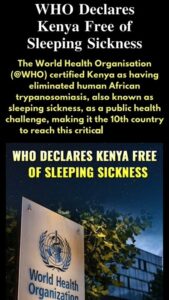
The World Health Organization (WHO) has certified Kenya as having eliminated human African trypanosomiasis, also known as sleeping sickness or African sleeping sickness, adding to a growing list of African nations that have successfully controlled this tse tse fly–borne parasitic disease. This achievement marks significant progress in the fight against this neglected tropical disease and African trypanosomiasis, a devastating parasitic infection prevalent in sub-Saharan Africa. The elimination of sleeping sickness in Kenya demonstrates the effectiveness of targeted interventions in managing the disease distribution and reducing the population at risk of human African trypanosomiasis.
Clinical Manifestations and Disease Progression of African Trypanosomiasis
- Early Stage: Fever, headaches, joint pain, weakness. This hemolymphatic stage of human African trypanosomiasis is characterized by the presence of trypanosomes in the bloodstream. The clinical manifestations of African trypanosomiasis at this stage can be non-specific, making differential diagnosis challenging.
- Advanced Stage: Confusion, disrupted sleep, behavioral changes due to central nervous system invasion. As the disease progresses, trypanosomes cross the blood-brain barrier, leading to neurological symptoms. This stage of human African trypanosomiasis often includes sleep cycle disturbance and can progress to an encephalopathic syndrome.
- Onset: Symptoms of African trypanosomiasis can appear weeks to months after a tsetse fly bite, the primary vector for human African trypanosomiasis. Environmental factors can influence the timing and severity of symptom onset in trypanosomiasis cases.
- Disease Course:
○ Gambiense: Slow progression; infected individuals may remain asymptomatic for years. This form of human African trypanosomiasis is caused by Trypanosoma brucei gambiense. The trypanosome’s ability for immune evasion contributes to its chronic nature in this type of African trypanosomiasis.
○ Rhodesiense: Rapid onset and progression. This acute form of African trypanosomiasis, also known as rhodesiense HAT, is caused by Trypanosoma brucei rhodesiense. It is often fatal if untreated, emphasizing the importance of early diagnosis and intervention in human African trypanosomiasis cases.
Global Elimination Progress of Human African Trypanosomiasis
- WHO Validation: Seven countries have eliminated gambiense HAT – Togo (2020), Benin (2021), Ivory Coast (2021), Uganda (2022), Equatorial Guinea (2022), Ghana (2023), Chad (2024), and Guinea (2025). This progress demonstrates successful interruption of transmission of human African trypanosomiasis in these endemic countries.
- Latest Achievement: Kenya joins the list in 2025, marking another milestone in disease elimination efforts for African trypanosomiasis. This success highlights the importance of understanding transmission cycles and implementing effective control strategies for human African trypanosomiasis.
- Significance: Marks progress towards WHO’s goal of eradicating human African trypanosomiasis as a public health problem across Africa, reducing the overall disease burden of trypanosomiasis in the region. The elimination efforts also focus on addressing the challenge of imported cases of African trypanosomiasis in non-endemic countries.
| About Human African Trypanosomiasis: |
|
● Nature: Parasitic disease transmitted via the bite of infected tse tse flies. African trypanosomiasis transmission primarily occurs through vector-borne transmission, though vertical transmission has been reported in rare cases of human African trypanosomiasis. |
| ● Other Name: Sleeping sickness. |
| ● Endemic Region: Sub-Saharan Africa. |
| ● Forms: |
| ○ Trypanosoma brucei gambiense – 92% of cases; chronic; found in 24 West & Central African countries. |
| ○ Trypanosoma brucei rhodesiense – 8% of cases; acute; found in 13 East & Southern African countries. |
| ● Risk Groups: Rural communities engaged in agriculture, fishing, hunting, and animal husbandry. These populations are at higher risk of African trypanosomiasis due to increased human-fly contact. Understanding reservoir hosts is crucial for controlling transmission of human African trypanosomiasis. |
African trypanosomiasis diagnosis often involves microscopic examination of blood samples and cerebrospinal fluid obtained through lumbar puncture. Rapid diagnostic tests and molecular diagnostics, such as polymerase chain reaction, have improved detection capabilities for human African trypanosomiasis. Trypanosomiasis treatment outcomes have improved with the introduction of fexinidazole treatment, though drug resistance remains a concern in some areas. In severe cases of African trypanosomiasis, melarsoprol therapy may be necessary, despite its potential side effects.
Vector control strategies, including the use of insecticide-treated cattle and the sterile insect technique, play a crucial role in reducing tse tse fly populations and preventing tsetse fly bites. The African trypanosomiasis vector, the tsetse fly, is a key target for these control measures. Epidemiological surveillance, including both active case detection and passive surveillance, and a One Health approach addressing both human and animal reservoirs are essential for maintaining progress towards elimination of human African trypanosomiasis.
The biology of the trypanosome parasite, including its variant surface glycoprotein and ability for antigenic variation, presents challenges for vaccine development and immune-based therapies for African trypanosomiasis. Research into these aspects of trypanosome biology is ongoing, with the goal of developing more effective African trypanosomiasis treatment options.
Understanding the complex interactions between the parasite, vector (various Glossina species), and host is crucial for developing comprehensive control strategies for human African trypanosomiasis. This includes studying the protein concentration changes in infected individuals and how these relate to disease progression and potential biomarkers for early detection of African trypanosomiasis.
The global effort to combat human African trypanosomiasis extends beyond endemic regions. Non-endemic countries play a role in supporting research, providing resources, and managing occasional imported cases of trypanosomiasis. This collaborative approach ensures a comprehensive strategy in the fight against sleeping sickness and other forms of trypanosomiasis.