







Trump Signs GENIUS Act to Boost Digital Assets
Why in the News?
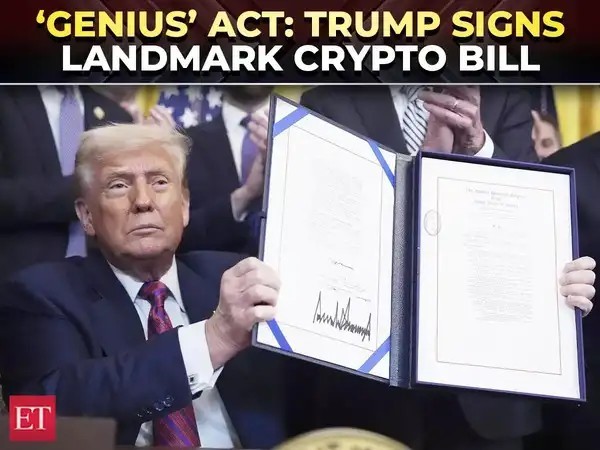
Former U.S. President Donald Trump signed the GENIUS Act into law, aiming to promote stablecoins, digital asset innovation, and regulatory clarity. Two related bills, CLARITY Act and Anti-CBDC Act, have also advanced to the U.S. Senate.
Key Developments: GENIUS Act Signed
- GENIUS Act (Guiding and Establishing National Innovation for U.S. Stablecoins) signed by Trump at a White House ceremony.
- Aims to secure U.S. dominance in cryptocurrency and global finance.
- Trump hailed the move as a “giant step” in strengthening America’s role in crypto technology.
- The Act faced initial hurdles but was passed by a majority vote in the House.
- Trump lobbied to gain support from conservative members of the House.
Other Bills in Focus: CLARITY and Anti-CBDC Acts
- The House passed the Digital Asset Market Clarity (CLARITY) Act and the Anti-CBDC Surveillance State Act.
- These bills aim to ensure that U.S. digital currency development aligns with privacy and free-market values.
- Both now await Senate approval before heading to Trump for final presidential assent.
- The laws seek to regulate crypto markets while preventing state surveillance via Central Bank Digital Currencies (CBDCs).
- The House’s action reflects a broader “America First” approach to digital financial innovation.
| Key points: U.S. Legislative Process on Digital Assets |
| – U.S. laws are passed in two steps: House of Representatives → Senate → President. |
| – The GENIUS Act promotes stablecoin regulation—a digital currency pegged to a stable reserve asset. |
| – The CLARITY Act aims for market structure clarity, essential for regulatory compliance. |
| – The Anti-CBDC Act reflects opposition to government-controlled digital currencies amid privacy concerns. |
| – These laws exemplify the U.S. use of legislation to shape financial sovereignty and innovation policy. |