





Telangana Clears Bills for 42% BC Quota
Why in the News?
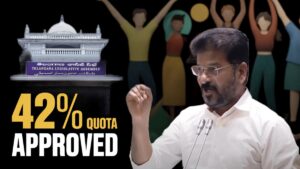
The Telangana Assembly has passed two Bills ensuring 42% reservation for Backward Classes (BCs) in local body elections, including gram panchayats, MPPs, ZPTCs, and MPTCs. This move, based on a socio-economic caste survey and empirical data, awaits the President’s assent, as earlier Bills and an Ordinance on the same issue are pending. The Congress government’s initiative, led by BC Welfare Minister Ponnam Prabhakar, aims to fulfill its pre-poll promise and the Kamareddy BC Declaration, emphasizing social justice and BC representation in local governance.
Details of Telangana Bills:
- Bills Passed:
○ Telangana Municipalities (Third Amendment) Bill, 2025.
○ Telangana Panchayat Raj (Third Amendment) Act, 2025.
- Objective: Implement 42% BC reservation in panchayat elections and other local body elections, including positions such as Sarpanchs, ZP Chairpersons, and other mandal and district units.
- Process:
○ Government carried out a comprehensive socio-economic, educational, employment, political, and caste survey across all households.
○ A dedicated BC commission was set up to assess backwardness and representation levels of BCs.
- Context:
○ Existing Bills and an Ordinance on the same issue are pending Presidential assent, with the government considering the ordinance route for immediate implementation.
○ Current move seeks to reaffirm State’s commitment to proportional representation and BC welfare.
- Ministers Involved:
○ Legislative Affairs Minister D. Sridhar Babu (introduced Municipalities Bill).
○ Panchayat Raj Minister D. Anasuya Seethakka (introduced Panchayat Raj Bill).
○ BC Welfare Minister Ponnam Prabhakar (spearheading the reservation process).
Opposition Concerns and Challenges Ahead:
- BRS (Opposition Party):
○ Supported higher BC reservations but raised fears of legal hurdles.
○ Ponguleti Srinivasa Reddy, a prominent BRS leader, pointed out failures of similar attempts in Bihar and Madhya Pradesh due to weak scientific backing.
- BJP:
○ Supported Bills but sought clarifications on the legal position.
○ Alleged lack of budgetary action on the ₹1 lakh crore promised for BCs in 5 years.
○ Criticized government for not appointing BC officials to top posts in state unit and district units.
- Legal Concern: Reservation for SCs, STs, and BCs together should not exceed the 50 percent cap, as per Supreme Court rulings. This reservation ceiling poses a challenge to the proposed backward classes reservation framework.
- Next Step: Implementation depends on Presidential approval and possible judicial scrutiny. The Telangana Cabinet, along with the Advocate General, is working to address potential legal implications and high court directives.
Understanding Reservation Policy in India:
| Understanding Reservation Policy in India : |
| ● Constitutional Basis: |
| ○ Articles 15 & 16 – allow affirmative action for socially and educationally backward classes. |
| ○ 73rd & 74th Constitutional Amendments – provide reservations in Panchayati Raj Institutions and urban local bodies. |
| ● Judicial Limit: |
| ○ Indra Sawhney Judgment (1992) capped total reservations at 50%. |
| ● Current Reservation in India: |
| ○ SCs, STs, OBCs, EWS benefit from various quotas. |
| ○ States often seek higher quotas for BCs citing social and political underrepresentation. |