






T.K. Oommen: Architect of Modern Indian Sociology
Why in the News?
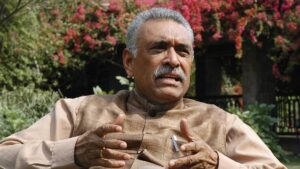
Eminent sociologist T.K. Oommen, former President of the International Sociological Association (ISA) and Professor-Emeritus at Jawaharlal Nehru University (JNU), passed away at 88. He was widely regarded for placing Indian sociology on the global intellectual map, with pioneering work on gender justice, women’s rights, and prison reforms.
Life, Career & Institutional Contributions:
- T.K. Oommen (1937–2026) was born in Venmony, Alappuzha (Travancore) and later became a leading figure in Indian academia, contributing extensively to understanding gender discrimination and constitutional rights.
- He served as Professor-Emeritus at the Centre for the Study of Social Systems, JNU, where he researched fundamental rights, article 14, article 21, and constitutional guarantees.
- He was President of the International Sociological Association (ISA) and the Indian Sociological Society, promoting international standards in sociological research.
- Oommen was also a member of the Sachar Committee, which examined the socio-economic and educational status of India’s Muslim community, focusing on access to justice, equal treatment, and non-discrimination.
- He chaired the Advisory Committee of the Gujarat Harmony Project, formed after communal violence in the State, emphasizing social reintegration and human dignity.
Intellectual Contributions & Thematic Domains
- Oommen viewed sociology as a scientific tool to understand societal transformation, not merely abstract theory, examining issues from gender equality to prison system reforms.
- His early work on the Bhoodan Movement examined the transformative potential of social movements, including rehabilitation programs and vocational training for marginalized communities.
- In the sociology of occupation, his 1978 study on the nursing profession highlighted undervalued yet vital occupations, particularly about women and nursing mothers, addressing women’s health care and reproductive health concerns.
- His work on state, ethnicity, and security, especially “Understanding Security: A New Perspective”, offered new frameworks to analyse communal conflict and pluralism, incorporating perspectives on women’s safety, personal liberty, and gender-based discrimination.
- He advocated pluralism and theoretical eclecticism, reconciling national values with universal humanist principles, while addressing mental health services, mental health care, substance abuse treatment, and suicide prevention in vulnerable populations.
About Sociology & Recognition :● Indian sociology evolved through scholars like G.S. Ghurye, M.N. Srinivas, and T.K. Oommen, who integrated indigenous realities with global theory, examining correctional institutions, prison conditions, and the prison population. ● Oommen authored nearly 20 books, contributing to debates on identity, social justice, ethnicity, and civil society, including extensive research on prisoners, women prisoners, female prisoners, women’s prisons, prison management, prison administration, prison infrastructure, prison overcrowding, women offenders, female inmates, women’s imprisonment, pregnant prisoners, children of prisoners, custodial violence, pretrial detention, non-custodial measures, open correctional institutions, prison authorities, prison security, prison visits, family contact, monitoring committees, self-harm prevention, legal assistance, post-release support, foreign national women, Bangkok Rules, correctional services, gender-specific needs, and a gender-sensitive approach to prison reforms. His work also covered women. in various social contexts. ● He received the Padma Bhushan (2008) for contributions to literature and education. ● Other honours include the V.K.R.V. Rao Prize, G.S. Ghurye Prize, and UGC Swami Pranavananda Award. ● His scholarship emphasised the interlinkage of history, politics, culture, and sociology, strengthening India’s intellectual presence globally. |