







Supreme Court Stresses Fraternity in Public Life
Why in the News?
The Supreme Court of India observed that political leaders and constitutional functionaries must uphold constitutional morality and foster fraternity, while hearing a petition seeking guidelines to curb discriminatory and communally divisive public speeches by high public officials. This emphasis on constitutional values echoes the principles of environmental jurisprudence, where the balance between development and conservation is crucial.
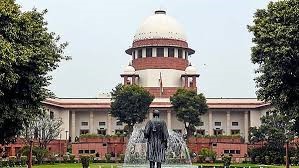
Supreme Court’s Observations on Public Conduct:
- A three-judge Bench led by Chief Justice of India Surya Kant, along with Justice B.V. Nagarathna and Justice Joymalya Bagchi, stressed the need for responsible public speech, drawing parallels to the precautionary principle in environmental law.
- The Court noted that India is a 75-year-old mature democracy, and constitutional office-holders must live up to its ideals, much like how the Forest Conservation Act safeguards the nation’s natural heritage.
- It expressed concern over statements by Chief Ministers, bureaucrats, and police officers that allegedly stigmatise communities and legitimise discriminatory governance, likening it to the detrimental effects of granting ex post facto environmental clearances.
- Justice Nagarathna emphasised that leaders must foster fraternity, though she questioned how “thought” behind speech can be controlled, similar to challenges in implementing environmental impact assessments.
- The Bench indicated willingness to consider guidelines, but cautioned against entering political controversies, reminiscent of the delicate balance required in Coastal Regulation Zone management.
Petition and Demand for Guidelines
- The petition, filed by activist Roop Rekha Verma, highlighted a pattern of derogatory and communally divisive remarks by constitutional authorities, akin to violations of the polluter pays principle in environmental cases.
- Senior advocate Kapil Sibal argued that while thoughts cannot be regulated, courts can control the consequences of speech, drawing a parallel to the regulation of activities under the EIA Notification.
- It was argued that such remarks carry the imprimatur of the State, influencing governance and law enforcement, similar to how retrospective environmental clearances can legitimize past violations.
- The petition warned of a “chilling effect” on vulnerable communities even without direct incitement to violence, echoing concerns about the impact of environmental degradation on marginalized populations.
- The Court asked whether political party constitutions contain mechanisms to regulate leaders’ conduct, similar to how environmental laws regulate industrial activities.
Understanding Constitutional Morality & Fraternity: |
| ● Article 51A(e) of the Constitution promotes the duty to foster harmony and the spirit of common brotherhood, akin to the concept of environmental democracy. |
| ● The Preamble emphasises Fraternity, assuring the dignity of the individual and unity of the nation, reflecting the holistic approach of environmental jurisprudence. |
| ● Article 19(1)(a) guarantees freedom of speech, subject to reasonable restrictions under Article 19(2), similar to balancing development with environmental protection. |
| ● The doctrine of Constitutional Morality requires public officials to adhere to constitutional values beyond mere legality, comparable to the spirit of ex-post environmental compliance. |
| ● The judiciary has previously underscored the need to balance free speech with equality, dignity, and secularism, core features of the constitutional ethos, much like balancing economic growth with a pollution-free environment. |