







SOUTH KOREAN–US JOINT AERIAL EXERCISE ‘BUDDY SQUADRON’
Why in the News?
- Joint Exercise: South Korea and the United States commenced the Buddy Squadron joint aerial exercise to enhance interoperability and tactical coordination between allied air forces.
- Regional Security: The exercise reflects continued military cooperation amid evolving security dynamics in the Indo-Pacific and Korean Peninsula.
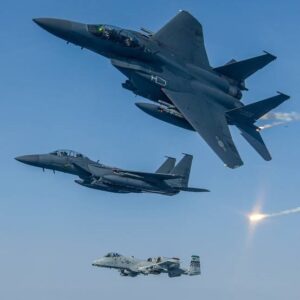
BUDDY SQUADRON AERIAL EXERCISE
- Exercise Nature: Buddy Squadron is a battalion-level rotational aerial drill, alternately hosted by South Korean and US air forces, focusing on operational integration.
- Operational Scope: The exercise emphasizes air-to-air combat tactics, coordinated missions, and integrated tactical training to improve joint operational effectiveness.
- Force Composition: Training involves fourth- and fifth-generation fighter aircraft, enhancing complex multi-platform combat readiness.
- Scale Expansion: This year, the number of participating aircraft and sorties has increased significantly, indicating intensified defence preparedness.
- Base Location: Conducted at Osan Air Base, the exercise strengthens forward-deployed airpower coordination in the Korean Peninsula region.
STRATEGIC AND SECURITY IMPLICATIONS
- Alliance Signalling: The exercise signals strong South Korea–US defence commitment, reinforcing extended deterrence credibility in Northeast Asia.
- Interoperability Focus: Emphasis on integrated tactics enhances joint command, control, and communication capabilities during high-intensity conflict scenarios.
- Regional Stability: Joint drills contribute to deterrence stability by demonstrating preparedness against conventional and asymmetric threats.
- Capability Integration: Training with advanced aircraft supports network-centric warfare readiness and combined force projection capacity.
- Geopolitical Context: Such exercises align with broader Indo-Pacific security strategies aimed at maintaining a rules-based regional order.
MILITARY ALLIANCES AND JOINT EXERCISES● Conceptual Basis: Military alliances enhance collective security through shared defence commitments, burden-sharing, and coordinated strategic planning. ● Operational Role: Joint military exercises improve interoperability, tactical coordination, and crisis-response preparedness among allied forces. ● Deterrence Logic: Regular exercises strengthen deterrence by denial and punishment, signalling readiness to potential adversaries. ● International Relations: Defence cooperation reflects realist security frameworks, alliance politics, and balance-of-power considerations. ● UPSC Relevance: The topic connects GS Paper II and III, covering international relations, security challenges, and defence preparedness frameworks. |