






Solid Waste Management Rules 2026 Emphasise Circular Economy
Why in the News ?
The Ministry of Environment, Forest and Climate Change has notified the Solid Waste Management Rules, 2026, effective from 1 April, strengthening waste segregation, extended producer responsibility, and polluter pays enforcement to improve urban sanitation and sustainable waste management. These rules aim to create a pollution free environment and promote environmental democracy in waste management practices.
Key Features of Solid Waste Management Rules, 2026:
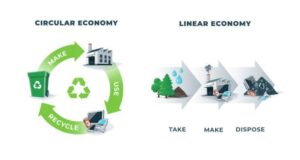
- The SWM Rules, 2026 integrate circular economy principles, emphasising waste reduction, reuse, recycling, and resource recovery. These rules also consider the environmental impact assessment of waste management facilities to ensure compliance with environmental clearances requirements, including considerations for ex post facto approvals in certain cases.
- Four-stream segregation at source has been made mandatory, covering biodegradable waste, recyclable waste, domestic hazardous waste, and sanitary waste.
- The rules stress efficient collection, processing, and scientific disposal, reducing landfill dependency and environmental pollution. This approach aligns with the precautionary principle in environmental jurisprudence, as reinforced by the recent Vanashakti judgment.
- A stronger focus is placed on Extended Producer Responsibility (EPR), making producers accountable for post-consumer waste management.
- The revised framework aims to improve urban governance, enhance municipal accountability, and promote citizen participation in waste segregation.
- By aligning waste management with sustainability goals, the rules support India’s commitments to climate action and resource efficiency, including considerations for coastal regulation zone areas.
Enforcement, Compliance and Environmental Compensation
- The new rules introduce environmental compensation based on the Polluter Pays Principle for violations, reinforcing environmental jurisprudence and the need for a pollution free environment.
- Penalties apply to operating without registration, false or misleading reporting, and improper solid waste handling practices.
- This marks a shift from advisory regulation to deterrence-based compliance, strengthening enforcement capacity of local authorities.
- The framework aims to curb non-compliance by bulk waste generators, urban local bodies, and private operators.
- Graded criteria for development around waste processing and disposal facilities have been introduced to enable faster land allocation while safeguarding environmental norms. This process may involve considerations under the Forest Conservation Act for certain areas and may require retrospective environmental clearances in some cases.
- Clearer rules are expected to reduce project delays, improve private sector participation, and scale up waste-processing infrastructure, all contributing to a more pollution free environment.
- The rules also address the need for compliance with the EIA notification for certain waste management facilities, ensuring comprehensive environmental safeguards.
About Solid Waste Management in India: |
| ● Solid waste includes household, commercial, institutional, and non-hazardous industrial waste. |
| ● Governed primarily by the Solid Waste Management Rules under the Environment (Protection) Act, 1986. |
| ● Polluter Pays Principle: The polluter bears the cost of preventing and remedying environmental damage. |
| ● Extended Producer Responsibility (EPR) shifts waste management responsibility upstream to producers and brand owners. |
| ● Urban Local Bodies (ULBs) are key implementing agencies, responsible for segregation, collection, transport, processing, and disposal. |
| ● Effective SWM is critical for public health, urban sustainability, and achieving Swachh Bharat Mission objectives. |