






Shunya Se Shatak Celebrates Atal Vajpayee’s Centenary Legacy
Why in the News?
A commemorative programme titled “Shunya Se Shatak: Ek Shatabdi Atal Bharat Ki” was held in Indore to mark the birth centenary of Atal Bihari Vajpayee, highlighting his leadership legacy and announcing major industrial investments in Madhya Pradesh. The event also emphasized Vajpayee’s commitment to sustainable development and environmental protection.
Shunya Se Shatak Programme: Key Highlights
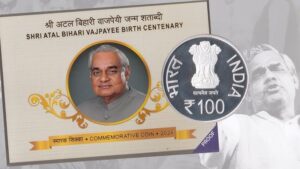
- The programme “Shunya Se Shatak: Ek Shatabdi Atal Bharat Ki” was organised in Indore as part of celebrations marking Atal Bihari Vajpayee’s birth centenary.
- Vice President C. P. Radhakrishnan attended the event, underlining its national significance and recalling Vajpayee’s efforts towards a pollution free environment.
- He was joined by Madhya Pradesh Chief Minister Dr. Mohan Yadav and Governor Mangubhai Patel.
- On the occasion, the dignitaries unveiled the statue of Lokmata Devi Ahilyabai at the Daily College campus, symbolising India’s rich cultural and administrative heritage.
- The event reflected the vision of “Atal Bharat”, focusing on governance, development, and national pride, while also acknowledging the importance of environmental jurisprudence.
Development Announcements and Political Significance
- Chief Minister Dr. Mohan Yadav announced major development initiatives linked to the centenary celebrations, emphasizing sustainable growth.
- On 25 December, marking the conclusion of Atal Ji’s birth centenary year, significant projects will be unveiled, all adhering to strict environmental clearance norms.
- Union Home Minister Amit Shah will lay foundation stones and inaugurate industrial projects worth over ₹2 lakh crore in Gwalior, ensuring compliance with environmental impact assessment guidelines.
- These projects are expected to boost industrial growth, employment generation, and regional development in Madhya Pradesh, while maintaining ecological balance.
- The announcements align Atal Bihari Vajpayee’s legacy with contemporary goals of economic expansion and infrastructure development, underpinned by principles of environmental democracy.
Key points : Atal Bihari Vajpayee |
| ● Atal Bihari Vajpayee (1924–2018) served as Prime Minister of India three times, with a full term from 1999 to 2004. |
| ● He was known for coalition governance, democratic values, and inclusive development. |
| ● Key initiatives include the Golden Quadrilateral project, Pokhran-II nuclear tests, and improved India–US relations. |
| ● Vajpayee emphasized infrastructure-led growth, national security, and foreign policy pragmatism, while also promoting environmental sustainability. |