







SC Bars Gender Bias in Open Prisons
Why in the News ?
The Supreme Court has ruled that exclusion of female prisoners from Open Correctional Institutions (OCIs) is unconstitutional and amounts to gender-based discrimination, directing States and UTs to amend prison rules, expand facilities, and ensure compliance with national and international standards to protect women’s rights and uphold gender justice.
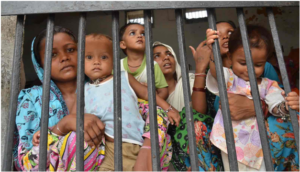
Supreme Court Verdict & Key Directions:
- A Bench of Justices Vikram Nath and Sandeep Mehta termed the exclusion of women from open prisons as “blatant gender discrimination” violating fundamental rights and Constitutional rights under Article 14 and 21, emphasizing equal treatment for all prisoners.
- The Court held that vague “security concerns” cannot be a ground to deny women access to OCIs, as prison security measures must ensure women’s safety while respecting human dignity and non-discrimination principles.
- States and UTs must review and amend prison rules within three months to remove direct or indirect exclusion of women offenders, ensuring access to justice and constitutional guarantees for all female inmates.
- Where integration into existing OCIs is not feasible, prison authorities must create dedicated facilities for women addressing gender-specific needs including provisions for pregnant prisoners, nursing mothers, and children of prisoners, along with women’s health care, reproductive health services, and mental health care.
- High Courts have been directed to register suo motu writ petitions to monitor compliance through monitoring committees and ensure implementation does not remain symbolic, protecting women’s imprisonment standards.
Structural Reforms & Committee Formation
- The judgment highlighted underutilisation of India’s 91 open jails (as per Prison Statistics India 2022 by NCRB), despite prison population overcrowding and inadequate prison infrastructure affecting prison conditions across the prison system.
- Several states including Assam, Gujarat, Telangana, Uttar Pradesh, and West Bengal had made women. ineligible for transfer to OCIs, denying them opportunities available in women’s prisons and violating principles about women prisoners’ rights.
- A high-powered committee chaired by former SC judge Justice S. Ravindra Bhat will frame uniform national standards for governance of OCIs, focusing on prison management and prison administration reforms.
- The committee will harmonise correctional services practices, ensure gender-sensitive approach and access, include provisions for transgender prisoners, and address foreign national women in custody, while preventing custodial violence.
- States must prepare time-bound protocols to rationalise eligibility criteria and make OCIs genuine rehabilitative spaces offering rehabilitation programs, vocational training, mental health services, legal assistance, substance abuse treatment, suicide prevention, self-harm prevention measures, and facilitating social reintegration, family contact, and prison visits, not mere custodial extensions.
About Prison Reforms & Legal Framework :● Open prisons focus on rehabilitation and reintegration, allowing inmates greater freedom with minimal supervision, emphasizing social reintegration and post-release support for successful community return. ● The Model Prison Manual, 2016 recommends equitable access and progressive correctional policies, promoting non-custodial measures and alternatives to pretrial detention where appropriate. ● International standards referenced: Nelson Mandela Rules (UN Standard Minimum Rules for the Treatment of Prisoners) and Bangkok Rules (for women prisoners), which specifically address the treatment and care of female prisoners with attention to their unique needs. ● The ruling reinforces gender equality, dignity, and reformative justice principles under the Indian Constitution, ensuring constitutional guarantees extend to all prisoners regardless of gender. ● The case originated from a petition by activist Suhas Chakma, seeking better utilisation of OCIs to address overcrowding and rehabilitation gaps, improve prison conditions, and ensure access to justice for all incarcerated individuals. |