






RUPTURE ACROSS THE DURAND LINE: PAKISTAN–AFGHANISTAN CLASHES
Why in the News?
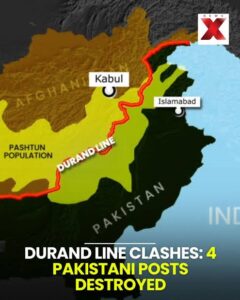
- Cross-Border Escalation: Pakistan and Afghanistan engaged in intense air, missile and ground clashes across the Durand Line.
- Strategic Breakdown: Escalation reflects collapse of trust over handling of Tehrik-e-Taliban Pakistan (TTP) and wider militant networks, with third party information sharing mechanisms breaking down.
POLITICAL AND SECURITY RUPTURE ACROSS DURAND LINE
- Political Breakdown: Diplomatic engagement between Islamabad and Kabul has deteriorated despite post-2021 expectations of strategic alignment.
- Establishment Divide: Long-standing ties between Pakistan’s Deep State and Afghan Taliban leadership have fractured significantly.
- TTP Dispute: Pakistan accuses Kabul of sheltering or failing to control Tehrik-e-Taliban Pakistan militants.
- Militant Surge: Rise in militant attacks in Khyber Pakhtunkhwa during 2022–25 intensified Islamabad’s military approach.
- Societal Divide: Deportation of Afghan refugees and cross-border hostility deepened people-to-people rupture.
ASYMMETRY AND REGIONAL GEOPOLITICAL IMPLICATIONS
- Military Imbalance: Pakistan’s air force and missile capability create clear asymmetry against Taliban’s limited arsenal.
- Economic Dependency: Landlocked Afghanistan remains dependent on Karachi port and transit routes, limiting strategic leverage.
- Proxy Complexity: Expansion of Islamic State–Khorasan (IS-K) complicates Taliban’s internal and external calculations.
- Externalisation Strategy: Islamabad faces criticism for externalising internal militancy by blaming Kabul and external actors.
- Conflict-Prone Future: Structural mistrust and strategic recalculations render the bilateral relationship fragile and volatile.
DURAND LINE AND PAK-AFGHAN RELATIONS● Historical Boundary: Durand Line (1893) demarcated British India and Afghanistan, remaining contested by Kabul historically. ● Strategic Depth Doctrine: Pakistan historically pursued Afghanistan as a buffer under its strategic depth policy. ● Tribal Linkages: Cross-border Pashtun tribes maintain deep sociocultural ties complicating border governance. ● Terrorism Nexus: Region remains hub for Taliban, TTP, and IS-K activities, affecting regional security. ● UPSC Relevance: Topic aligns with GS Paper II and III, covering international relations and internal security challenges. |