







Rohingya Refugees Mark 8th Exodus Anniversary in Bangladesh
Why in the News?
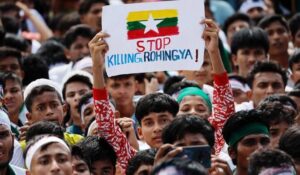
On August 25, 2025, Rohingya refugees in Bangladesh’s Cox’s Bazar refugee camps marked the 8th anniversary of their mass exodus from Myanmar, observing “Rohingya Genocide Remembrance Day”, while demanding safe repatriation to Rakhine State amid continuing instability in Myanmar.
About Anniversary Observance in Bangladesh:
-
Event:
-
Tens of thousands of displaced persons gathered in Kutupalong camp, Cox’s Bazar.
-
Carried banners stating “No more refugee life” and “Repatriation the ultimate solution.”
-
-
Occasion:
-
Observed as “Rohingya Genocide Remembrance Day.”
-
Aim: Highlight genocide, displacement, and demand safe return.
-
-
Challenges in Bangladesh:
-
Refugees face donor aid cuts, overcrowded camps, and limited livelihood opportunities.
-
Over 1 million Rohingyas, considered the world’s most persecuted minority, currently live in Bangladesh refugee camps.
-
Background: Exodus and Myanmar Situation
-
Exodus of 2017:
-
Began on August 25, 2017, when Rohingya Muslims fled violence in Rakhine State, Myanmar.
-
Trigger: Shelling, killings, and arson by Myanmar military, leading to accusations of ethnic cleansing.
-
Journey: Thousands crossed by foot and boats into Bangladesh.
-
-
Conflict in Rakhine:
-
Region now under partial control of the Arakan Army (AA) insurgent group.
-
Continuing armed conflict with Myanmar military prolongs uncertainty for safe repatriation.
-
-
Refugee Voices:
-
Protestors accused both Myanmar army and Arakan Army of committing genocide against Rohingyas.
-
Example: Nur Aziz (19) emphasized remembering lives lost for being Muslim Rohingyas.
-
Key points: Rohingya Crisis
-
Who are the Rohingyas?
-
A Muslim minority group from Rakhine State, Myanmar.
-
Denied citizenship under Myanmar’s 1982 Citizenship Law → considered stateless people.
-
-
International Response:
-
UN & Bangladesh seek safe repatriation agreements but instability persists.
-
Recognized by UN as one of the world’s largest refugee crises.
-
The international community, including UNHCR and the World Food Programme, has been providing humanitarian aid to address the needs of displaced persons in refugee camps.
-
-
Human Rights Concerns:
-
Rohingya refugees have faced numerous rights violations and human rights abuses both in Myanmar and in overcrowded camps.
-
The exodus in 2017 was triggered by what many consider ethnic cleansing, leading to calls for accountability efforts.
-
-
Challenges in Host Communities:
-
The influx of over a million refugees has strained resources in Cox’s Bazar, affecting both displaced persons and host communities.
-
Efforts are ongoing to ensure humanitarian access and address issues like food shortages.
-
-
Path Forward:
-
The international community continues to push for a sustainable return of Rohingya refugees to Myanmar.
-
However, voluntary return remains challenging due to ongoing armed conflict and the lack of a stable Myanmar.
-
As the Rohingya crisis enters its ninth year, the need for a lasting solution becomes increasingly urgent. The international community must continue to support humanitarian aid efforts while working towards creating conditions for a safe, dignified, and voluntary return of the Rohingya to their homeland.