






Rice Export Success Deepens India’s Groundwater Crisis
Why in the News?
The Union of India has emerged as the world’s largest rice producer and exporter, overtaking China. However, rising rice cultivation, especially in Punjab and Haryana, is intensifying groundwater depletion, raising concerns over water security, farm sustainability, and subsidy-driven distortions. This situation has caught the attention of supreme courts and policymakers alike, prompting discussions on sustainable agricultural practices and data-driven policy decisions.
India’s Rice Leadership and Policy Push:
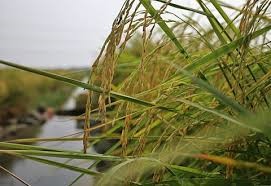
- India has overtaken China to become the largest global producer of rice, exporting over 20 million metric tonnes in the latest fiscal year.
- Rice exports have nearly doubled over the past decade, driven by assured procurement, rising Minimum Support Price (MSP), and strong global demand.
- Political leadership and agricultural lobbies have highlighted farmer resilience and policy innovation behind this growth, while also acknowledging the supreme importance of addressing environmental concerns.
- India today produces far more rice than required for its domestic food security, even as its population crossed 1.4 billion in 2023.
- However, this export-led success masks mounting ecological costs, particularly in water-stressed agricultural heartlands, necessitating a review of data fiduciary obligations in agricultural policy-making.
Groundwater Depletion in Rice-Growing States
- In Punjab and Haryana, rice cultivation relies predominantly on groundwater irrigation, unlike other regions that use mixed surface sources.
- Over the past decade, groundwater levels have sharply declined — borewells that earlier reached water at 30 feet now go as deep as 80–200 feet.
- The two States extract 35–57% more groundwater annually than natural recharge, classifying many blocks as “over-exploited” or “critical”.
- Farmers are forced to invest heavily in deeper borewells, longer pipes, and high-capacity pumps, increasing debt burdens.
- Rice is a highly water-intensive crop, consuming 3,000–4,000 litres per kg, which is 20–60% higher than the global average.
- Even good monsoons in recent years have failed to offset extraction, exposing farmers to climate and rainfall variability risks.
About Subsidies, Cropping Pattern and Water Stress: |
| ● MSP-linked procurement and free or subsidised electricity incentivise farmers to continue water-intensive rice cultivation. |
| ● Experts argue India is effectively subsidising groundwater overuse, despite being one of the most water-stressed countries globally. |
| ● Distorted cropping patterns reduce diversification and discourage shifts to millets, pulses, or oilseeds, which need less water. |
| ● Some reform signals are emerging: Haryana’s ₹17,500 per hectare incentive encourages switching to less water-intensive crops. |
| ● However, short-term incentives and lack of assured markets limit impact. |
The situation calls for a comprehensive approach that balances agricultural productivity with environmental sustainability. The Union of India must consider implementing a robust grievance redressal mechanism to address farmers’ concerns while transitioning to more sustainable agricultural practices. This approach should also take into account the freedom of expression of all stakeholders involved in the agricultural sector, while ensuring the protection of farmers’ data principal rights in the digital age of agriculture.