







Revisiting Linguistic Reorganisation of Indian States, 1956
Why in the News?
Tamil Nadu Governor R.N. Ravi has criticized the linguistic reorganisation of states, claiming it created second-class citizens among linguistic minorities. This has reopened the debate on language-based federalism and its role in preserving or threatening India’s national unity as a sovereign democratic republic.
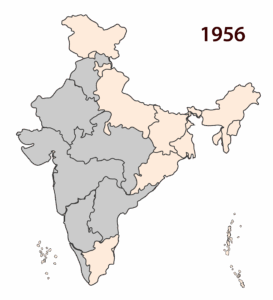
Contemporary Debate on Linguistic States:
- Governor Ravi stated that linguistic reorganisation marginalised non-dominant language groups, especially in Tamil Nadu.
- He argued that the formation of linguistic states reduced national integration and created regional divisions, potentially leading to sectarian sub-nationalism.
- Critics, however, emphasise that linguistic reorganisation has promoted inclusive governance and regional identity.
- Scholars believe linguistic federalism has curbed secessionist tendencies and strengthened democracy.
- The debate reflects ongoing tensions between centralised nationalism and regional aspirations in Indian federalism.
Linguistic Federalism: Unity Through Diversity
- India’s Constitution (Article 1) defines it as a “Union of States”, enabling flexible federalism in the reorganization of states.
- While Jawaharlal Nehru initially opposed linguistic states, public movements forced a policy shift. Govind Ballabh Pant, another key figure, played a crucial role in the reorganization process.
- Unlike Pakistan and Sri Lanka, India embraced linguistic pluralism and voluntary multilingualism, avoiding ethnic conflict.
- Linguistic reorganisation reflected regional demands while preserving national coherence for the good of India.
- Language became a tool of integration, not disintegration, in post-independence India, transforming the administrative landscape from British India provinces to linguistically organized states.
About States Reorganisation Commission (SRC):● The States Reorganisation Commission (SRC), also known as the Fazal Ali Commission, was established in 1953 under retired Chief Justice Fazl Ali. ● The SRC Report (1955) recommended reorganisation based on language, but with safeguards for unity and administrative efficiency. ● The States Reorganisation Act, 1956 led to the creation of 14 states and 6 union territories, including the transformation of Part B states. ● Potti Sriramulu’s fast and death in 1952 led to the formation of Andhra Pradesh, the first linguistic state, carved out of Telugu speaking areas. ● Second ARC (2008) noted linguistic states enhanced governance, accessibility, and cultural representation within the Indian Union. |
The reorganization process considered various factors, including financial self-sufficiency of the proposed states. This led to the creation of states like Marathi-majority Maharashtra and the later Punjab Reorganization Act, which further divided linguistic regions.
The formation of linguistic states with elected state legislatures marked a significant shift from the earlier multilingual administrative territories. This change aimed to bring governance closer to the people and promote regional languages and cultures.
However, critics argue that this reorganization may have inadvertently created new minorities within linguistic states, potentially leading to the marginalization of smaller language groups. The ongoing debate reflects the complex balance between regional aspirations and national unity in India’s federal structure.
As India continues to evolve as a diverse yet united nation, the principles of linguistic federalism remain crucial in maintaining the delicate balance between regional identities and national cohesion.