







PROCUREMENT OF MINOR FOREST PRODUCE DIPS SHARPLY
Why in the News?
- Data Disclosure: Government data tabled in Parliament shows a 92% fall in MFP procurement in 2024-25.
- Minister Reply: Jual Oram presented figures in response to a question.
- MP Query: Question was raised by Priyanka Gandhi Vadra regarding MSP operations.
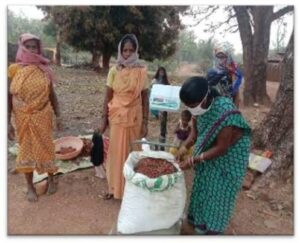
WHAT THE DATA SHOWS
- Sharp Decline: Procurement of Minor Forest Produce (MFP) at MSP fell by over 92% between 2023-24 and 2024-25.
- State Coverage: The procurement decline was recorded across 19 States, indicating a nationwide contraction.
- Financial Support: The Ministry has released ₹319.65 crore to States so far for MFP procurement at MSP.
- Implementation Gap: Despite fund releases, actual on-ground procurement remained extremely low in 2024-25.
- Policy Concern: The fall raises questions about operational efficiency and State-level implementation.
IMPLICATIONS FOR TRIBAL LIVELIHOODS
- Income Impact: Reduced procurement directly affects tribal and forest-dependent communities’ incomes.
- Market Distress: Without MSP procurement, gatherers may be forced into distress sales to private traders.
- Welfare Link: MFP is a key component of tribal livelihood security and nutritional support.
- Regional Inequality: States with higher tribal populations face disproportionate economic stress.
- Policy Credibility: Persistent decline could undermine trust in MSP-based forest welfare schemes.
MINOR FOREST PRODUCE AND MSP● Definition Scope: Minor Forest Produce includes non-timber items like tendu leaves, mahua, lac and tamarind. ● Legal Backing: MFP rights are recognised under the Forest Rights Act, 2006, supporting tribal ownership. ● MSP Objective: MSP for MFP aims to ensure fair prices and income stability for forest gatherers. ● Nodal Agency: Implementation is overseen by TRIFED under the Ministry of Tribal Affairs. ● Development Role: Effective MFP procurement strengthens inclusive growth and forest-based economies. |