






PMJDY Crosses 560 Million Accounts in 11 Years
Why in the News ?
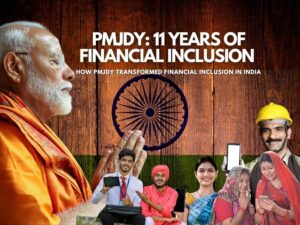
The Pradhan Mantri Jan Dhan Yojana (PMJDY), launched in 2014, has completed 11 years, achieving over 560 million bank accounts with deposits exceeding ₹2.68 lakh crore. It is the world’s largest financial inclusion scheme, empowering rural poor, women, and underserved communities through banking, credit, and digital facilities.
Achievements and Current Status:
● Scale:
○ Over 560 million accounts opened in 11 years.
○ Deposits exceed ₹2.68 lakh crore.
○ Average deposit per account: ₹4,768 (as of Aug 13, 2025).
● RuPay Card Usage:
○ More than 380 million RuPay cards issued.
○ Promotes digital payments and financial security.
● Government’s View:
○ PM Modi: PMJDY has enhanced dignity, empowerment, and financial independence.
○ FM Nirmala Sitharaman: Scheme is a driver of economic growth and development by enabling the poor to benefit from the economy.
Significance and Impact on Financial Inclusion:
● Financial Inclusion:
○ Brought underserved populations in remote areas into formal banking.
○ Strengthened credit delivery and boosted savings culture.
● Social Security:
○ Enabled poor households to access subsidies, pensions, insurance, and DBT directly.
○ Reduced leakages and middlemen exploitation.
● Digital Transformation:
○ Pushed India towards a cashless economy via RuPay cards and UPI-linked accounts.
● Long-term Impact:
○ Strengthens the financial ecosystem.
○ Acts as a safety net for vulnerable households in times of crisis.
○ Contributes to the vision of inclusive and sustainable growth.
PMJDY: Key Features● Launch: August 28, 2014 by Prime Minister Narendra Modi. ● Objective: Provide universal access to banking and bring every household into the formal financial system. ● Account Type: Basic Savings Bank Deposit Account (BSBDA) – zero balance, no maintenance charges. ● Benefits:
○ Free RuPay debit card with ₹2 lakh accident insurance cover. ○ Overdraft facility up to ₹10,000 for emergencies. ○ Direct Benefit Transfer (DBT) channel for subsidies and government schemes. ● Inclusivity:
○ 67% accounts in rural/semi-urban areas. ○ 56% accounts opened by women. |