







New Rural Employment Act Faces Delay in Implementation
Why in the News ?
The Viksit Bharat — Guarantee for Rozgar and Ajeevika Mission (Gramin) Act, 2025 is yet to be implemented as the Union Rural Development Ministry continues consultations with States. Key rules, allocation formulas, and administrative requirements are still under preparation.
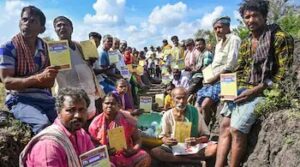
Implementation Challenges of the New Rural Employment Act:
- The Viksit Bharat — Guarantee for Rozgar and Ajeevika Mission (Gramin) (VB-GRAM-G) Act, 2025 is intended to replace the Mahatma Gandhi National Rural Employment Guarantee Act (MGNREGA), 2005.
- However, the new legislation cannot be implemented immediately because rules and operational guidelines are yet to be finalised.
- The Union Ministry of Rural Development is conducting weekly consultations with State governments to address administrative and policy issues.
- The government must frame rules across 11 categories, including provisions related to social audits and monitoring mechanisms.
- Officials indicate that the scheme may not be rolled out by April 1, as initially expected.
Key Policy Issues and Administrative Requirements
- A major challenge is determining a “state-wise normative allocation” formula, which will decide how funds are distributed among States.
- Some States argue that past performance under MGNREGA should influence allocations, while others demand consideration of current demand and migration trends.
- The legislation requires Gram Panchayats to be classified into categories (A, B, and C) based on development indicators such as proximity to urban areas.
- Before the scheme is launched, States must complete several preparatory steps including enrolment on the DBT Sparsh platform for direct benefit transfers.
- Additional requirements include completion of e-KYC verification of job cards and integration with the Yuktdhara geospatial planning portal for preparing Viksit Gram Panchayat plans.
About Rural Employment Schemes in India:● MGNREGA (2005): A landmark rights-based rural employment programme guaranteeing 100 days of wage employment annually to rural households. ● Objective: To enhance livelihood security, reduce rural poverty, and create durable community assets. ● Gram Panchayat Role: Local governments play a central role in planning, approving, and implementing rural development works. ● Social Audit: A transparency mechanism where community members evaluate the implementation of government schemes. ● Direct Benefit Transfer (DBT): A system that ensures direct transfer of funds to beneficiaries’ bank accounts, reducing leakages and improving accountability. |