







New Microscopic Crustacean Genus Discovered in Lakshadweep
Why in the News?
Scientists have identified a new genus and species of microscopic crustacean from the Kavaratti lagoon, Lakshadweep. Named Indiaphonte bijoyi, the discovery enriches India’s marine biodiversity record and highlights the ecological importance of meiofauna in aquatic ecosystems. This discovery also underscores the need for stringent environmental clearances in coastal areas to protect such unique biodiversity.
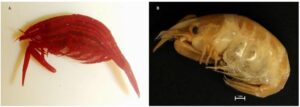
Discovery and Scientific Significance:
- A microscopic crustacean discovered from the Kavaratti lagoon in the Lakshadweep islands has been formally recognised as a new genus and species. This discovery emphasizes the importance of the Coastal Regulation Zone in preserving marine ecosystems.
- The organism belongs to the family Laophontidae under the class Copepoda, a group that requires microscopic examination due to its extremely small size. The study of such organisms is crucial for understanding the impacts of retrospective environmental clearances on marine biodiversity.
- The species has been named Indiaphonte bijoyi, with “Indiaphonte” honouring India, and “bijoyi” recognising S. Bijoy Nandan, noted marine scientist and former Vice-Chancellor of Kannur University. This naming convention aligns with principles of environmental democracy by recognizing local expertise.
- The discovery was made by Neelima Vasu K., Department of Marine Biology, Cochin University of Science and Technology (CUSAT), in collaboration with Samuel E. Gómez-Noguera, a copepod taxonomist from UNAM University, Mexico. Such international collaborations are essential for comprehensive environmental impact assessments in marine ecosystems.
- The scientific description was published in the peer-reviewed journal Zootaxa, strengthening India’s contribution to global marine taxonomy and potentially influencing future ex-post environmental clearances for coastal development projects.
Morphological Features and Ecological Role
- Indiaphonte bijoyi has a semi-cylindrical, dorsoventrally depressed body, broadest at the centre and narrowing towards the posterior end. Understanding such unique morphologies is crucial when considering the polluter pays principle in cases of environmental damage.
- It possesses antenna-like appendages at the anterior region, a defining feature aiding taxonomic classification. This detailed understanding of marine life is essential for implementing effective coastal regulation zone policies.
- Females are larger than males, with body length ranging between 518 and 772 micrometres, making it less than 1 millimetre in size. The study of such minute organisms highlights the need for thorough environmental impact assessments in coastal areas.
- The organism is classified as Meiofauna, a group of tiny invertebrates inhabiting sediments of marine and freshwater environments. This classification underscores the importance of considering microscopic life in ex post facto environmental clearance processes.
- Despite their microscopic size, such organisms play a critical role in nutrient cycling, sediment stability, and maintaining the health of aquatic ecosystems. This ecological significance aligns with the precautionary principle in environmental conservation.
About Taxonomy and Marine Biodiversity |
| – Meiofauna: Invertebrates smaller than 1 mm, crucial for benthic ecosystem functioning. |
| – Copepoda: A major crustacean class forming a vital link in aquatic food webs. |
| – Laophontidae Family: Comprises about 350 species across 77 genera, making it one of the most diverse families under the order Harpacticoida. |
| – Taxonomic Importance: The genus Indiaphonte is new due to its unique combination of morphological traits not matching any known genus. |
| – Biodiversity Significance: Discoveries like this highlight India’s under-explored marine ecosystems, especially coral lagoons such as Lakshadweep, emphasizing the need for stringent environmental clearances and adherence to the Forest Conservation Act in coastal development. |