






Lok Sabha Begins Motion To Remove Justice Varma
Why in the News?
The Lok Sabha is set to initiate a bipartisan motion to remove Justice Yashwant Varma of the Allahabad High Courtfollowing a cash recovery controversy, with 152 MPs from both ruling and opposition parties signing the removal motion. This action underscores the importance of maintaining judicial integrity and the separation of powers between different branches of government.
Removal Motion and Political Consensus:
● 152 MPs, including those from the ruling alliance and Opposition, signed the removal motion, demonstrating rare unity across political lines.
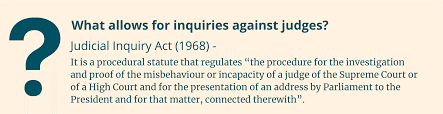
● The motion follows the Judges (Inquiry) Act, 1968 procedure, which outlines the process for investigating and potentially removing judges.
● Speaker Om Birla is expected to appoint a three-member inquiry committee, adhering to the requirement of minimum five judges for such proceedings when combined with potential Supreme Court involvement.
● Lok Sabha will consider the motion first, followed by the Rajya Sabha, as part of the carriage of proceedings in this unprecedented case.
● Minister Kiren Rijiju emphasized the unanimous support from all political parties, highlighting the gravity of the situation and its implications for judicial accountability.
Cash Recovery and Allegations Against Judge
● In March, a fire at Justice Varma’s Delhi residence led to the discovery of half-burnt currency notes, raising questions about potential impropriety.
● He was later transferred to the Allahabad High Court, a move that some viewed as an interim measure pending further investigation.
● A Supreme Court inquiry committee looked into the matter, following established protocols for investigating allegations against sitting judges.
● Chief Justice Sanjiv Khanna forwarded the report to President Droupadi Murmu and the Prime Minister, initiating the formal process that could lead to the judge’s removal.
● The findings paved the way for the removal proceedings in Parliament, potentially setting a precedent for how similar cases might be handled in the future.
| Understanding Procedure for Judge Removal in India:● Article 124(4) and Judges (Inquiry) Act, 1968 govern the removal of High Court and Supreme Court judges.● Motion must be signed by at least 50 Rajya Sabha or 100 Lok Sabha MPs.● An inquiry committee includes: CJI/Supreme Court Judge, HC Chief Justice, and a jurist.● Both Houses must pass the motion with a special majority.● Final order of removal is passed by the President of India, currently President Droupadi Murmu.● The process respects the separation of powers while providing a mechanism for accountability.● In cases where allegations are proven, a writ of mandamus might be considered to compel necessary actions.● The entire procedure is designed to balance judicial independence with the need for accountability, reflecting the complex interplay of constitutional principles in the Indian legal system. |