







Kilauea Volcano Erupts With Spectacular Lava Display
Why in the News?
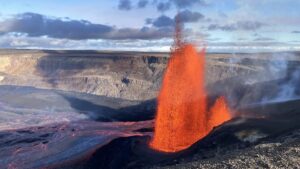
The Kilauea volcano in Hawaii erupted again on August 24, 2025, spewing lava fountains nearly 100 feet high. This marks the 31st eruption since December 2024, reinforcing Kilauea’s status as one of the world’s most active volcanoes. The recent volcanic eruption has drawn attention to the ongoing seismic activity and volcanic hazards associated with this Hawaiian volcano.
Latest Eruption Details:
-
Eruption site: Halemaʻumaʻu Crater, within Hawai’i Volcanoes National Park.
-
Intensity: Lava fountains reached 100 feet, visible across Hawaii Island. The explosive eruption resulted in spectacular lava shooting and occasional lava overflows from the crater floor.
-
Duration: The current eruption began on Friday, August 22, 2025, continuing through the weekend. This latest volcanic activity adds to Kīlauea’s extensive eruption history.
-
Impact on residents:
-
No homes or infrastructure affected yet.
-
Lava flow is contained within the crater, forming a growing lava lake.
-
-
Tourism effect: Thousands of locals and tourists gathered to witness the dramatic lava display, boosting regional tourism but also raising safety monitoring concerns. The Hawaiian Volcano Observatory has increased its volcanic threat assessment and monitoring efforts.
Kilauea’s Volcanic Activity & Significance:
-
Frequency: This is the 31st eruption since Dec 2024, highlighting persistent volcanic activity and the need for continuous monitoring of ground deformation and other precursors.
-
Global status: Kilauea is among the most active volcanoes worldwide, alongside Mount Etna (Italy) and Mount Stromboli. Its frequent eruptions provide valuable data for studying volcanic explosivity index and long-term eruption patterns.
-
Geological importance:
-
Part of the Hawaiian hotspot volcanic chain formed by the Pacific Plate moving over a mantle plume.
-
Produces shield volcano structures, characterized by broad slopes and fluid basaltic lava. These volcanic landforms are typical of Hawaiian volcanoes.
-
-
Environmental concerns:
-
While eruptions remain confined, long-term lava emissions can reshape landscapes and affect local ecosystems.
-
Previous eruptions have destroyed homes, roads, and agricultural land, though this episode is comparatively contained within the summit caldera.
-
-
Scientific significance: Kilauea’s frequent eruptions provide researchers with unique opportunities to study magma chamber dynamics, volcanic gas emissions, and the formation of volcanic glass and tephra.
Key points: Volcano
-
Types of Volcanoes:
-
Shield Volcanoes: Large, broad, low-gradient slopes formed by fluid lava flows. (Kilauea is a prime example).
-
Composite Volcanoes (Stratovolcanoes): Steep-sided, explosive (e.g., Mount Fuji).
-
Cinder Cone Volcanoes: Small, steep slopes, short-lived eruptions.
-
-
Volcanic Zones:
-
Ring of Fire (Pacific Ocean) contains ~75% of active volcanoes.
-
Hawaii represents an intra-plate hotspot volcano, not located on plate boundaries. The rift zone associated with Kilauea plays a crucial role in its eruptive behavior.
-
The ongoing eruption at Kilauea volcano serves as a reminder of the dynamic nature of Earth’s geology and the importance of continued research and monitoring of volcanic activity. As one of the most studied volcanoes in the world, Kilauea continues to provide valuable insights into volcanic processes and hazards.