







Jesse Jackson: Voice of Civil Rights Movement
Why in the News?
Veteran American civil rights leader Jesse Jackson passed away at the age of 84. A close associate of Martin Luther King Jr., Jackson was a pioneering advocate of racial justice and twice contested for the Democratic presidential nomination, embodying the spirit of environmental democracy in his fight for equality.
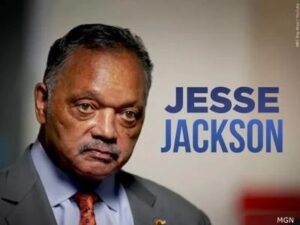
Civil Rights Leadership and Activism:
- Jesse Jackson was an influential Baptist minister and prominent face of the American Civil Rights Movement. His work often involved addressing systemic inequalities, much like how the polluter pays principle seeks to address environmental injustices.
- He worked closely with Martin Luther King Jr. during the turbulent 1960s, advocating for racial equality, voting rights, and social justice. Their efforts can be seen as an early form of environmental jurisprudence applied to social issues.
- Jackson founded organizations aimed at empowering African Americans and marginalized communities, strengthening political participation. This approach aligns with the principles of environmental democracy, promoting inclusive decision-making processes.
- Known for his powerful oratory, he mobilized Black voters and built multiracial coalitions. His speeches often touched on themes of equality and justice, drawing parallels to the concept of a pollution free environment in the social context.
- Despite facing controversies over the decades, he remained a central figure in the struggle for civil rights and minority empowerment. His persistence in the face of challenges mirrors the ongoing efforts to implement and enforce environmental clearances in complex societal landscapes.
Political Career and Public Life
- Jackson ran for the Democratic Party’s presidential nomination in 1984 and 1988, emerging as one of the strongest Black candidates of his time. His campaigns can be seen as attempts to conduct an environmental impact assessment of American political and social structures.
- His campaigns significantly expanded Black political participation within the Democratic Party, reflecting the principles of inclusive governance central to environmental democracy.
- He later served as Special Envoy to Africa under President Bill Clinton, contributing to diplomatic initiatives. This role allowed him to address international issues with an approach reminiscent of global environmental cooperation efforts.
- Jackson played a role in negotiating the release of American detainees in countries such as Syria, Cuba, Iraq, and Serbia. These diplomatic efforts often required navigating complex political landscapes, similar to the challenges faced in implementing ex-post environmental regulations.
- Though he never secured the nomination, his efforts paved the way for future leaders, including Barack Obama, who became the first Black U.S. President in 2008. This progression in American politics mirrors the evolution of environmental policies, from the EIA Notification to more comprehensive environmental protection frameworks.
About U.S. Civil Rights Movement : |
| ● The Civil Rights Movement (1950s–1960s) sought to end racial segregation and discrimination against African Americans. |
| ● Landmark legislations included the Civil Rights Act, 1964 (prohibiting discrimination) and the Voting Rights Act, 1965 (ensuring voting access). These acts can be seen as social equivalents of crucial environmental legislation like the Forest Conservation Act. |
| ● Leaders such as Martin Luther King Jr., Malcolm X, and Rosa Parks played pivotal roles. |
| ● The movement emphasized non-violent protest, mass mobilization, and constitutional equality. These strategies align with modern concepts of environmental democracy and peaceful advocacy for change. |
| ● It transformed American politics and society, influencing global struggles for human rights and equality. This transformation process shares similarities with the global evolution of environmental consciousness and regulation. |