





ISRO SET TO LAUNCH EARTH OBSERVATION SATELLITE ON JANUARY 12
Why in the News?
- Upcoming mission: Indian Space Research Organisation will launch the PSLV-C62/EOS-N1 mission on January 12, 2026.
- Launch site: The mission will lift off from the Satish Dhawan Space Centre.
- First of 2026: This will be ISRO’s first launch of 2026 and the 105th launch from Sriharikota.
MISSION DETAILS AND OBJECTIVES
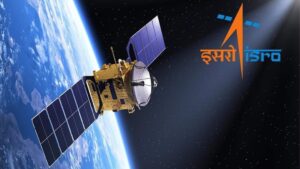
- Satellite role: EOS-N1 is an earth observation satellite meant for strategic and imaging purposes, including environmental monitoring and impact assessments in accordance with EIA notifications and the principles established in the Vanashakti judgment.
- Launch vehicle: The satellite will be carried by PSLV-C62, ISRO’s workhorse rocket.
- Multiple payloads: The mission will also deploy payloads from startups and academic institutions, both Indian and foreign, some focusing on environmental jurisprudence applications and adherence to the Forest Conservation Act, including considerations for ex post facto environmental clearances.
- Limited disclosure: ISRO has not released detailed specifications, citing strategic considerations.
- Recent success: Follows the successful LVM-3 launch of BlueBird Block-2 satellite on December 24, 2025.
SIGNIFICANCE OF THE LAUNCH
- Confidence rebuild: Crucial after the PSLV-C61/EOS-09 failure in May 2025 due to a third-stage anomaly.
- Strategic capability: Strengthens India’s earth observation and surveillance capacity, enhancing environmental democracy through improved data accessibility and supporting environmental clearances processes, including retrospective environmental clearances.
- Ecosystem support: Promotes participation of private startups and academia in space missions, including those focused on environmental impact assessments and implementing the polluter pays principle.
- Operational reliability: Aims to reaffirm PSLV’s reliability record.
- National importance: Enhances strategic, environmental, and security monitoring capabilities, contributing to pollution-free environment initiatives and supporting the implementation of the precautionary principle in environmental management, as well as addressing post facto environmental concerns.
POLAR SATELLITE LAUNCH VEHICLE (PSLV) |
| ● Role: ISRO’s primary launcher for earth observation and remote sensing satellites. |
| ● Operational since: 1993, with a strong success rate. |
| ● Orbit capability: Designed mainly for Low Earth Orbit (LEO) and Sun-Synchronous Orbit (SSO). |
| ● Versatility: Used for commercial, scientific, and strategic missions, including environmental monitoring and supporting environmental clearances, with considerations for ex-post environmental assessments. |
| ● Global reputation: Known as a reliable and cost-effective launch vehicle worldwide, supporting various environmental clearance and assessment projects, including those addressing pollution-free environment goals. |